

Basketball Practice Design: How to Avoid the “Clean Practice” Trap




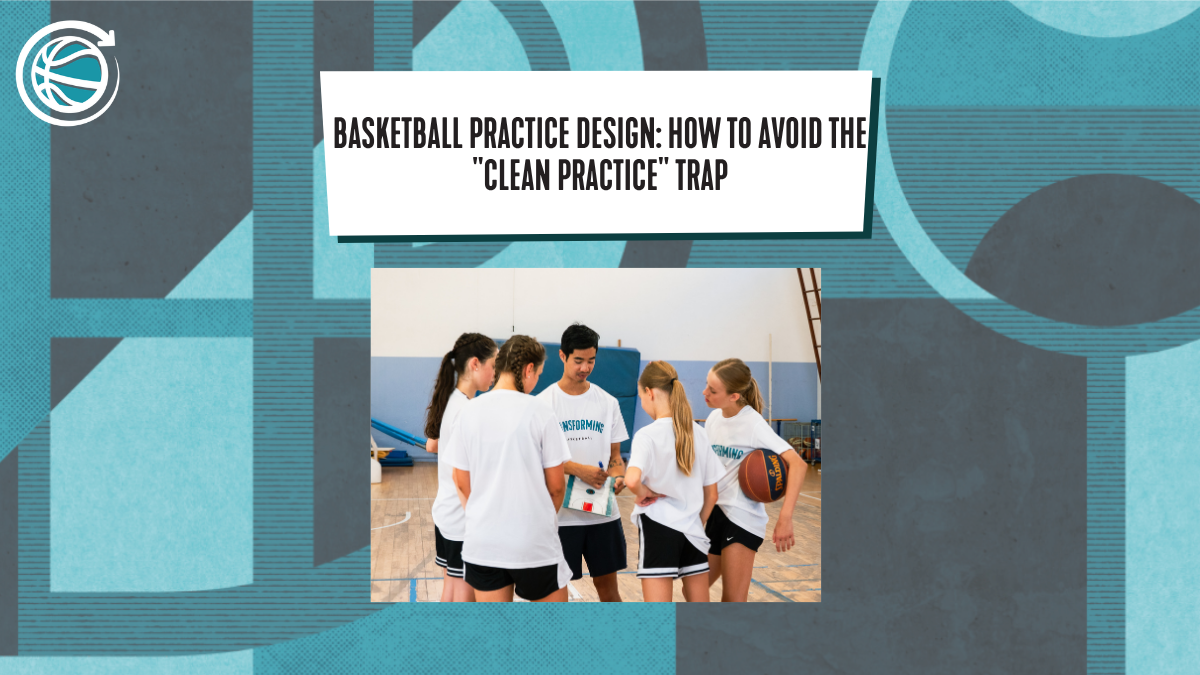
We’ve all been there—the perfect drill, high energy, and everyone in the right spot. Then the game starts, and it all falls apart. You fell for the “Clean Practice” trap. If you want to speed up the learning process, you have to stop coaching for compliance and start coaching for retention. A modern basketball practice design isn’t about making the coach feel comfortable; it’s about preparing players for the chaos of 5v5 basketball.
The Secret Metric: Time on Task
In the world of evidence-based coaching, the most important metric isn’t the number of shots made; it’s Time on Task. “Decision-making density” is another way to describe this concept. Simply put, every second a player spends listening to a coach lecture is a second lost where they could be learning to navigate a defense.
To prepare players for the pressure of a game, they need to make 10 to 20 decisions in the gym for every one they’ll face on game night. If a player only sees a short-roll read twice in a game, but you use Small-Sided Games to give them 30 reps in a Tuesday session, you’ve just compressed fifteen games’ worth of experience into one practice.
Try this SSG:
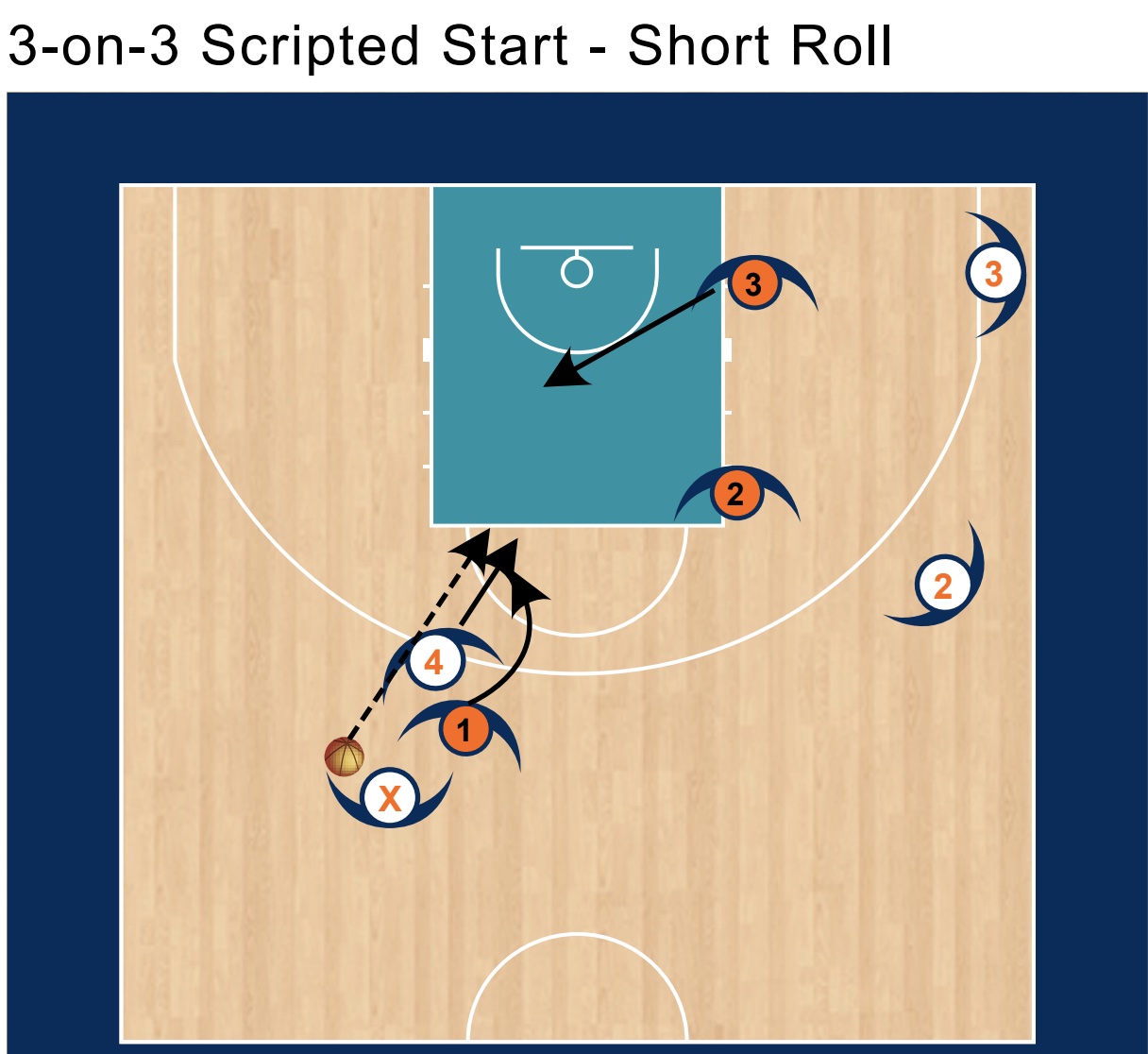
- Scripted start. So it is only live after the pass is made to the roller.
- From here the offense has 4 seconds to score.
How Basketball Practice Design Improves Time on Task
If you want to maximize your basketball practice design, you have to be intentional about the clock. Here are three ways to immediately increase your team’s Time on Task:
- Limit Explanation Time: Follow the “30-second rule.” If you can’t explain the drill in 30 seconds, it is too complex. Get the players moving and let the constraints do the coaching. Use your phone and record your explanation. You can then go back and see how you can simplify your explanation.
- Sync Your Logistics: Take water breaks and timeouts together as a team. This prevents “dead time” where players wander off at different intervals, which kills the flow and decision-making density of the session.
- Smaller Games, More Decisions: Move away from 5-on-0 scripted reps. Use 2-on-2 or 3-on-3 Small-Sided Games. Smaller numbers mean more touches, more space, and significantly more decisions per minute for every player on the floor.
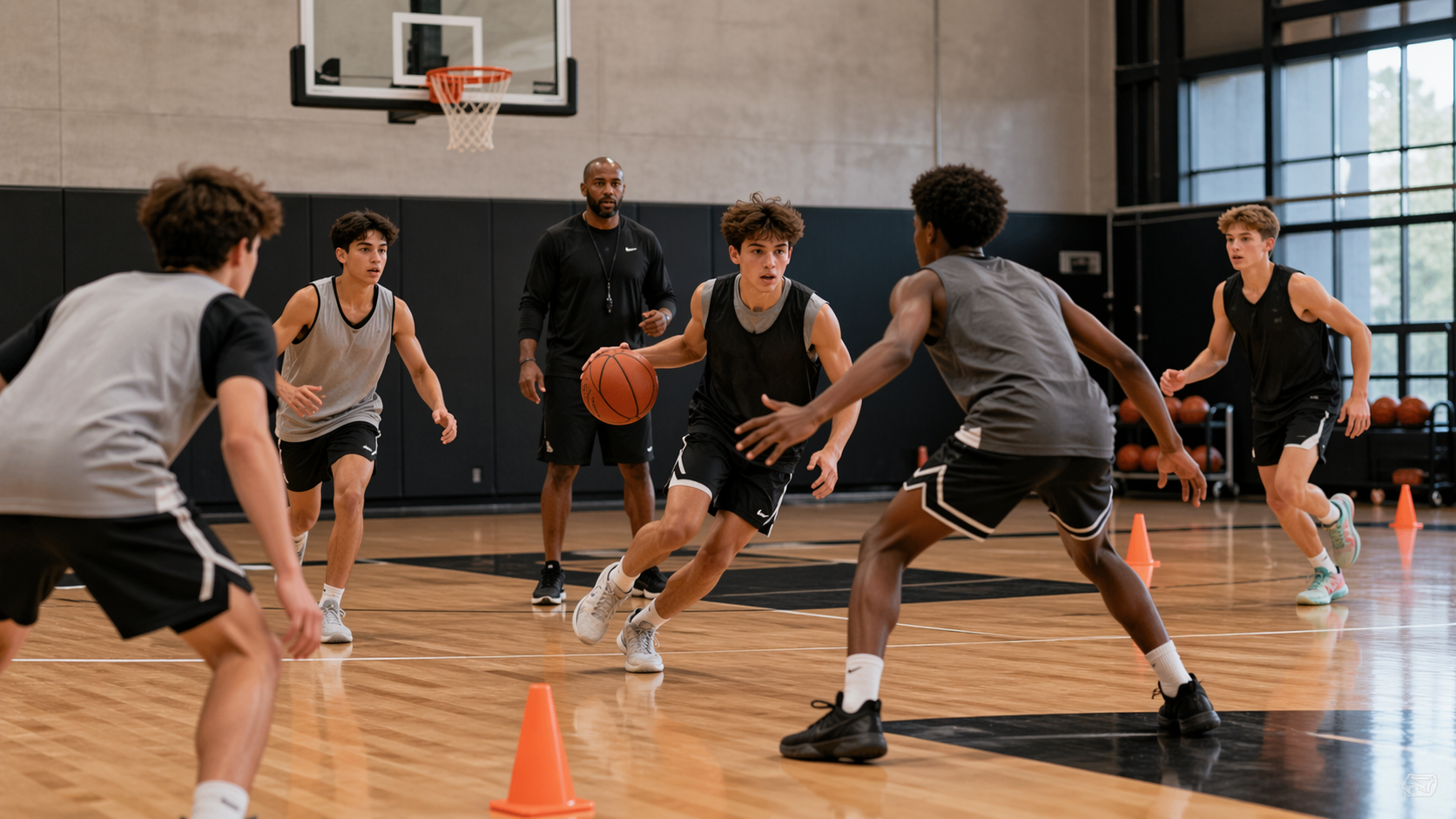
Maximizing your basketball practice design.
Embrace the Messy Learning
Think of a toddler learning to walk. We don’t lecture them on biomechanics; we create an environment where they can pull themselves up and stumble. Practice design should function the same way. Speeding up the learning process requires the courage to let your players fail, turn the ball over, and find their own solutions. If it looks perfect in the gym, it’s likely too easy, and no real learning is happening.
The Confidence Dial: Pre-Game Balance
Does this mean every session should be chaotic? Not quite. Effective basketball practice design uses a “sliding scale” of complexity:
- Discovery Phase (Early Week): High randomness, live defense, and maximum discovery.
- Confidence Phase (Pre-Game): Shift to “Guided Defense.” Use coaches to give specific looks so players see the ball go through the net while still making the necessary reads. We want to ensure players are mentally ready for the game and feeling confident.
The Ultimate Ego Check
If your players can’t solve problems in the gym without you yelling instructions, they won’t solve them in the fourth quarter. Trust your constraints, maximize your Time on Task, and watch your team’s adaptability skyrocket.
Great basketball practice design doesn’t just make practice look organized—it helps players adapt, think, and perform when the game becomes unpredictable. When coaches build sessions around decision-making, retention, and game-like reps, players develop habits that actually transfer to competition. That is the real goal of practice.
Ready to transform your gym?
- Join the Community: Access hundreds of SSG diagrams and clinics at TransformingBball.com.
- The Deep Dive: Check out the Transforming Basketball book for the full evidence-based framework on player development.
- Download the FREE SSG Games Book to use in your next practice: https://transformingbball.com/21-ssgs-for-your-next-practice


We’ve all been there—the perfect drill, high energy, and everyone in the right spot. Then the game starts, and it all falls apart. You fell for the “Clean Practice” trap. If you want to speed up the learning process, you have to stop coaching for compliance and start coaching for retention. A modern basketball practice design isn’t about making the coach feel comfortable; it’s about preparing players for the chaos of 5v5 basketball.
The Secret Metric: Time on Task
In the world of evidence-based coaching, the most important metric isn’t the number of shots made; it’s Time on Task. “Decision-making density” is another way to describe this concept. Simply put, every second a player spends listening to a coach lecture is a second lost where they could be learning to navigate a defense.
To prepare players for the pressure of a game, they need to make 10 to 20 decisions in the gym for every one they’ll face on game night. If a player only sees a short-roll read twice in a game, but you use Small-Sided Games to give them 30 reps in a Tuesday session, you’ve just compressed fifteen games’ worth of experience into one practice.
Try this SSG:
- Scripted start. So it is only live after the pass is made to the roller.
- From here the offense has 4 seconds to score.
How Basketball Practice Design Improves Time on Task
If you want to maximize your basketball practice design, you have to be intentional about the clock. Here are three ways to immediately increase your team’s Time on Task:
- Limit Explanation Time: Follow the “30-second rule.” If you can’t explain the drill in 30 seconds, it is too complex. Get the players moving and let the constraints do the coaching. Use your phone and record your explanation. You can then go back and see how you can simplify your explanation.
- Sync Your Logistics: Take water breaks and timeouts together as a team. This prevents “dead time” where players wander off at different intervals, which kills the flow and decision-making density of the session.
- Smaller Games, More Decisions: Move away from 5-on-0 scripted reps. Use 2-on-2 or 3-on-3 Small-Sided Games. Smaller numbers mean more touches, more space, and significantly more decisions per minute for every player on the floor.
Maximizing your basketball practice design.
Embrace the Messy Learning
Think of a toddler learning to walk. We don’t lecture them on biomechanics; we create an environment where they can pull themselves up and stumble. Practice design should function the same way. Speeding up the learning process requires the courage to let your players fail, turn the ball over, and find their own solutions. If it looks perfect in the gym, it’s likely too easy, and no real learning is happening.
The Confidence Dial: Pre-Game Balance
Does this mean every session should be chaotic? Not quite. Effective basketball practice design uses a “sliding scale” of complexity:
- Discovery Phase (Early Week): High randomness, live defense, and maximum discovery.
- Confidence Phase (Pre-Game): Shift to “Guided Defense.” Use coaches to give specific looks so players see the ball go through the net while still making the necessary reads. We want to ensure players are mentally ready for the game and feeling confident.
The Ultimate Ego Check
If your players can’t solve problems in the gym without you yelling instructions, they won’t solve them in the fourth quarter. Trust your constraints, maximize your Time on Task, and watch your team’s adaptability skyrocket.
Great basketball practice design doesn’t just make practice look organized—it helps players adapt, think, and perform when the game becomes unpredictable. When coaches build sessions around decision-making, retention, and game-like reps, players develop habits that actually transfer to competition. That is the real goal of practice.
Ready to transform your gym?
- Join the Community: Access hundreds of SSG diagrams and clinics at TransformingBball.com.
- The Deep Dive: Check out the Transforming Basketball book for the full evidence-based framework on player development.
- Download the FREE SSG Games Book to use in your next practice: https://transformingbball.com/21-ssgs-for-your-next-practice




check what's trending

What is ecological dynamics and how is it connected to a constraints-led approach?
Dec 8, 2025
George Vaz

Are you searching for the best small sided games (SSGs) to improve your basketball practices? Want to replace boring, low-transfer drills with competitive games that actually develop player decision-making and in-game skills?
In this post, I’m sharing my top 5 favorite small-sided basketball games—designed to teach core concepts like closeouts, pick-and-roll, advantage creation, and transition offense and defense. These basketball SSGs are intense, purposeful, and built around real-game actions.
Whether you're coaching youth basketball, high school, or pros, these top small sided games will make your sessions more effective, more engaging, and more fun—for both players and coaches.
Let’s break down each game and how it can transform your practices.
Aug 4, 2025
George Vaz

Whether you’re coaching in the NBA, EuroLeague, or youth basketball, one thing remains universally true: the worst transition offense is still more efficient than the best half-court offense. Yet, many teams still struggle to fully capitalize on transition opportunities, often opting to slow down the game instead of pushing the pace. The question is, why? By running more intentionally, teams can create easier scoring opportunities. So why do some teams hesitate?
Apr 7, 2025
George Vaz
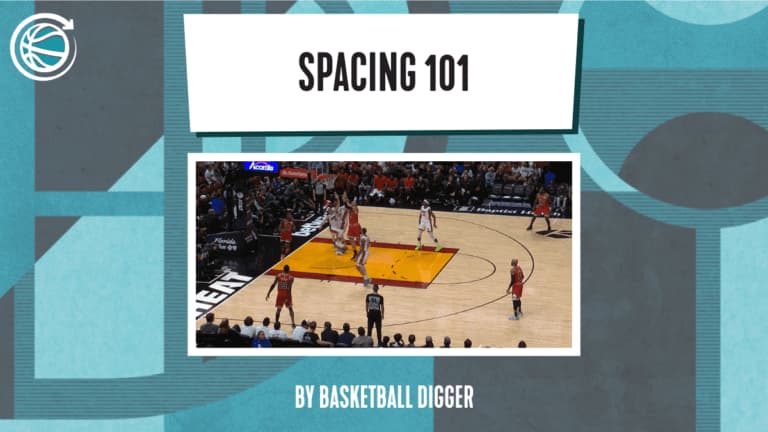
Spacing has changed the game. NBA offenses today look nothing like they did in the ’90s—more threes, better efficiency, and smarter shot selection. But why? The key lies in how teams use space to create and capitalize on advantages.
Mar 31, 2025
Simon Caret
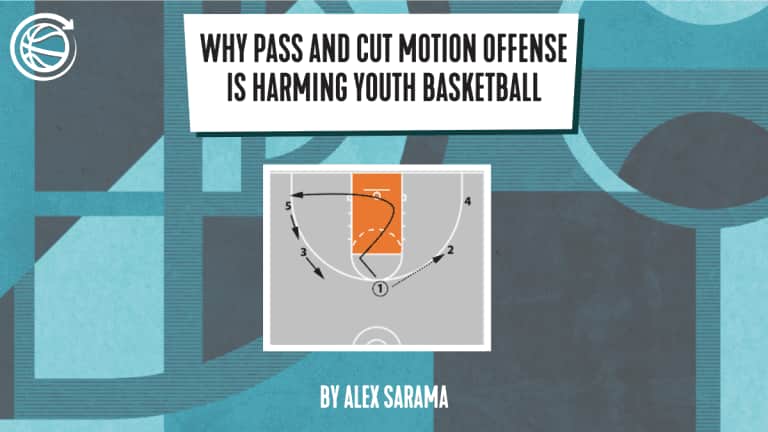
This article breaks down why pass and cut motion offense limits youth player development, and explores better ways to teach spacing, decision-making, and offensive creativity.
May 1, 2024
Alex Sarama
Approaches within the basketball industry are predominantly based upon experiential knowledge and traditions.


