

How to Master The Short Roll in Your Basketball Offense





How can you effectively use the short roll as a coverage solution against an aggressive defensive coverage?
In the modern era of pace and space, the pick and roll is the most used trigger to create advantages on offense. Below you can see the pick and roll usage from the 2024-25 season for each NBA team:
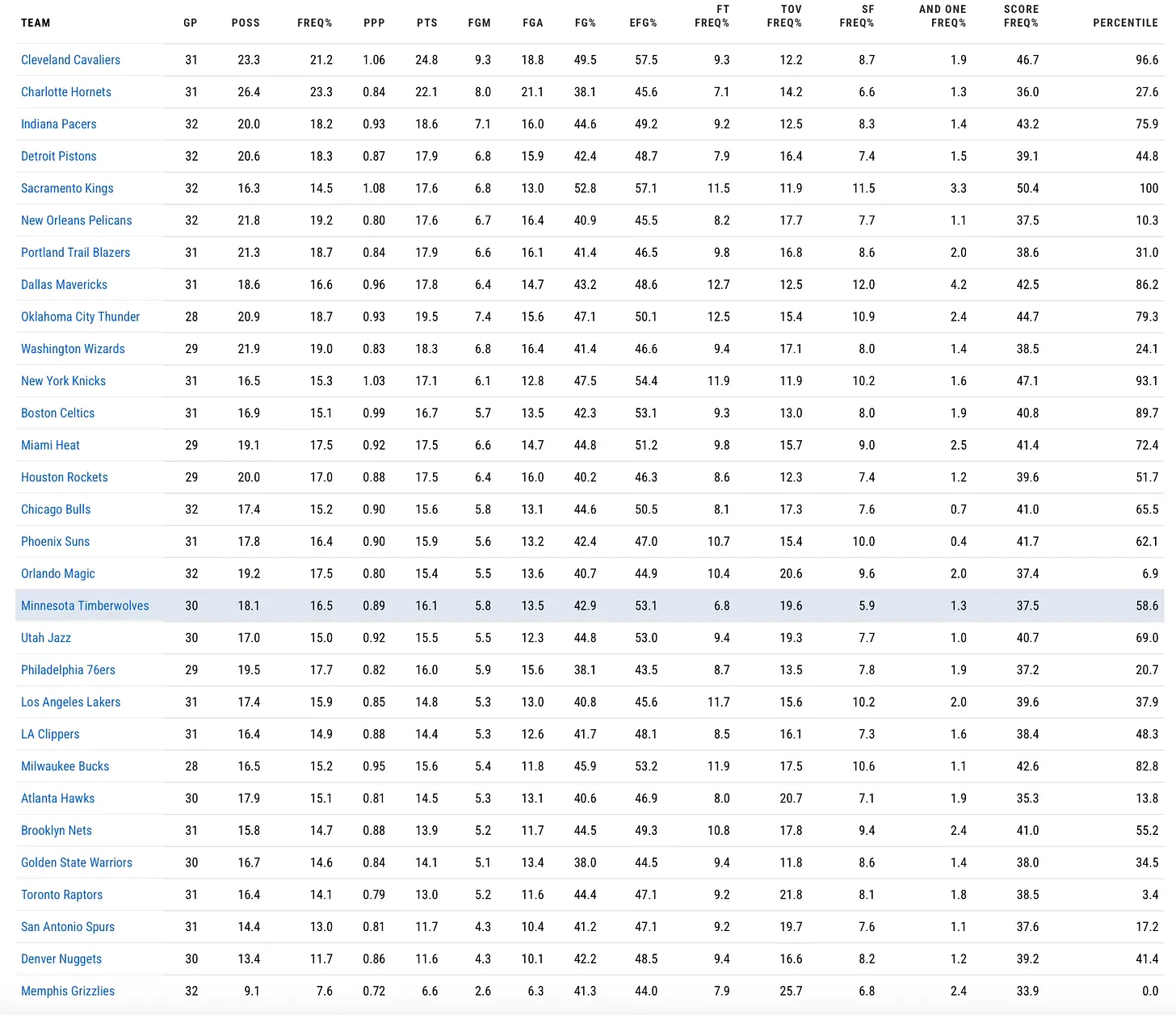 Stats correct as of December 30 2024
The Cavaliers, the league leaders in pick and roll usage, have a high pick and roll usage rate at 23.3 times per game. In order to be effective in pick and roll, it is essential for your team to have clear coverage solutions. In other words, what will your team look to intentionally achieve vs every type of defense? Letting your players run triggers without a shared understanding of how you will create advantages against each type of defense is not a recipe for achieving elite offensive efficiency.
The short roll comes into the equation as a great coverage solution for aggressive coverages. When teams show, blitz or even employ an aggressive switch, the pocket pass can be made into the roller before they pass the free-throw line. If the ball enters the short roll cleanly, your team has a guaranteed 4-on-3 advantage because of how there are two defenders on the ball.
The short roll can be paired with another coverage solution: the cut and slide, as seen below.
Immediate off-ball reactions can be a cut and slide, as seen below:
Why the Short Roll is So Efficient
When a defense sends two to the ball—via a blitz or show—it will always leave someone open. The short roll creates a numbers advantage, often a 4-on-3, with the ball in the hands of a player moving downhill into space. That’s incredibly hard to guard, especially when paired with good spacing and decisive reads (such as a cut to stretch the “take two” defender)
But it’s not just the numbers—it’s the geometry. The short roll attacks the defense from the middle of the floor, forcing defenders to collapse inwards and make tough decisions. Do they leave the corner shooter? Step up and risk a lob or dump-off pass to the roller? Slide down to take away the corner kick-out and expose a potential slot cut?
How Coaches and Players Can Best Teach It
1. Empower the Roller to be a Playmaker
Train your bigs (or short rollers) not just to finish but to see the floor. That means reps in live 4-on-3 activities, passing under pressure, reading help, and making the skip or drop-off pass to cutters. This requires teams to trust their rollers to make plays rather than scripting the same solution each time.
📌 Activity Example: 3-on-2 advantage start, beginning from a short roll catch. The moment the roller catches it in the pocket, the live 3-on-2 starts.
2. Prioritize Timing and Angles
The ball-handler has to deliver the pass on time and in space. Too late or off-target and the whole advantage from the short roll disappears. Likewise, the screener needs to short roll to an area where they can catch and see—often just above the free-throw line. The roller should attempt to catch “with vision” of the floor to make the next decision easier.
🧠 Coaching Tip: Teach screeners to “roll into the window,” to provide an outlet for the handler as opposed to rolling too deep.
If you’re looking to dive deeper into the details of the pick and roll—whether it’s understanding the reads, designing drills, or applying it in live game situations—check out our at Transforming Basketball. You can explore the Pick and Roll Small-Sided Games Clinic for practical, game-like activities, or the Pick and Roll Offense Course for a comprehensive breakdown of concepts and structure in the PNR.

How can you effectively use the short roll as a coverage solution against an aggressive defensive coverage?
In the modern era of pace and space, the pick and roll is the most used trigger to create advantages on offense. Below you can see the pick and roll usage from the 2024-25 season for each NBA team:
Stats correct as of December 30 2024
The Cavaliers, the league leaders in pick and roll usage, have a high pick and roll usage rate at 23.3 times per game. In order to be effective in pick and roll, it is essential for your team to have clear coverage solutions. In other words, what will your team look to intentionally achieve vs every type of defense? Letting your players run triggers without a shared understanding of how you will create advantages against each type of defense is not a recipe for achieving elite offensive efficiency.
The short roll comes into the equation as a great coverage solution for aggressive coverages. When teams show, blitz or even employ an aggressive switch, the pocket pass can be made into the roller before they pass the free-throw line. If the ball enters the short roll cleanly, your team has a guaranteed 4-on-3 advantage because of how there are two defenders on the ball.
The short roll can be paired with another coverage solution: the cut and slide, as seen below.
Immediate off-ball reactions can be a cut and slide, as seen below:
Why the Short Roll is So Efficient
When a defense sends two to the ball—via a blitz or show—it will always leave someone open. The short roll creates a numbers advantage, often a 4-on-3, with the ball in the hands of a player moving downhill into space. That’s incredibly hard to guard, especially when paired with good spacing and decisive reads (such as a cut to stretch the “take two” defender)
But it’s not just the numbers—it’s the geometry. The short roll attacks the defense from the middle of the floor, forcing defenders to collapse inwards and make tough decisions. Do they leave the corner shooter? Step up and risk a lob or dump-off pass to the roller? Slide down to take away the corner kick-out and expose a potential slot cut?
How Coaches and Players Can Best Teach It
1. Empower the Roller to be a Playmaker
Train your bigs (or short rollers) not just to finish but to see the floor. That means reps in live 4-on-3 activities, passing under pressure, reading help, and making the skip or drop-off pass to cutters. This requires teams to trust their rollers to make plays rather than scripting the same solution each time.
📌 Activity Example: 3-on-2 advantage start, beginning from a short roll catch. The moment the roller catches it in the pocket, the live 3-on-2 starts.
2. Prioritize Timing and Angles
The ball-handler has to deliver the pass on time and in space. Too late or off-target and the whole advantage from the short roll disappears. Likewise, the screener needs to short roll to an area where they can catch and see—often just above the free-throw line. The roller should attempt to catch “with vision” of the floor to make the next decision easier.
🧠 Coaching Tip: Teach screeners to “roll into the window,” to provide an outlet for the handler as opposed to rolling too deep.
If you’re looking to dive deeper into the details of the pick and roll—whether it’s understanding the reads, designing drills, or applying it in live game situations—check out our at Transforming Basketball. You can explore the Pick and Roll Small-Sided Games Clinic for practical, game-like activities, or the Pick and Roll Offense Course for a comprehensive breakdown of concepts and structure in the PNR.




check what's trending

What is ecological dynamics and how is it connected to a constraints-led approach?
Dec 8, 2025
George Vaz

Are you searching for the best small sided games (SSGs) to improve your basketball practices? Want to replace boring, low-transfer drills with competitive games that actually develop player decision-making and in-game skills?
In this post, I’m sharing my top 5 favorite small-sided basketball games—designed to teach core concepts like closeouts, pick-and-roll, advantage creation, and transition offense and defense. These basketball SSGs are intense, purposeful, and built around real-game actions.
Whether you're coaching youth basketball, high school, or pros, these top small sided games will make your sessions more effective, more engaging, and more fun—for both players and coaches.
Let’s break down each game and how it can transform your practices.
Aug 4, 2025
George Vaz

Whether you’re coaching in the NBA, EuroLeague, or youth basketball, one thing remains universally true: the worst transition offense is still more efficient than the best half-court offense. Yet, many teams still struggle to fully capitalize on transition opportunities, often opting to slow down the game instead of pushing the pace. The question is, why? By running more intentionally, teams can create easier scoring opportunities. So why do some teams hesitate?
Apr 7, 2025
George Vaz
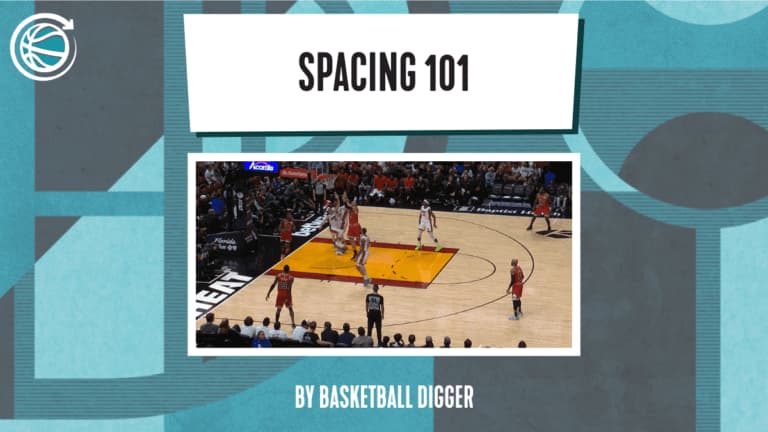
Spacing has changed the game. NBA offenses today look nothing like they did in the ’90s—more threes, better efficiency, and smarter shot selection. But why? The key lies in how teams use space to create and capitalize on advantages.
Mar 31, 2025
Simon Caret
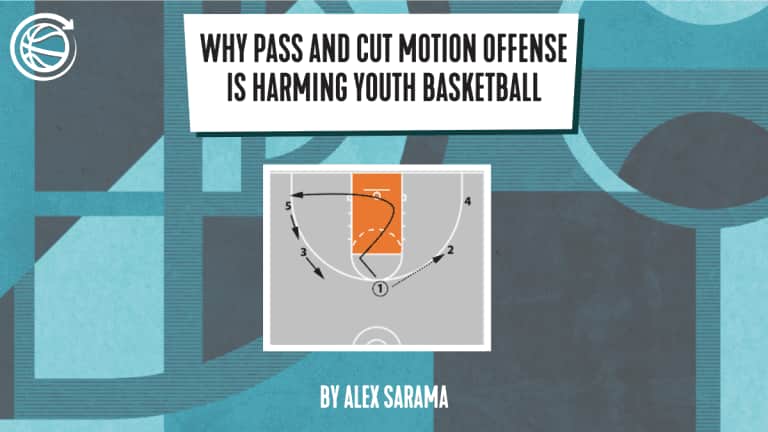
This article breaks down why pass and cut motion offense limits youth player development, and explores better ways to teach spacing, decision-making, and offensive creativity.
May 1, 2024
Alex Sarama
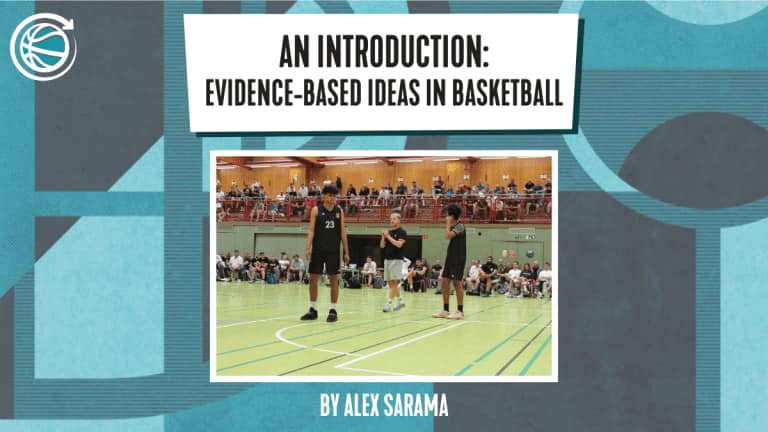
Approaches within the basketball industry are predominantly based upon experiential knowledge and traditions.


