

What Does “Pace and Space” Mean Within a Conceptual Offense?
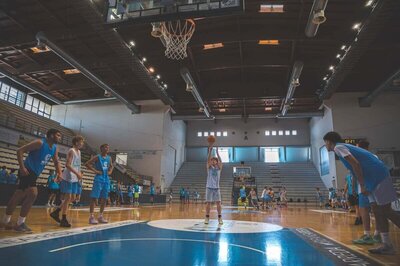




What does pace and space even mean? In this blog, we unpack the modern offensive concepts that every coach needs to know.
Playing with pace and space start with getting the best possible shot regardless of the time left in the shot clock. There are a few things we can talk about here such as shot selection, arrival spacing, and transition principles. But firstly, let’s review how analytics can be used to measure pace.

- Team Possessions: The total number of possessions the team had in the game.
- Opponent Possessions: The total number of possessions the opposing team had.
- Minutes Played: The actual minutes of the game (usually 48 minutes in regulation)
Playing with pace is done in order to convert natural advantages which more readily appear in transition than playing against a half-court offense. In the NBA when teams are stopped in transition, they then flow immediately into a trigger. This begins the half-court phase of offense. This is very different to years past when teams would be less intentional about playing fast or going straight into a scripted action without looking for natural scoring opportunities.
Pace and space are inherently complementary. In the modern game, many teams arrive in 5 out spacing. This can be achieved even with non-shooting bigs. 5 out spacing begins with players running wide and creating a 2 side. This creates space for the ball handler to drive to the rim or initiate the first trigger, such as a drag screen.
Below are examples of modern “arrival spacings” as seen in the NBA, but also used by hundreds of Transforming members at the High School level.


Other benefits of coherent arrival spacing mean that your team can quickly flow into your half court offense if you have not exploited an advantage in transition by playing with pace and space. At the end of the day, at any level the most efficient half-court offenses start earlier in the clock. The more delayed your team is initiating the first real action, the more inefficient your offense becomes. This is another reason why playing conceptually is so important vs wasting time in the clock through running motion-like actions without scoring intent.
To learn more about conceptual offense, watch this clinic with Transforming’s Founder and Director of Player Development for the Cleveland Cavaliers, Alex Sarama.



What does pace and space even mean? In this blog, we unpack the modern offensive concepts that every coach needs to know.
Playing with pace and space start with getting the best possible shot regardless of the time left in the shot clock. There are a few things we can talk about here such as shot selection, arrival spacing, and transition principles. But firstly, let’s review how analytics can be used to measure pace.
- Team Possessions: The total number of possessions the team had in the game.
- Opponent Possessions: The total number of possessions the opposing team had.
- Minutes Played: The actual minutes of the game (usually 48 minutes in regulation)
Playing with pace is done in order to convert natural advantages which more readily appear in transition than playing against a half-court offense. In the NBA when teams are stopped in transition, they then flow immediately into a trigger. This begins the half-court phase of offense. This is very different to years past when teams would be less intentional about playing fast or going straight into a scripted action without looking for natural scoring opportunities.
Pace and space are inherently complementary. In the modern game, many teams arrive in 5 out spacing. This can be achieved even with non-shooting bigs. 5 out spacing begins with players running wide and creating a 2 side. This creates space for the ball handler to drive to the rim or initiate the first trigger, such as a drag screen.
Below are examples of modern “arrival spacings” as seen in the NBA, but also used by hundreds of Transforming members at the High School level.
Other benefits of coherent arrival spacing mean that your team can quickly flow into your half court offense if you have not exploited an advantage in transition by playing with pace and space. At the end of the day, at any level the most efficient half-court offenses start earlier in the clock. The more delayed your team is initiating the first real action, the more inefficient your offense becomes. This is another reason why playing conceptually is so important vs wasting time in the clock through running motion-like actions without scoring intent.
To learn more about conceptual offense, watch this clinic with Transforming’s Founder and Director of Player Development for the Cleveland Cavaliers, Alex Sarama.




check what's trending

What is ecological dynamics and how is it connected to a constraints-led approach?
Dec 8, 2025
George Vaz

Are you searching for the best small sided games (SSGs) to improve your basketball practices? Want to replace boring, low-transfer drills with competitive games that actually develop player decision-making and in-game skills?
In this post, I’m sharing my top 5 favorite small-sided basketball games—designed to teach core concepts like closeouts, pick-and-roll, advantage creation, and transition offense and defense. These basketball SSGs are intense, purposeful, and built around real-game actions.
Whether you're coaching youth basketball, high school, or pros, these top small sided games will make your sessions more effective, more engaging, and more fun—for both players and coaches.
Let’s break down each game and how it can transform your practices.
Aug 4, 2025
George Vaz

Whether you’re coaching in the NBA, EuroLeague, or youth basketball, one thing remains universally true: the worst transition offense is still more efficient than the best half-court offense. Yet, many teams still struggle to fully capitalize on transition opportunities, often opting to slow down the game instead of pushing the pace. The question is, why? By running more intentionally, teams can create easier scoring opportunities. So why do some teams hesitate?
Apr 7, 2025
George Vaz
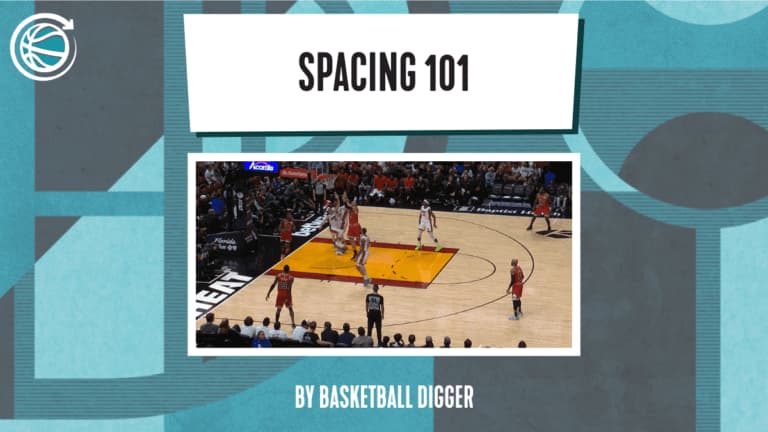
Spacing has changed the game. NBA offenses today look nothing like they did in the ’90s—more threes, better efficiency, and smarter shot selection. But why? The key lies in how teams use space to create and capitalize on advantages.
Mar 31, 2025
Simon Caret
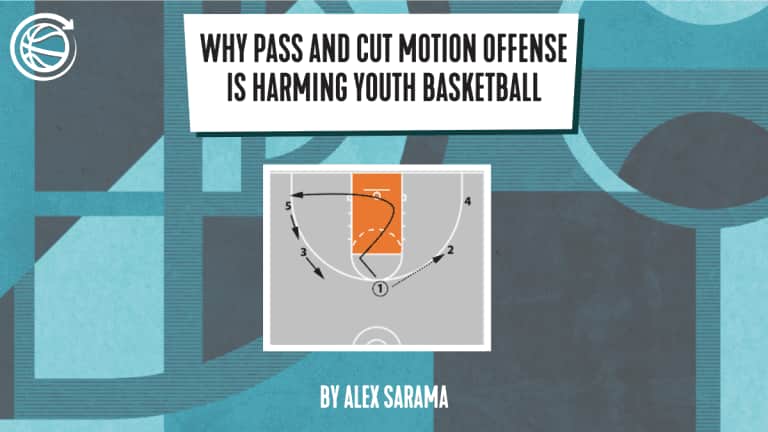
This article breaks down why pass and cut motion offense limits youth player development, and explores better ways to teach spacing, decision-making, and offensive creativity.
May 1, 2024
Alex Sarama
Approaches within the basketball industry are predominantly based upon experiential knowledge and traditions.


