






Transforming Basketball Blog

Jun 9, 2025
George Vaz
How can goal-setting be used to set tangible actions for improving your team’s defense? Utilizing stats and KPIs (key performance indicators) helps evaluate overall individual and team performance, as well as identifying areas for improvement and tracking progress (or regression!) over extended time periods.
Skill acquisition is an evidence-based field analyzing how athletes learn and develop motor skills. Contemporary skill acquisition research informs us that effective coaching is about a lot more than just repetition. The days of repetitive drilling may be numbered, as instead a CLA involves coaches designing more representative learning environments where players are constantly making decisions.

Jun 2, 2025
George Vaz
We've all had those games—the ref’s whistle seems broken, your shots are hitting everything but the net, and somehow every long rebound finds the other team. You look up at the scoreboard and wonder if the basketball gods just took the night off. Sound familiar?
Mental games are always neccessary in order to help players stay focused, resilient, and confident under pressure, allowing them to overcome adversity, control emotions, and maintain team chemistry for better performance.
This is where the real battle begins—not with your hands, but with your head. Mental toughness in basketball isn’t just a buzzword; it’s the difference between falling apart and fighting back. Whether you're a player trying to shake off a bad quarter, or a coach looking to steady a rattled team, mastering the mental game is your secret weapon.
We’ll break down simple, powerful ways to stay mentally strong—from how to set micro-goals in timeouts to training body language that speaks louder than the scoreboard. Because no matter how the game’s going, your mindset should never be the first thing to break.

May 26, 2025
George Vaz
If you’re wondering how to improve transition defense, it starts with what you do on offense. In this blog, we’ll reveal three key offensive habits to avoid that often lead to fast breaks —and how fixing them can immediately improve your team’s defensive transition. From limiting turnovers to improving shot selection and ensuring proper spacing, each of these areas plays a crucial role in preventing easy transition buckets. We’ll also dive into effective strategies like “Tagging Up” to increase rebounding pressure and get defensive matchups fixed right after the shot goes up.

May 19, 2025
George Vaz
How your team consistently creates advantages depends on your player’s unique strengths and weaknesses, as well as what may be most effective based on the tendencies of other teams in your league. For instance, is playing as fast as possible complementary to your team’s skillset, or what triggers and coverage solutions may best fit your players to consistently create an advantage? Regardless of how your team creates advantages, the key principles for how your team converts them are known as “dominoes.” In this blog, we’ll unpack these three principles of dominoes to improve your team’s offensive efficiency.

May 12, 2025
George Vaz
What does pace and space even mean? In this blog, we unpack the modern offensive concepts that every coach needs to know.

May 5, 2025
George Vaz
How can you effectively use the short roll as a coverage solution against an aggressive defensive coverage? In the modern era of pace and space, the pick and roll is the most used trigger to create advantages on offense.

Apr 28, 2025
George Vaz
On-ball defense is one of the most debated aspects of basketball coaching. Should players force the ball to the sideline, middle, or weak hand? The answer isn’t one-size-fits-all—it’s influenced by a coach’s philosophy, their team’s strengths, and the make-up of the league your team plays in. While many coaches advocate for forcing the ball to the sidelines to limit passing options, but there is no one-size-fits-all. Success can be found in forcing to the weak hand, regardless of the location on the floor (e.g. sending the handler left towards the middle, even on the right side).

Apr 21, 2025
George Vaz
Mastering transition offense is about more than rigid rules—it's about empowering players with principles that allow them to create easy scoring opportunities. When athletes are given the freedom to make decisions based on the situation, it opens up endless possibilities for creating efficient scoring opportunities.

Apr 14, 2025
George Vaz
Whether you’re coaching in the NBA, EuroLeague, or youth basketball, one thing remains universally true: the worst transition offense is still more efficient than the best half-court offense. Yet, many teams still struggle to fully capitalize on transition opportunities, often opting to slow down the game instead of pushing the pace. The question is, why? By running more intentionally, teams can create easier scoring opportunities. So why do some teams hesitate?

Apr 7, 2025
George Vaz




check what's trending

What is ecological dynamics and how is it connected to a constraints-led approach?
Dec 8, 2025
George Vaz

Are you searching for the best small sided games (SSGs) to improve your basketball practices? Want to replace boring, low-transfer drills with competitive games that actually develop player decision-making and in-game skills?
In this post, I’m sharing my top 5 favorite small-sided basketball games—designed to teach core concepts like closeouts, pick-and-roll, advantage creation, and transition offense and defense. These basketball SSGs are intense, purposeful, and built around real-game actions.
Whether you're coaching youth basketball, high school, or pros, these top small sided games will make your sessions more effective, more engaging, and more fun—for both players and coaches.
Let’s break down each game and how it can transform your practices.
Aug 4, 2025
George Vaz
Whether you’re coaching in the NBA, EuroLeague, or youth basketball, one thing remains universally true: the worst transition offense is still more efficient than the best half-court offense. Yet, many teams still struggle to fully capitalize on transition opportunities, often opting to slow down the game instead of pushing the pace. The question is, why? By running more intentionally, teams can create easier scoring opportunities. So why do some teams hesitate?
Apr 7, 2025
George Vaz
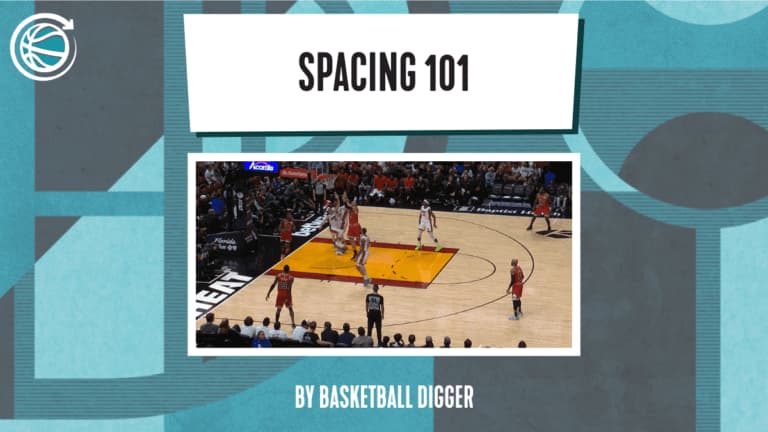
Spacing has changed the game. NBA offenses today look nothing like they did in the ’90s—more threes, better efficiency, and smarter shot selection. But why? The key lies in how teams use space to create and capitalize on advantages.
Mar 31, 2025
Simon Caret
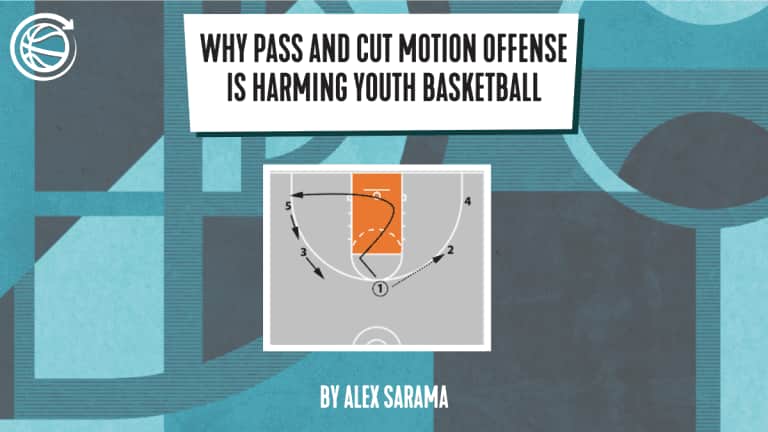
This article breaks down why pass and cut motion offense limits youth player development, and explores better ways to teach spacing, decision-making, and offensive creativity.
May 1, 2024
Alex Sarama
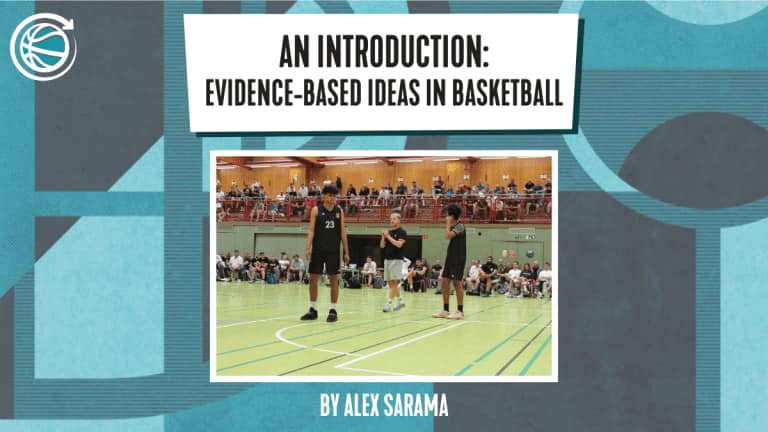
Approaches within the basketball industry are predominantly based upon experiential knowledge and traditions.


