

Where to Start for Coaches New to a Constraints-Led Approach





Living in the age of information, paralysis by analysis is easier to experience than ever. Implementing a Constraints-Led Approach with a basketball team is no different. Sifting through the research, books (such as the book, Transforming Basketball), podcasts, etc., you are inundated with potential routes to using a CLA and it can be difficult to decide where to start.
This post came from within our membership community…
Principles of Play
The starting point we would suggest is centered around principles of play. The reason being that principles of play are not only paramount in the sport of basketball, but they underpin the behavior that emerges on offense, defense and transition play across all team sports. Be it the tactical prowess of your ATOs or technical proficiency of your guards handling the ball, they all are centered around principles of play.
The key terms that we discuss at transforming basketball that can be found in our Principles of Play Glossary PDF are as follows:
How To Do This Practically
By designing your own principle of play, it makes it much easier to design practice activities. We find that coaches generally fall into the trap of copying drills when they are not guided by a north star: aka clear principles of play.
A general outline for any coach is to put your principles of play on a one pager. Then you can easily design practice activities to bring these to life, centered around CLA principles. For instance, if working with a U12 team, you may design an activity with an advantage to create dominoes situations for your players. The sub principles of play for your team to maintain this advantage would be zero second decisions, 1 can’t guard 2 and floor is lava while the defense attempts to get back to neutral (a state of no advantage).
You would now have to consider the constraints that would put players in a situation to apply these principles. Naturally, this means creating a small-sided game with an advantage, such as a hi-5 start (player hi-5s the coach standing behind the ball handler, with other players spaced around the perimeter). You may then use a short shot clock to encourage the behaviour of making quick decisions to convert the advantage.
By considering the principles of play in every part of the game, it makes it much easier for you to be creative in planning your own practice activities.
To learn more about how to apply evidence-based ideas in your practices, join our Transforming Basketball Community.



Living in the age of information, paralysis by analysis is easier to experience than ever. Implementing a Constraints-Led Approach with a basketball team is no different. Sifting through the research, books (such as the book, Transforming Basketball), podcasts, etc., you are inundated with potential routes to using a CLA and it can be difficult to decide where to start.
This post came from within our membership community…
Principles of Play
The starting point we would suggest is centered around principles of play. The reason being that principles of play are not only paramount in the sport of basketball, but they underpin the behavior that emerges on offense, defense and transition play across all team sports. Be it the tactical prowess of your ATOs or technical proficiency of your guards handling the ball, they all are centered around principles of play.
The key terms that we discuss at transforming basketball that can be found in our Principles of Play Glossary PDF are as follows:
How To Do This Practically
By designing your own principle of play, it makes it much easier to design practice activities. We find that coaches generally fall into the trap of copying drills when they are not guided by a north star: aka clear principles of play.
A general outline for any coach is to put your principles of play on a one pager. Then you can easily design practice activities to bring these to life, centered around CLA principles. For instance, if working with a U12 team, you may design an activity with an advantage to create dominoes situations for your players. The sub principles of play for your team to maintain this advantage would be zero second decisions, 1 can’t guard 2 and floor is lava while the defense attempts to get back to neutral (a state of no advantage).
You would now have to consider the constraints that would put players in a situation to apply these principles. Naturally, this means creating a small-sided game with an advantage, such as a hi-5 start (player hi-5s the coach standing behind the ball handler, with other players spaced around the perimeter). You may then use a short shot clock to encourage the behaviour of making quick decisions to convert the advantage.
By considering the principles of play in every part of the game, it makes it much easier for you to be creative in planning your own practice activities.
To learn more about how to apply evidence-based ideas in your practices, join our Transforming Basketball Community.




check what's trending

What is ecological dynamics and how is it connected to a constraints-led approach?
Dec 8, 2025
George Vaz

Are you searching for the best small sided games (SSGs) to improve your basketball practices? Want to replace boring, low-transfer drills with competitive games that actually develop player decision-making and in-game skills?
In this post, I’m sharing my top 5 favorite small-sided basketball games—designed to teach core concepts like closeouts, pick-and-roll, advantage creation, and transition offense and defense. These basketball SSGs are intense, purposeful, and built around real-game actions.
Whether you're coaching youth basketball, high school, or pros, these top small sided games will make your sessions more effective, more engaging, and more fun—for both players and coaches.
Let’s break down each game and how it can transform your practices.
Aug 4, 2025
George Vaz

Whether you’re coaching in the NBA, EuroLeague, or youth basketball, one thing remains universally true: the worst transition offense is still more efficient than the best half-court offense. Yet, many teams still struggle to fully capitalize on transition opportunities, often opting to slow down the game instead of pushing the pace. The question is, why? By running more intentionally, teams can create easier scoring opportunities. So why do some teams hesitate?
Apr 7, 2025
George Vaz
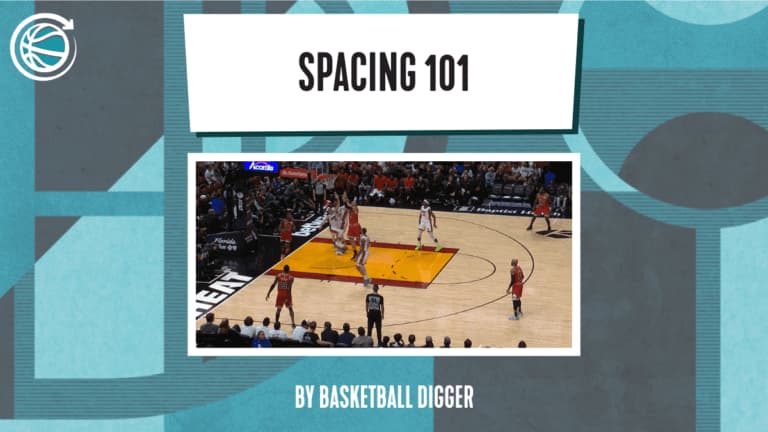
Spacing has changed the game. NBA offenses today look nothing like they did in the ’90s—more threes, better efficiency, and smarter shot selection. But why? The key lies in how teams use space to create and capitalize on advantages.
Mar 31, 2025
Simon Caret
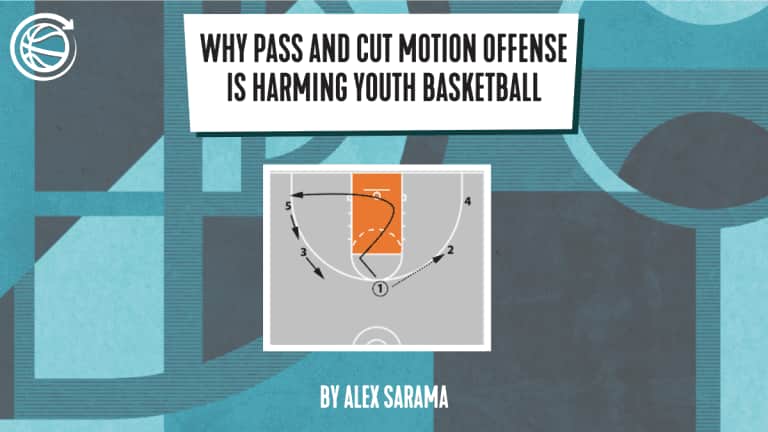
This article breaks down why pass and cut motion offense limits youth player development, and explores better ways to teach spacing, decision-making, and offensive creativity.
May 1, 2024
Alex Sarama
Approaches within the basketball industry are predominantly based upon experiential knowledge and traditions.


