

The Read and React Offense vs A Conceptual Offense
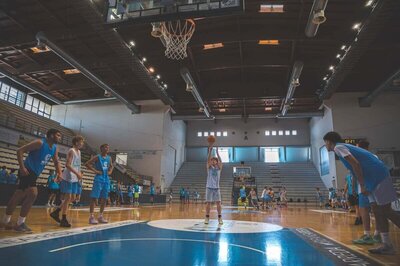




A conceptual offense is one where players are playing with triggers and constantly reading the defense, looking to create and exploit advantages. A read and react offense has its actions determined primarily by what other teammates do and where the ball goes. The players are taught to read the ball / their teammate and react to it, as opposed to having the primary focus on the defensive coverage.
Here are some examples on the differences between both.
Defense-Based Decision Making
In a conceptual offense, offensive actions and movements are primarily dictated by how the defense guards the offense, in other words: the coverages and coverage solutions. In contrast, the Read and React Offense focuses on offensive patterns and movements based on more rigid “if X, then Y” type-rules. A conceptual offense is more based on principles vs hard and fast rules.
Another example of this is the predetermined action within the Read & React of the dribble hand-off (DHO). By stating that an offensive player should dribble at a teammate with their back towards the basket, in order to anticipate the DHO as opposed to moving with circle movement or cutting on a dribble at, it simply removes all possibilities to attack aggressively on the DHO. This allows the defense to easily anticipate the action.
Flexibility and Adaptability
The rigid structure of the Read & React offense, with its predefined layers and automatic actions, can limit players’ ability to make real-time decisions based on what the best opportunity is within a possession. This is because players are so focussed on trying to run rules vs acting upon what the defense gives them.
A conceptual offense, however, allows players to have possibilities rather than fixed rules, enabling them to adapt to various defensive coverages more effectively.
Modern Spacing Concepts
The Read & React’s automatic pass, cut, and fill actions can clutter the paint and create poor spacing, reducing the effectiveness of players to use an advantage. A conceptual offense emphasizes maintaining great spacing and creating advantages through utilizing double gaps and avoiding cutting without a purpose. Within a conceptual offense, each trigger is used to decisively create an advantage vs wasting time on the shot clock running a pattern.
Furthermore, rigid circle movement does not occur within a conceptual offense. Spacing and penetration principles of play avoid having teammates move directly into the space of drivers. For instance, if a player is in the strong side corner, why would they move out of this location when a corner catch and shoot 3PT shot is one of the most efficient shots available?
Learn more!
If you would like to learn more about the conceptual offense and how to apply it in your practices, check these resources out:

A conceptual offense is one where players are playing with triggers and constantly reading the defense, looking to create and exploit advantages. A read and react offense has its actions determined primarily by what other teammates do and where the ball goes. The players are taught to read the ball / their teammate and react to it, as opposed to having the primary focus on the defensive coverage.
Here are some examples on the differences between both.
Defense-Based Decision Making
In a conceptual offense, offensive actions and movements are primarily dictated by how the defense guards the offense, in other words: the coverages and coverage solutions. In contrast, the Read and React Offense focuses on offensive patterns and movements based on more rigid “if X, then Y” type-rules. A conceptual offense is more based on principles vs hard and fast rules.
Another example of this is the predetermined action within the Read & React of the dribble hand-off (DHO). By stating that an offensive player should dribble at a teammate with their back towards the basket, in order to anticipate the DHO as opposed to moving with circle movement or cutting on a dribble at, it simply removes all possibilities to attack aggressively on the DHO. This allows the defense to easily anticipate the action.
Flexibility and Adaptability
The rigid structure of the Read & React offense, with its predefined layers and automatic actions, can limit players’ ability to make real-time decisions based on what the best opportunity is within a possession. This is because players are so focussed on trying to run rules vs acting upon what the defense gives them.
A conceptual offense, however, allows players to have possibilities rather than fixed rules, enabling them to adapt to various defensive coverages more effectively.
Modern Spacing Concepts
The Read & React’s automatic pass, cut, and fill actions can clutter the paint and create poor spacing, reducing the effectiveness of players to use an advantage. A conceptual offense emphasizes maintaining great spacing and creating advantages through utilizing double gaps and avoiding cutting without a purpose. Within a conceptual offense, each trigger is used to decisively create an advantage vs wasting time on the shot clock running a pattern.
Furthermore, rigid circle movement does not occur within a conceptual offense. Spacing and penetration principles of play avoid having teammates move directly into the space of drivers. For instance, if a player is in the strong side corner, why would they move out of this location when a corner catch and shoot 3PT shot is one of the most efficient shots available?
Learn more!
If you would like to learn more about the conceptual offense and how to apply it in your practices, check these resources out:




check what's trending

What is ecological dynamics and how is it connected to a constraints-led approach?
Dec 8, 2025
George Vaz

Are you searching for the best small sided games (SSGs) to improve your basketball practices? Want to replace boring, low-transfer drills with competitive games that actually develop player decision-making and in-game skills?
In this post, I’m sharing my top 5 favorite small-sided basketball games—designed to teach core concepts like closeouts, pick-and-roll, advantage creation, and transition offense and defense. These basketball SSGs are intense, purposeful, and built around real-game actions.
Whether you're coaching youth basketball, high school, or pros, these top small sided games will make your sessions more effective, more engaging, and more fun—for both players and coaches.
Let’s break down each game and how it can transform your practices.
Aug 4, 2025
George Vaz

Whether you’re coaching in the NBA, EuroLeague, or youth basketball, one thing remains universally true: the worst transition offense is still more efficient than the best half-court offense. Yet, many teams still struggle to fully capitalize on transition opportunities, often opting to slow down the game instead of pushing the pace. The question is, why? By running more intentionally, teams can create easier scoring opportunities. So why do some teams hesitate?
Apr 7, 2025
George Vaz
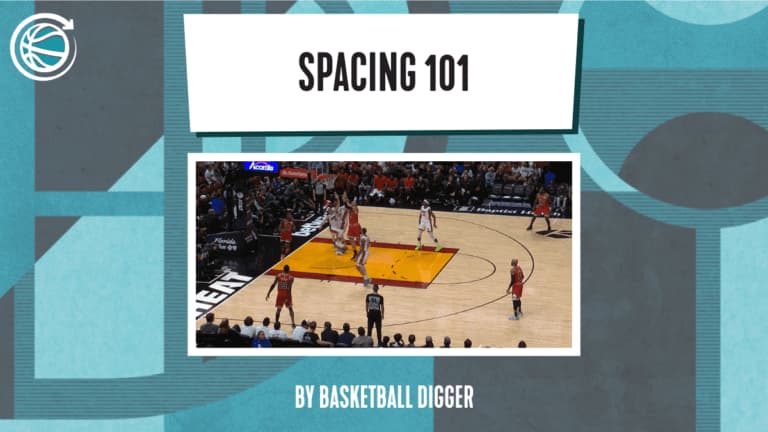
Spacing has changed the game. NBA offenses today look nothing like they did in the ’90s—more threes, better efficiency, and smarter shot selection. But why? The key lies in how teams use space to create and capitalize on advantages.
Mar 31, 2025
Simon Caret
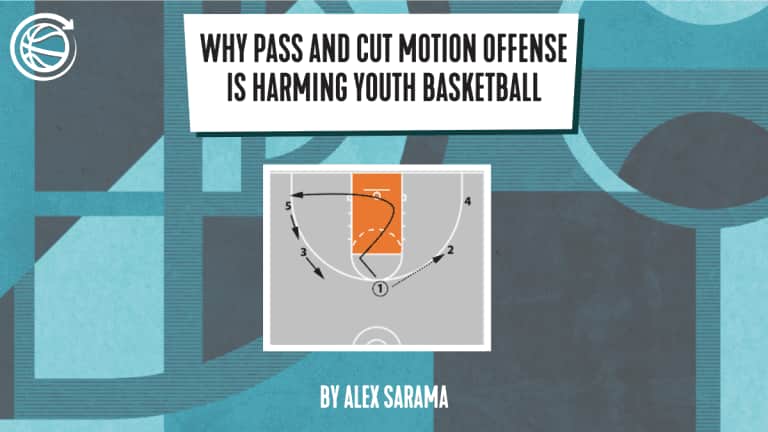
This article breaks down why pass and cut motion offense limits youth player development, and explores better ways to teach spacing, decision-making, and offensive creativity.
May 1, 2024
Alex Sarama
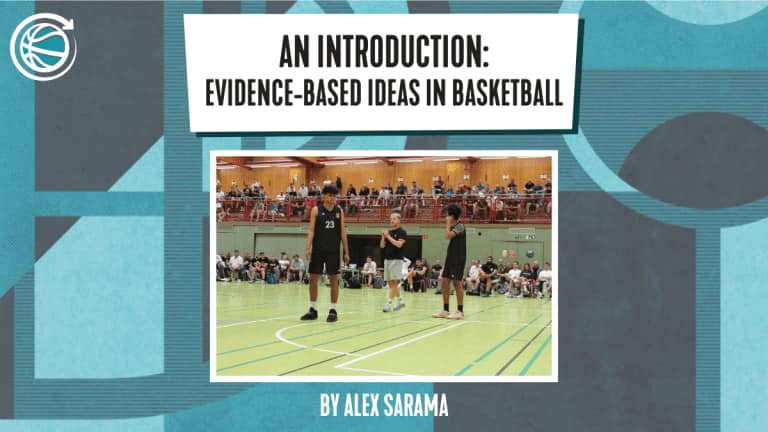
Approaches within the basketball industry are predominantly based upon experiential knowledge and traditions.


