

How to Add Practice Variability To Build Smarter, More Adaptable Players





In the quest to develop well-rounded basketball players, embracing variability in practice is CRUCIAL. But why should coaches move away from rigid, highly-structured drills and incorporate more dynamic, unpredictable scenarios into their practice sessions?
The answer lies in how skills are best transferred to real-game situations.
- Perception-Action Coupling: In the game, perception and action are completely intertwined. Players never act without perceiving information within their environment. With all the traditional drills in basketball completely ignoring the importance of perception, coaches are not appreciating how important specifying information is within the game environment that the players need to pick-up in order to find an effective movement solution.
- Adaptability Through Exploration: You’ve heard the phrase “Every game is different”. Well, every single possession is different, too. Adding variability helps players explore the different affordances (opportunities for action) that are available to them.
- Contextual Interference: This is an old information-processing term that is still relevant within a contemporary approach. Essentially, by practicing in diverse conditions it helps players become more skilful as they learn to solve movement problems in different ways.
- Developing Resiliency Under Pressure: Building skilful, adaptable players starts by putting them in unpredictable situations in practice. If players have never trained within the storm, how can you expect them to succeed in the real thing?
Practical Ways to Add Variability
Some easy methods to incorporate variability include:
-
Changing start positions in activities
-
Altering player spacing each repetition
-
Introducing time or scoring constraints
These adjustments ensure players regularly face new problems to solve, accelerating their ability to adapt in real-time.
Variability Equals Better Problem-Solvers
At the end of the day, more variability enhances the ability of your players to solve problems. And problem-solving is the very essence of the game. Players who frequently encounter novel situations in practice develop better perception-action couplings, allowing them to read the game more effectively in real-time.
Look at how different all these possessions are. Will the players be able to better adapt to these same or similar problems in the game if they have seen them prior at practice?




In the quest to develop well-rounded basketball players, embracing variability in practice is CRUCIAL. But why should coaches move away from rigid, highly-structured drills and incorporate more dynamic, unpredictable scenarios into their practice sessions?
The answer lies in how skills are best transferred to real-game situations.
- Perception-Action Coupling: In the game, perception and action are completely intertwined. Players never act without perceiving information within their environment. With all the traditional drills in basketball completely ignoring the importance of perception, coaches are not appreciating how important specifying information is within the game environment that the players need to pick-up in order to find an effective movement solution.
- Adaptability Through Exploration: You’ve heard the phrase “Every game is different”. Well, every single possession is different, too. Adding variability helps players explore the different affordances (opportunities for action) that are available to them.
- Contextual Interference: This is an old information-processing term that is still relevant within a contemporary approach. Essentially, by practicing in diverse conditions it helps players become more skilful as they learn to solve movement problems in different ways.
- Developing Resiliency Under Pressure: Building skilful, adaptable players starts by putting them in unpredictable situations in practice. If players have never trained within the storm, how can you expect them to succeed in the real thing?
Practical Ways to Add Variability
Some easy methods to incorporate variability include:
-
Changing start positions in activities
-
Altering player spacing each repetition
-
Introducing time or scoring constraints
These adjustments ensure players regularly face new problems to solve, accelerating their ability to adapt in real-time.
Variability Equals Better Problem-Solvers
At the end of the day, more variability enhances the ability of your players to solve problems. And problem-solving is the very essence of the game. Players who frequently encounter novel situations in practice develop better perception-action couplings, allowing them to read the game more effectively in real-time.
Look at how different all these possessions are. Will the players be able to better adapt to these same or similar problems in the game if they have seen them prior at practice?




check what's trending
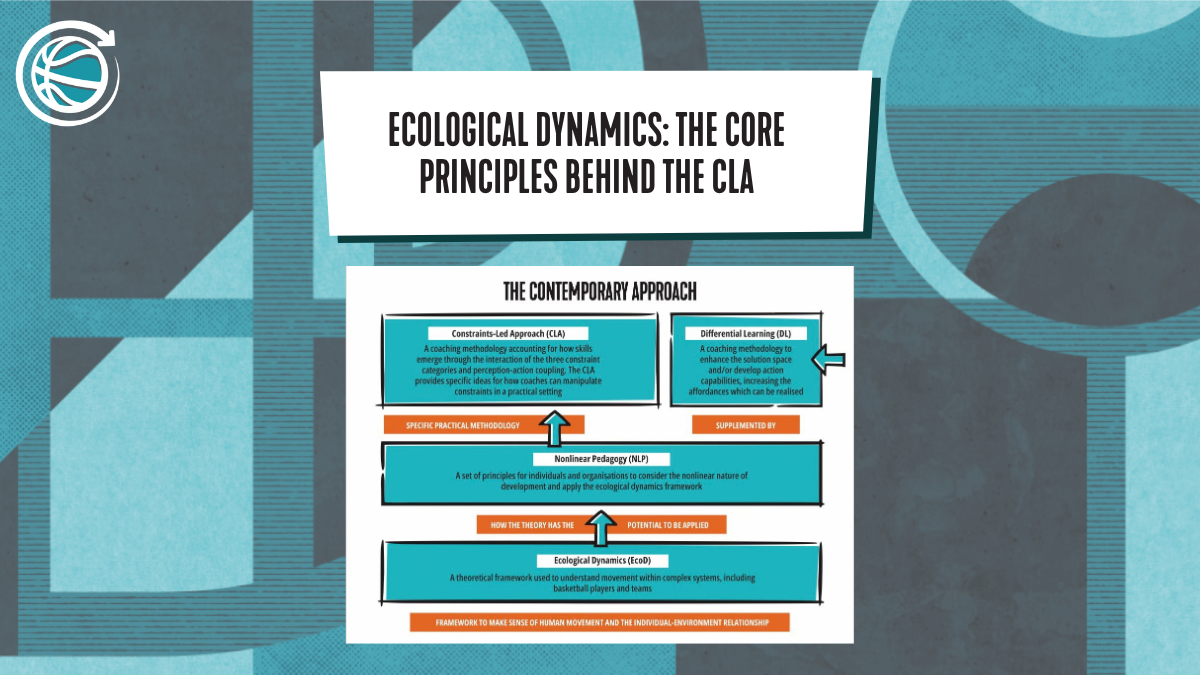
What is ecological dynamics and how is it connected to a constraints-led approach?
Dec 8, 2025
George Vaz

Are you searching for the best small sided games (SSGs) to improve your basketball practices? Want to replace boring, low-transfer drills with competitive games that actually develop player decision-making and in-game skills?
In this post, I’m sharing my top 5 favorite small-sided basketball games—designed to teach core concepts like closeouts, pick-and-roll, advantage creation, and transition offense and defense. These basketball SSGs are intense, purposeful, and built around real-game actions.
Whether you're coaching youth basketball, high school, or pros, these top small sided games will make your sessions more effective, more engaging, and more fun—for both players and coaches.
Let’s break down each game and how it can transform your practices.
Aug 4, 2025
George Vaz

Whether you’re coaching in the NBA, EuroLeague, or youth basketball, one thing remains universally true: the worst transition offense is still more efficient than the best half-court offense. Yet, many teams still struggle to fully capitalize on transition opportunities, often opting to slow down the game instead of pushing the pace. The question is, why? By running more intentionally, teams can create easier scoring opportunities. So why do some teams hesitate?
Apr 7, 2025
George Vaz
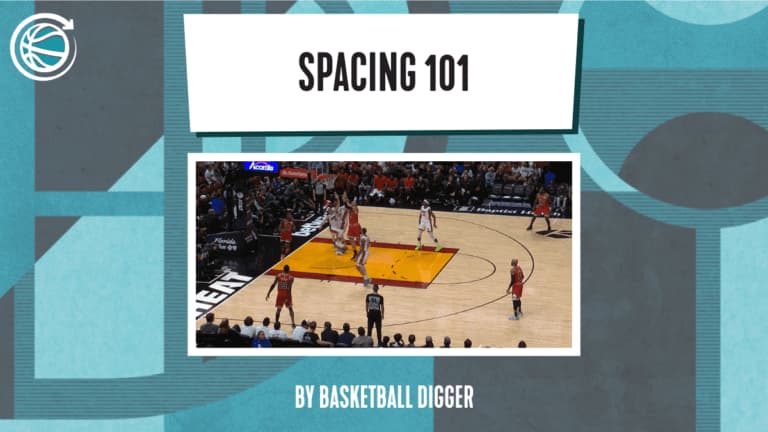
Spacing has changed the game. NBA offenses today look nothing like they did in the ’90s—more threes, better efficiency, and smarter shot selection. But why? The key lies in how teams use space to create and capitalize on advantages.
Mar 31, 2025
Simon Caret
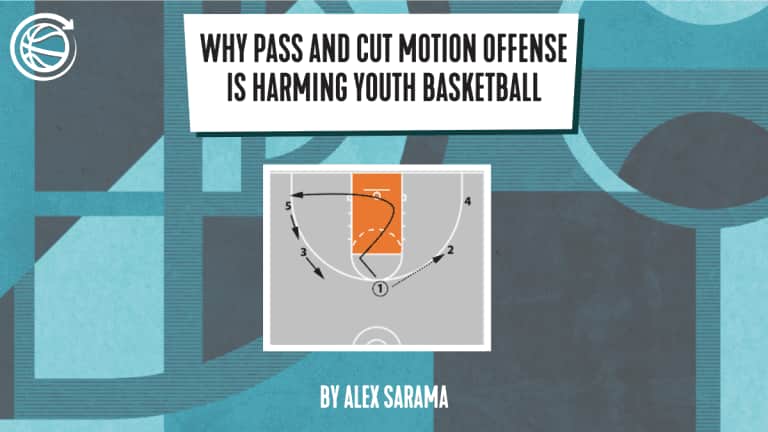
This article breaks down why pass and cut motion offense limits youth player development, and explores better ways to teach spacing, decision-making, and offensive creativity.
May 1, 2024
Alex Sarama
Approaches within the basketball industry are predominantly based upon experiential knowledge and traditions.


