

Getting Buy-In for the CLA: A Guide for Basketball Coaches





A big hurdle to overcome in making the leap into utilizing the CLA is the pushback you can receive from those on the outside such as parents administrators and other coaches. The players themselves are often the easiest – from youth to pro – as they immediately recognize the value this type of training provides!
With the dominant approach being so entrenched at all levels of basketball, everyone will have established expectations on how a coach is meant to coach in practice, or what they do on the sidelines during a game.
Setting Expectations with Parents
Therefore, the first advice we offer to coaches working with parents who have never seen a constraints-led approach, is to clearly set expectations for all parties involved. When you are going to introduce a different way of doing things, it is critical to first have this conversation. Present on what a constraints-led approach is, why it provides greater value to the traditional things they have seen, as well as all the successful teams in basketball now using it.
Using Everyday Analogies to Build Understanding
When bringing parents in on the conversation, it can be helpful to use an analogy to everyday life such as the example below. This great idea came from Art Errickson in our membership community!

Using everyday examples of the process of learning provides a framework all can relate to. This may help them understand why using a more ecological approach can be beneficial when it comes to coaching their children.
Gaining Buy-In from Other Coaches
When it comes to “selling a CLA to other coaches”, setting expectations with your coaching colleagues can be approached in a similar manner. At Transforming, we often start our coach education in clinics around the world by asking the coaches about a problem they are having trouble solving. For example, the principle of play to be active in the gaps with defensive positioning off the ball. What has the coach tried doing to implement this? This may often lead to a typical answer such as instructing their players on on the importance of moving when they don’t have the ball, pairing this with a traditional drill like a shell drill.
What we can do now is offer the alternative; a CLA activity with a constraint that may invite the desired behavior to become more attractive. For example, if the principle of play is being in the gaps, any time the defense neutralize a drive (e.g. forcing a dribble pick-up or turnover) through good gap positioning, they earn three bonus points. This would incentivize each player to be highly attuned to ways in which they can optimize their off ball movement to offer appropriate help on drives.
Community Ideas for Building Buy-In
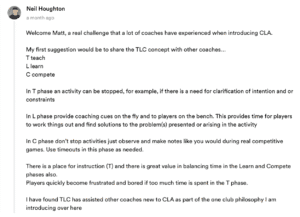
Here are two more great ideas from Transforming members for getting buy-in from other coaches in your program who are new to these ideas…





A big hurdle to overcome in making the leap into utilizing the CLA is the pushback you can receive from those on the outside such as parents administrators and other coaches. The players themselves are often the easiest – from youth to pro – as they immediately recognize the value this type of training provides!
With the dominant approach being so entrenched at all levels of basketball, everyone will have established expectations on how a coach is meant to coach in practice, or what they do on the sidelines during a game.
Setting Expectations with Parents
Therefore, the first advice we offer to coaches working with parents who have never seen a constraints-led approach, is to clearly set expectations for all parties involved. When you are going to introduce a different way of doing things, it is critical to first have this conversation. Present on what a constraints-led approach is, why it provides greater value to the traditional things they have seen, as well as all the successful teams in basketball now using it.
Using Everyday Analogies to Build Understanding
When bringing parents in on the conversation, it can be helpful to use an analogy to everyday life such as the example below. This great idea came from Art Errickson in our membership community!
Using everyday examples of the process of learning provides a framework all can relate to. This may help them understand why using a more ecological approach can be beneficial when it comes to coaching their children.
Gaining Buy-In from Other Coaches
When it comes to “selling a CLA to other coaches”, setting expectations with your coaching colleagues can be approached in a similar manner. At Transforming, we often start our coach education in clinics around the world by asking the coaches about a problem they are having trouble solving. For example, the principle of play to be active in the gaps with defensive positioning off the ball. What has the coach tried doing to implement this? This may often lead to a typical answer such as instructing their players on on the importance of moving when they don’t have the ball, pairing this with a traditional drill like a shell drill.
What we can do now is offer the alternative; a CLA activity with a constraint that may invite the desired behavior to become more attractive. For example, if the principle of play is being in the gaps, any time the defense neutralize a drive (e.g. forcing a dribble pick-up or turnover) through good gap positioning, they earn three bonus points. This would incentivize each player to be highly attuned to ways in which they can optimize their off ball movement to offer appropriate help on drives.
Community Ideas for Building Buy-In
Here are two more great ideas from Transforming members for getting buy-in from other coaches in your program who are new to these ideas…




check what's trending

What is ecological dynamics and how is it connected to a constraints-led approach?
Dec 8, 2025
George Vaz

Are you searching for the best small sided games (SSGs) to improve your basketball practices? Want to replace boring, low-transfer drills with competitive games that actually develop player decision-making and in-game skills?
In this post, I’m sharing my top 5 favorite small-sided basketball games—designed to teach core concepts like closeouts, pick-and-roll, advantage creation, and transition offense and defense. These basketball SSGs are intense, purposeful, and built around real-game actions.
Whether you're coaching youth basketball, high school, or pros, these top small sided games will make your sessions more effective, more engaging, and more fun—for both players and coaches.
Let’s break down each game and how it can transform your practices.
Aug 4, 2025
George Vaz

Whether you’re coaching in the NBA, EuroLeague, or youth basketball, one thing remains universally true: the worst transition offense is still more efficient than the best half-court offense. Yet, many teams still struggle to fully capitalize on transition opportunities, often opting to slow down the game instead of pushing the pace. The question is, why? By running more intentionally, teams can create easier scoring opportunities. So why do some teams hesitate?
Apr 7, 2025
George Vaz
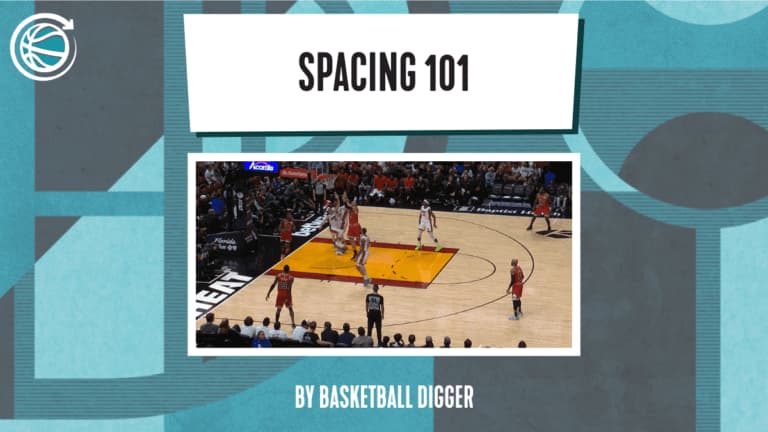
Spacing has changed the game. NBA offenses today look nothing like they did in the ’90s—more threes, better efficiency, and smarter shot selection. But why? The key lies in how teams use space to create and capitalize on advantages.
Mar 31, 2025
Simon Caret
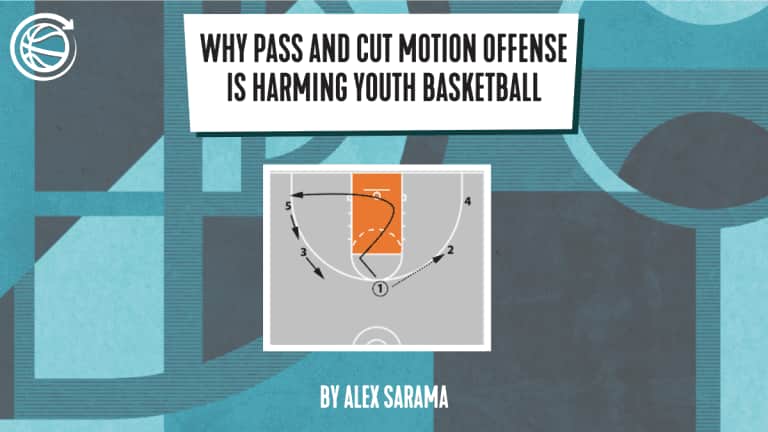
This article breaks down why pass and cut motion offense limits youth player development, and explores better ways to teach spacing, decision-making, and offensive creativity.
May 1, 2024
Alex Sarama
Approaches within the basketball industry are predominantly based upon experiential knowledge and traditions.


