


Idea clave para entrenadores
An exit screen helps a driver or cutter return to perimeter space. The receiver can use it for a shot, while the screener must remain alert to a slip if defenders commit to the receiver. Live practice allows both players to respond to how the defense handles the action.
Leer la guía: Conceptual OffenseHow does Steph Curry get so wide open after driving, kicking and then sprinting out to relocate for a shot?
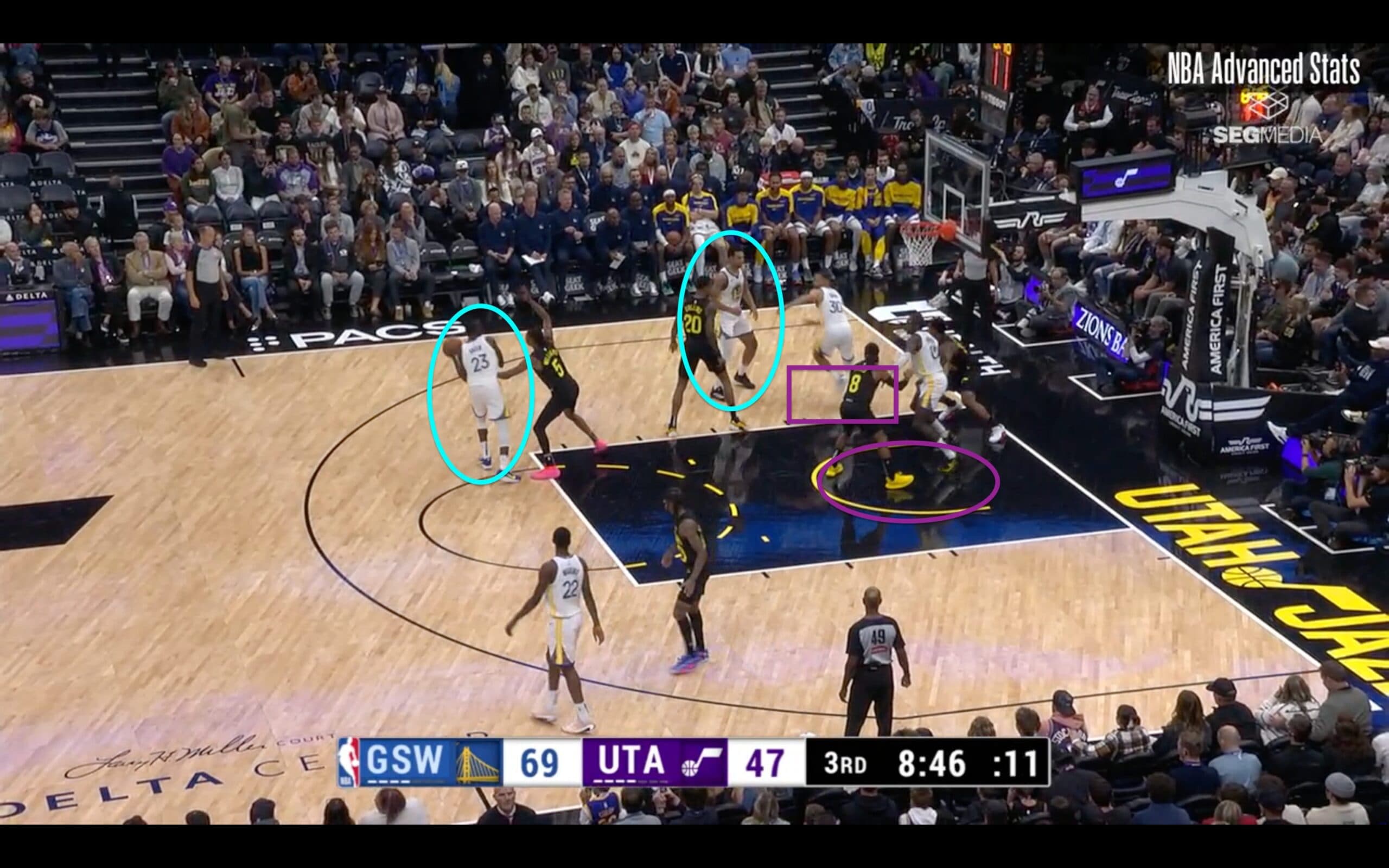
An exit screen is a screen used to send a driver or a cutter back out to the 3PT line, usually for a shot.
The Golden State Warriors use this principle of play effectively with Steph Curry after he drives into the paint and passes the ball back out. Usually it is a non-shooter such as Draymond Green setting an exit screen for Curry to get back out to space. Players say all the time that when Steph gives the ball up, that is when he is most dangerous.
In this learning video you will see Steph receive the ball in the corner in many different ways: continuation of a set play, cut/ drive and space to corner, or through triggers. Note that in a lot of these actions for the Warriors, both defenders will sometimes jump out to Curry to prevent the open shot. The slip out for the screener then becomes a great option.
How to Teach Exit Screens
1-on-1+2 Exit, Advantage start
Constraints:
- Shooter starts on the block, screener in short corner, mid range area, and passer starts at the elbow.
- The defender starts inside the smile.
- Live after the shooter moves.
Constraints:
Add = defender starts with arm touching offensive player - less of an advantage
Add = 1 dribble allowed to create space
Add = a block is 1 point
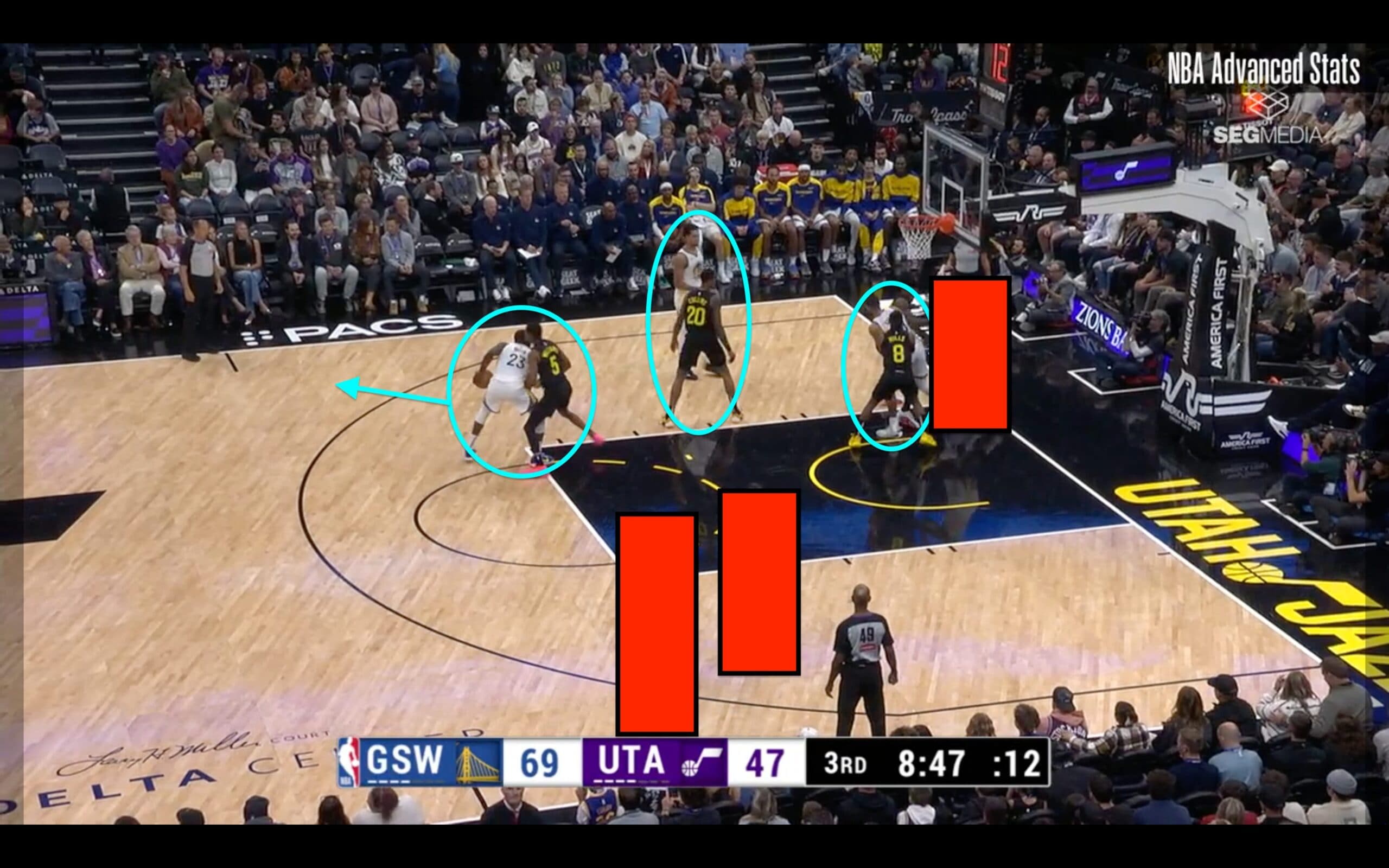
3-on-3, Exit screen Start
In this game you can take this part of the clip and simplify the task by removing players. It is essentially the same game as above but now we have more players. The passer could choose to reject and drive to the basket. The screener could slip the screen.
Rules:
- 1 offensive player starts on the block. Other 2 offensive players are in 2-side spacing.
- Must set an Exit screen.
Constraints:
Add = 6 seconds to score
Add = Player on block will start from an advantage start on the opposite side of the floor.
Instead of starting with the exit screen, you could start this small-sided game with a drive where the help defender would come over to help and take away the lay up. The offense could then pass out to the 2 side and receive an exit screen, like below. Again, this would make it more realistic and game-like.
How to Use the Screen
- Set Up the Screen: Change of Pace & Direction: Teach DECEPTION. Read the Defender: If the defender is going OVER, curl up. If they go under, fade or flare. Stay Connected: Shoulder to shoulder coming off the screen.
- Read & React to the Defense If the defense anticipate and switch early, screener can slip.
- Be Ready to Make a Play Whether you are open for the shot or 2 players gravitate to you, be ready to shoot, pass or drive.
- Communication Make a Connection: Non-Verbal Cues. Eye contact or slight hand signals.
An exit screen is a highly effective way to free up shooters while also creating opportunities for the screener. By incorporating small-sided games like the 1-on-1+2 and 3-on-3 variations, players can develop a deeper understanding of how to use and react to exit screens in dynamic, game-like situations. These SSGs not only help refine shooting and spacing but also encourage decision-making under defensive pressure. By layering these concepts into your offensive framework—whether in conceptual play, set actions, or special situations like SOBs/BOBs—you give your team an added advantage in generating open looks. Keep reinforcing deception, reading the defense, and making quick decisions to maximize the effectiveness of exit screens in your offense.
Sigue desarrollándote como entrenador.
Conecta estas ideas con el Success Pathway, la videoteca de actividades, la comunidad de entrenadores y las sesiones mensuales en directo.
Descubre la membresíaCompártelo con otro entrenador
¿Conoces a alguien a quien le resultaría útil? Comparte este artículo.