

Common Triggers for a Conceptual Offense




Firstly, what is a trigger?
A trigger is an offensive action that will ‘trigger’ or cause the first domino to fall – creating an advantage.
The most common triggers are two-person actions, like a pick and roll or get. You can also have triggers involving more players, such as an off-ball screen or pistol. Furthermore, if your players are advanced in conceptual offense principles (ie. using coverage solutions, recognizing dominoes, etc) you might choose to have 3 or 4 player triggers that your team can quickly flow into based on arrival spacing. Such examples include double drags or staggers.
While there are a plethora of actions you can use to build your own conceptual offense, it is more important to focus on the coverage solutions of whatever triggers you choose to use with your team.
What is a coverage solution?
Coverage solution: How the offense reads the defense’s coverage and finds a ‘solution’ to create dominoes. ie. A pocket pass vs a show coverage will create a 4-on-3 dominoes scenario.
Mark Daugnault calls these ‘coverage attacks’ as an easier way to remember what they are versus what the defense does.
Below, we are going to show you some of our favorite triggers AND some options as possible coverage solutions that you can use with your team.
List of Triggers:
Turtle or Mouse: A 1-on-1 or “solo” against a poor defender. The idea is to create optimal spacing to attack the mismatch.
In U12, 1-on-1 could be the main or the only trigger needed, along with optimal spacing and dominoes principles.
Pick and Roll Spacings: Side, rub, clear, angle. Read more here about these spacings and how they differ.

Get/ DHO: Similar to a PnR but the ‘picker’ has the ball. When handing off before dribbling there are more coverage solutions available. For example, a pitch and slip or a keep.

Wide: Screen away. Could be done through the trail or from wing to corner with the ball at the top. Splits are another form of wide, but when the ball is in the high or low post.
If after a screen away, the defense is still able to keep offense in “neutral”, the screener can re-screen to set a flare AKA a Ricky.

Flare Screen: A screen sending the receiving player away from the ball.

Ghost screen: Player going to set the pick sprints through beyond the perimeter without making contact. The player in the next spot would have to cut the pop to prevent 1 defender from guarding 2.

Coaches can also choose to combine these triggers like in the example above. A ghost screen immediately followed by a flare screen.
With all these actions happening on the ball or in the next spacing spot away, there will need to be equal reactions from the other players to maintain effective spacing. These will include principles such as:
- Cut and slide
- Cut the pop (seen in the ghost screen example diagram)
- Push, pull, hold
- CAP: Cut and pop
The Goal of the Offense
Triggers and coverage solutions form the foundation of a dynamic, conceptual offense. Rather than memorizing endless set plays, teams should focus on understanding how each trigger can create the initial advantage and then playing out of dominoes. Whether it’s a simple 1-on-1 solo or a more complex multi-player action like a side pick and roll, the goal of a good offense remains the same: create and maintain dominoes until a high value shot presents itself. By teaching players to recognize coverages and find the appropriate coverage solution, coaches build the foundation of good offense.

Firstly, what is a trigger?
A trigger is an offensive action that will ‘trigger’ or cause the first domino to fall – creating an advantage.
The most common triggers are two-person actions, like a pick and roll or get. You can also have triggers involving more players, such as an off-ball screen or pistol. Furthermore, if your players are advanced in conceptual offense principles (ie. using coverage solutions, recognizing dominoes, etc) you might choose to have 3 or 4 player triggers that your team can quickly flow into based on arrival spacing. Such examples include double drags or staggers.
While there are a plethora of actions you can use to build your own conceptual offense, it is more important to focus on the coverage solutions of whatever triggers you choose to use with your team.
What is a coverage solution?
Coverage solution: How the offense reads the defense’s coverage and finds a ‘solution’ to create dominoes. ie. A pocket pass vs a show coverage will create a 4-on-3 dominoes scenario.
Mark Daugnault calls these ‘coverage attacks’ as an easier way to remember what they are versus what the defense does.
Below, we are going to show you some of our favorite triggers AND some options as possible coverage solutions that you can use with your team.
List of Triggers:
Turtle or Mouse: A 1-on-1 or “solo” against a poor defender. The idea is to create optimal spacing to attack the mismatch.
In U12, 1-on-1 could be the main or the only trigger needed, along with optimal spacing and dominoes principles.
Pick and Roll Spacings: Side, rub, clear, angle. Read more here about these spacings and how they differ.
Get/ DHO: Similar to a PnR but the ‘picker’ has the ball. When handing off before dribbling there are more coverage solutions available. For example, a pitch and slip or a keep.
Wide: Screen away. Could be done through the trail or from wing to corner with the ball at the top. Splits are another form of wide, but when the ball is in the high or low post.
If after a screen away, the defense is still able to keep offense in “neutral”, the screener can re-screen to set a flare AKA a Ricky.
Flare Screen: A screen sending the receiving player away from the ball.
Ghost screen: Player going to set the pick sprints through beyond the perimeter without making contact. The player in the next spot would have to cut the pop to prevent 1 defender from guarding 2.
Coaches can also choose to combine these triggers like in the example above. A ghost screen immediately followed by a flare screen.
With all these actions happening on the ball or in the next spacing spot away, there will need to be equal reactions from the other players to maintain effective spacing. These will include principles such as:
- Cut and slide
- Cut the pop (seen in the ghost screen example diagram)
- Push, pull, hold
- CAP: Cut and pop
The Goal of the Offense
Triggers and coverage solutions form the foundation of a dynamic, conceptual offense. Rather than memorizing endless set plays, teams should focus on understanding how each trigger can create the initial advantage and then playing out of dominoes. Whether it’s a simple 1-on-1 solo or a more complex multi-player action like a side pick and roll, the goal of a good offense remains the same: create and maintain dominoes until a high value shot presents itself. By teaching players to recognize coverages and find the appropriate coverage solution, coaches build the foundation of good offense.




check what's trending
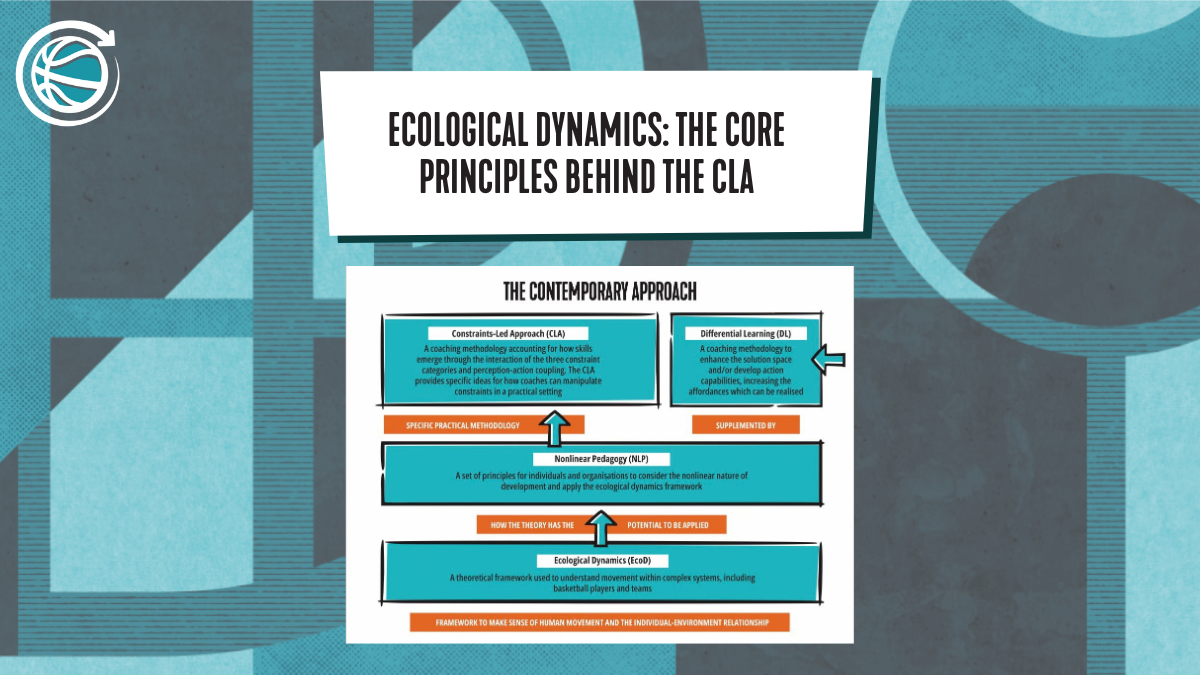
What is ecological dynamics and how is it connected to a constraints-led approach?
Dec 8, 2025
George Vaz

Are you searching for the best small sided games (SSGs) to improve your basketball practices? Want to replace boring, low-transfer drills with competitive games that actually develop player decision-making and in-game skills?
In this post, I’m sharing my top 5 favorite small-sided basketball games—designed to teach core concepts like closeouts, pick-and-roll, advantage creation, and transition offense and defense. These basketball SSGs are intense, purposeful, and built around real-game actions.
Whether you're coaching youth basketball, high school, or pros, these top small sided games will make your sessions more effective, more engaging, and more fun—for both players and coaches.
Let’s break down each game and how it can transform your practices.
Aug 4, 2025
George Vaz

Whether you’re coaching in the NBA, EuroLeague, or youth basketball, one thing remains universally true: the worst transition offense is still more efficient than the best half-court offense. Yet, many teams still struggle to fully capitalize on transition opportunities, often opting to slow down the game instead of pushing the pace. The question is, why? By running more intentionally, teams can create easier scoring opportunities. So why do some teams hesitate?
Apr 7, 2025
George Vaz
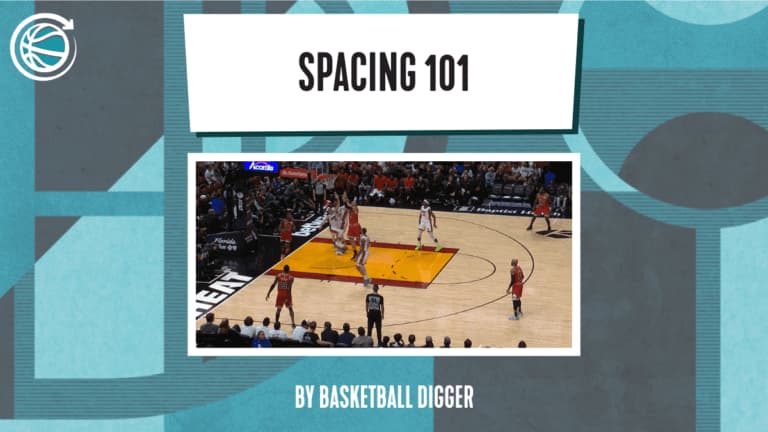
Spacing has changed the game. NBA offenses today look nothing like they did in the ’90s—more threes, better efficiency, and smarter shot selection. But why? The key lies in how teams use space to create and capitalize on advantages.
Mar 31, 2025
Simon Caret
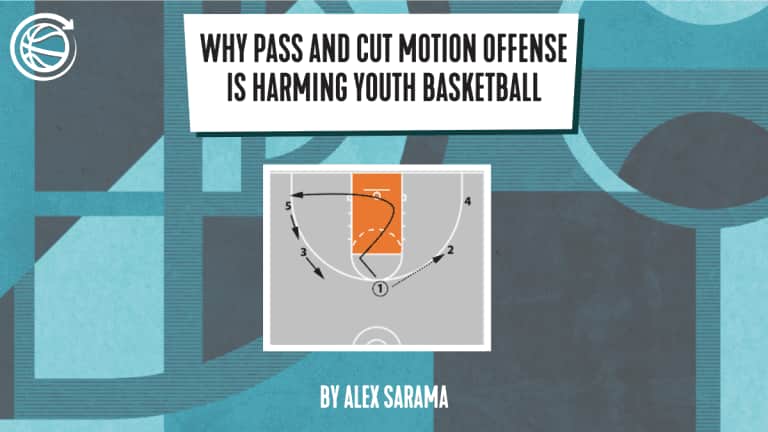
This article breaks down why pass and cut motion offense limits youth player development, and explores better ways to teach spacing, decision-making, and offensive creativity.
May 1, 2024
Alex Sarama
Approaches within the basketball industry are predominantly based upon experiential knowledge and traditions.


