Transforming Basketball
انضم إلى العضويةهل أنت عضو بالفعل؟ تسجيل الدخول

Coaching Guide

Conceptual Offense

Create an advantage. Keep it. Turn it into a high-value shot. A conceptual offense gives players shared principles for spacing, transition and attacking the defense, with freedom to find their own creative solutions.

4 min read
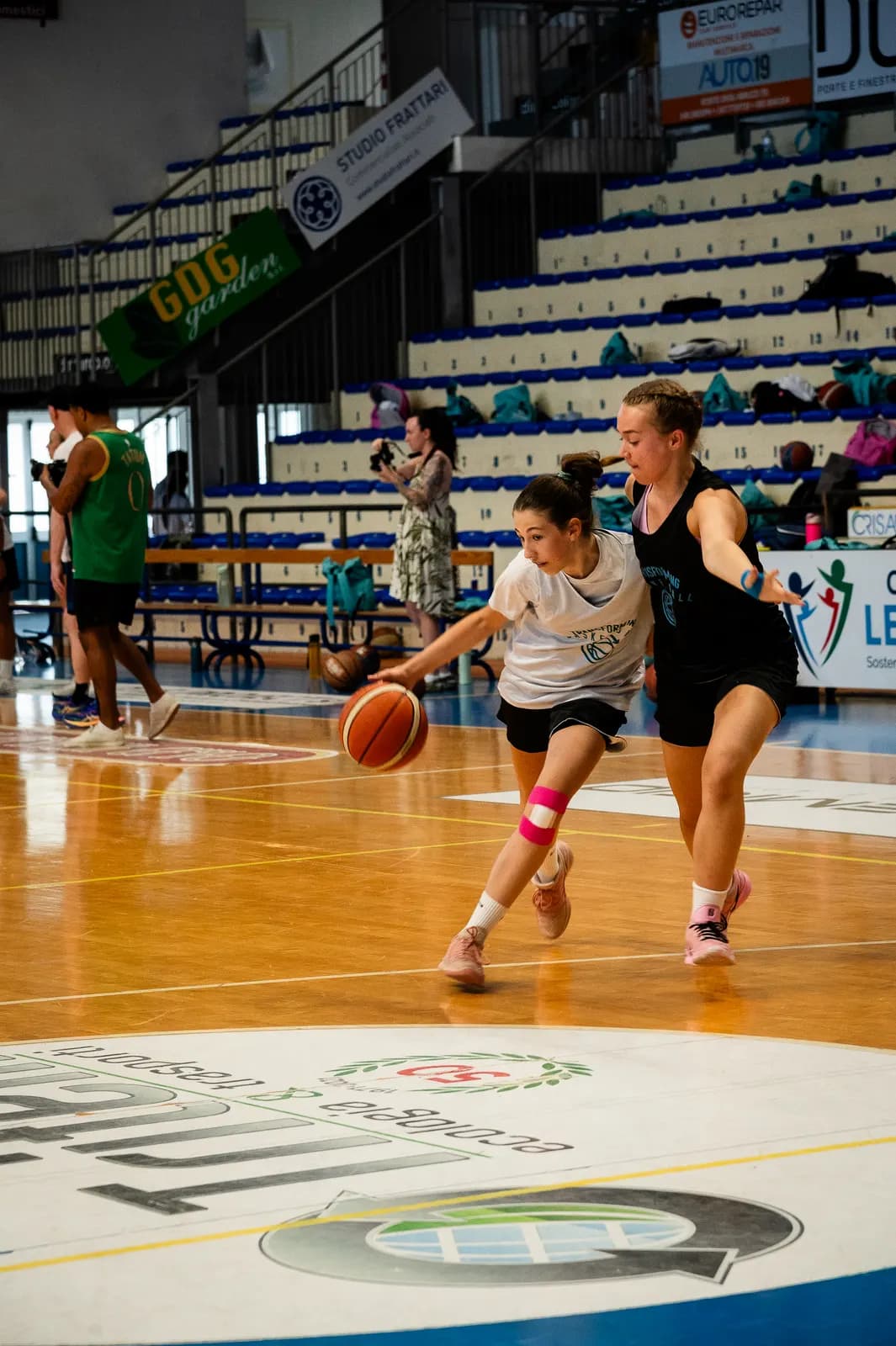
A ball-handler driving past a defender during a live game at the 2026 Transforming Basketball camp in Roseto

How is this different from motion or Read & React?

The key question is what prompts the next action.

  • An automatic movement

    In a pass-and-cut pattern, the pass tells the player to cut. The same movement can happen whether or not it helps the offense attack the defense.

  • A decision based on the defense

    In a conceptual offense, players use the defense to decide what comes next. A cut can exploit an opening; holding space can leave a teammate room to drive.

Shared principles give the team structure. Players learn to recognize when an action will create or keep an advantage.

Read the full comparison

Keep the advantage

An advantage might be a 2-on-1, a defender recovering on a closeout, or a matchup your player can attack. We call playing with that advantage “dominoes.”

Use three principles to keep the advantage:

How to Teach Advantage Basketball (Dominoes Explained)
  1. Zero seconds

    Shoot, pass or drive before the defense recovers. Holding the ball gives time for the defenders to get back to neutral.

  2. 1 can’t guard 2

    Find space where one defender cannot guard you and a teammate. That might mean a drift, lift or cut.

  3. The floor is lava

    After driving or cutting, get back out to space quickly so a teammate can attack the paint.

Create space when a teammate drives

When a drive draws help, the players without the ball need to give the ball-handler options.

These cutting principles allow a team to either maintain or convert a dominoes sequence. These are merely options based on spacing templates and the strengths and weaknesses of your players.

  • From the Conceptual Offense Playbook: corner cut and cut & slide (p.13).

    Corner cut

    On a middle drive, the corner player can cut behind the help toward the basket.

  • From the Conceptual Offense Playbook: corner cut and cut & slide (p.13).

    Cut and slide

    Against heavy help at the nail, a teammate slides into the vacated corner. The ball-handler can finish, find the cutter or pass to the corner.

Diagrams: Conceptual Offense Playbook, p.13The Conceptual Offense Playbook

Create the advantage before the defense is set

After a rebound, the player with the ball can push or pass ahead. Teammates sprint to create space for the next decision. Filling a corner and the wing on the same side creates a two side: two receivers the defense must account for.

If the defense loads toward the ball, a skip to that two side can start dominoes. If no advantage appears, flow into a trigger from where the players arrive. There is no need to stop and move everyone to a prescribed starting spot.

Practice constraint: Make scores within five seconds of gaining possession worth double. Watch whether players find an early advantage and still choose a shot within their range.

Explore transition offense
  • From the Conceptual Offense Playbook: flatten and free-throw two side (p.26).

    Flatten

  • From the Conceptual Offense Playbook: flatten and free-throw two side (p.26).

    Free-throw two side

Diagrams: Conceptual Offense Playbook, p.26

No advantage? Use a trigger

A trigger is an action that creates the first advantage. Start with actions that suit your players, then develop solutions to the way the defense guards them.

A Better Alternative to Set Plays in Youth Basketball - Triggers
  1. 1-on-1

    Space the floor and attack a matchup. This can be the main trigger for an U12 team.

  2. Pick and roll

    The action creates different opportunities against different coverages. A pocket pass against a show can create a 4-on-3.

  3. Get / handoff

    Pass to a teammate and follow your pass into a handoff. A keep or pitch-and-slip gives the offense other ways to attack.

Explore common triggers

Teach Answers to Every Single Coverage

Knowing the action is only the beginning. Players also need to recognize how the defense is guarding it.

  • Reject

    If the defense opens a path away from the screen, the handler can attack it. The player is looking for an opening, not rejecting on command.

  • Short roll

    Against a show or blitz, the screener can become a receiver behind the two defenders. The next decision depends on where the help comes from.

  • Read the tag

    If an off-ball defender helps on the roller, a teammate becomes available. Without that help, the pass to the roller may be open.

Coverage solutions differ based on how you are trying to punish or prevent certain coverages. Just some basic examples of coverages in a pick and roll include drop, under, down, switch, show or blitz. The offense should have an answer for every type of coverage with clearly defined coverage solutions.

  • From the Conceptual Offense Playbook: crack angle and reject (p.64).

    Crack angle

  • From the Conceptual Offense Playbook: crack angle and reject (p.64).

    Reject

Diagrams: Conceptual Offense Playbook, p.64

Which shots are you trying to create?

Use Mike MacKay’s ROB: in Range, Open and Balanced. Prioritize rim finishes and open catch-and-shoot opportunities within each player’s range. For younger players, that may mean a shorter shot rather than a three.

Try it in practice

The one-opportunity constraint

Play any format from 3-on-3 to 5-on-5, with the offense constrained to running one, or multiple, triggers. However, the offense only has one opportunity to create dominoes from the initial trigger. If they are still neutral after running the trigger, this means they were not intentional enough with using a coverage solution.

Alex explains the activity

Where should you start with your team?

Start with shot selection, dominoes and one trigger that suits your players. You can build from those foundations without introducing every action at once.

  1. Define Your Shot Quality

    Use the ROB concept described above, or gold, silver, bronze medals. Gold = a rim finish or FT, silver = a catch and shoot 3PT, bronze = a non-rim two or off the dribble 3PT.

  2. Play with an advantage

    Use temporary advantage games (e.g. 3-on-2+1) which allow players to refine dominoes habits: zero seconds, 1 can’t guard 2 and the floor is lava.

  3. Choose one trigger

    For an U12 team, 1-on-1 may be enough to begin with. As players develop, explore how their chosen action works against different defensive coverages.

Explore conceptual offense

Four resources to help you teach it.

Keep learning

Free

Conceptual Playbook

Shared principles to help your team create, maintain, and convert advantages.

سنرسل إليك المورد عبر البريد الإلكتروني، مع أفكار تدريبية من حين لآخر. يمكنك إلغاء الاشتراك في أي وقت. سياسة الخصوصية.

لغة المورد: الإنجليزية. التنزيل المجاني ورسائل البريد الإلكتروني اللاحقة متاحة حاليًا باللغة الإنجليزية فقط.

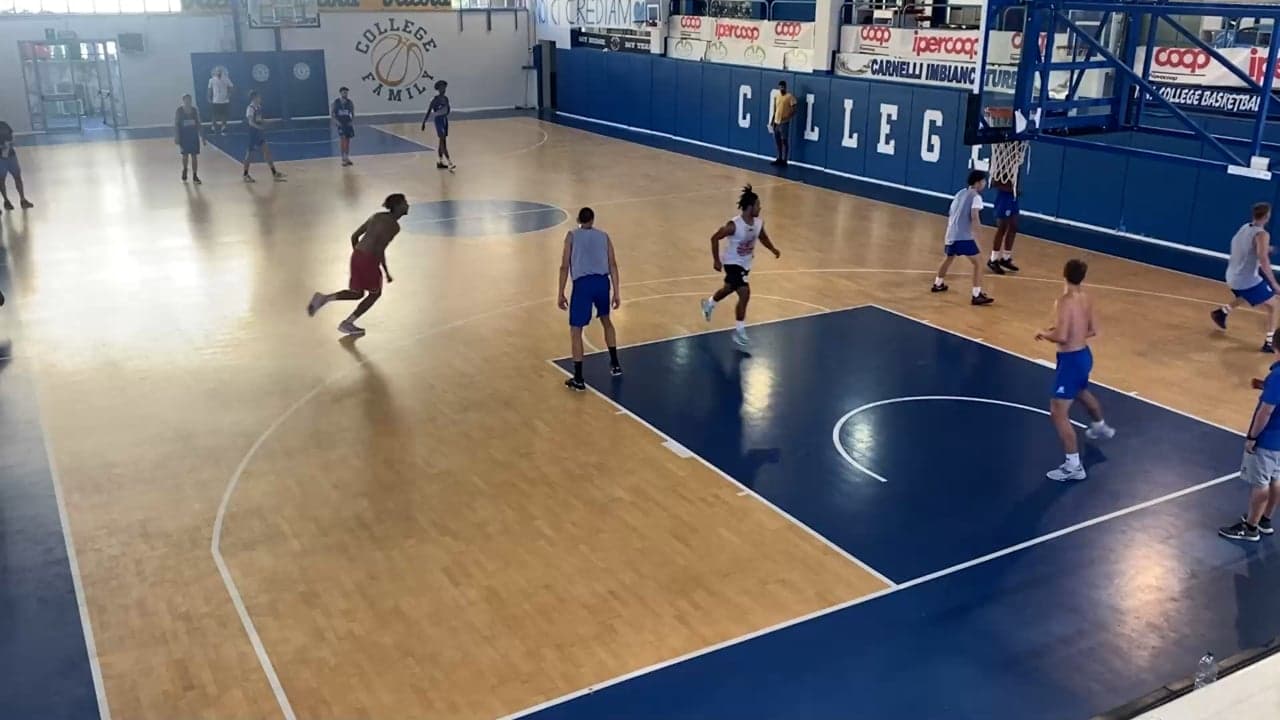
Still from the Implementing a Conceptual Offense clinic overview.

Implementing a Conceptual Offense

$49 USD

Take the Starter Kit onto the court. Alex explains how to teach shared principles, triggers and coverage solutions through game examples and small-sided games.

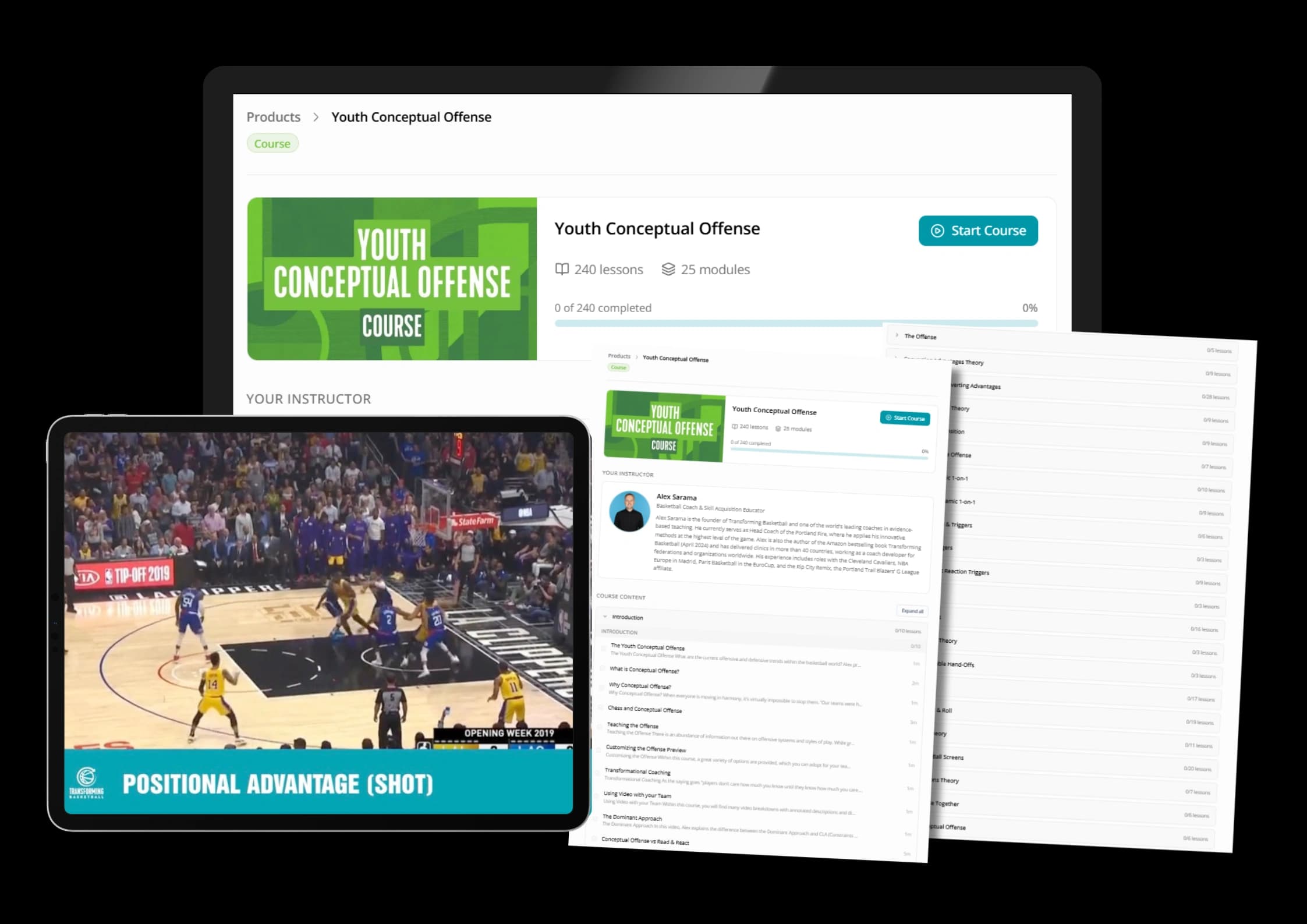
Youth Conceptual Offense course with lesson, game video and workbook previews.

Youth Conceptual Offense

$499 USD

Go deeper into teaching dominoes, creating advantages and developing your offense through small-sided games.