

The Coach’s Role in Practice
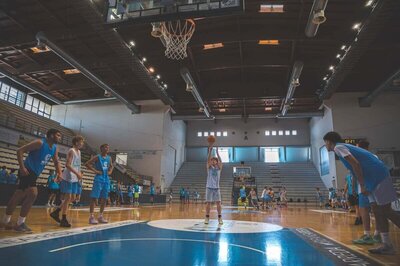




Coaching goes far beyond just calling plays and giving instructions. Much like players who have specific roles on a team, coaches too have distinct responsibilities during practice. While the traditional model often has the coach taking center stage with a loud whistle and top-down authority, the modern coaching philosophy emphasizes player autonomy and collaboration. In today’s game, particularly in high-level settings like the EuroLeague, coaches and players work together to craft strategies and adjust in real-time. Coach’s role in practice can cover different aspects as well!
Take, for instance, Olympiakos’ Georgios Bartzokas, who, in the heat of a close game, actively involves his players in decisions—asking them what play they prefer to run. This shift towards player involvement doesn’t just happen in games; it should be ingrained in practice as well.
In this post, we’ll dive into the key roles of a coach during practice, from designing dynamic drills to collaborating with players, and explore how fostering a more interactive and adaptable environment can help elevate both individual and team performance.
What is the role of the coach during practice?

Just as players have specific roles for a team, so too does the coach. Both the head coach and the assistants.
In a traditional environment, the coach with the loudest voice or the whistle will control the group. Players will stop and go when the coach says so. However, in a more modern approach that you see with many coaches both in games and in practice, players are having more autonomy and a clearer voice. You can observe this in timeouts during EuroLeagueand EuroCup games—they give excellent coverage of the timeouts. I particularly enjoy listening in to Georgios Bartzokas’ timeouts with Olympiakos. I observed him asking the players what play they wanted to run in the last two minutes of a close game! (Although he gave the illusion of choice by giving them an option of play A or play B, but still, you get the point.)
While it is true that coaching interventions are important, having players give their feedback when appropriate is just as important. After all, the players are out there on the court and can see and feel the game in real time more than the quickest eyes on the sidelines can. The same is true in a practice environment.
Coaching Implications:
Coaches should design practice tasks that present athletes with dynamic, unscripted problems, encouraging exploration and adaptation rather than rote repetition.
With this in mind, I want to create a list of what I believe are a coach’s key roles during a practice:
- Reffing: Coaches should make sure the same calls players will see in games are officiated in practice.
- Games Designer: Think Squid Game without the gruesome fate of the contestants. Coaches should design games/drills that replicate the game environment as much as possible. This will involve being creative, so take away information to focus players’ affordances on the intention you are teaching. i.e., if you want to work on the MIG/last, you might create a 1-on-1 game that simulates an offensive player attacking the basket, as the help defender must come over to protect the basket.
- Collaborator: A coach should work with their players and ask what the players think they need to work on. This creates rapport with the group and, like the example above, gives the illusion of choice.
Other Coaching Practices
1. Giorgos Bartzokas Collaborates with Players During Timeout
In this EuroLeague timeout, Olympiacos head coach Giorgos Bartzokas engages in a collaborative discussion with his players, allowing them to contribute to the strategic decisions. This approach exemplifies the modern coaching philosophy of fostering player autonomy and shared decision-making.
2. Sarunas Jasikevicius Executes a Game-Winning Play
Legendary coach Sarunas Jasikevicius demonstrates his tactical brilliance during a crucial timeout, designing a play that leads to a game-winning basket. His ability to communicate effectively and make decisive calls under pressure highlights the critical role of coaching during pivotal moments.
You can find this YouTube Shorts about his coaching tactic.
3. Timeout Strategies in High-Stakes Situations
This video delves into various timeout strategies employed by coaches during high-pressure situations, emphasizing the importance of clear communication, strategic planning, and player involvement in executing critical plays.
Recommendation
For coaches looking to improve their game strategy and enhance their team’s performance, I highly recommend checking out Transforming Basketball’s Game Coaching Resources. These resources offer a wealth of insights into effective game coaching, from practical drills to in-depth strategies that can help you understand the intricacies of game flow, decision-making, and team dynamics. These resources are a great addition to your coaching toolkit, providing you with actionable insights to take your coaching to the next level. You can find more details here: Game Coaching Resources PDF.
Additionally, if you’re interested in deepening your game coaching knowledge, the Game Coaching Workshop offered by Transforming Basketball is an invaluable opportunity. This workshop dives into key aspects of game coaching, from live coaching strategies to post-game analysis, and will provide you with new perspectives on how to approach your coaching responsibilities. It’s perfect for coaches of all levels who want to elevate their understanding of basketball coaching. Learn more and sign up here: Game Coaching Workshop.
Both of these resources will be great investments for any coach serious about improving their team’s in-game performance.




Coaching goes far beyond just calling plays and giving instructions. Much like players who have specific roles on a team, coaches too have distinct responsibilities during practice. While the traditional model often has the coach taking center stage with a loud whistle and top-down authority, the modern coaching philosophy emphasizes player autonomy and collaboration. In today’s game, particularly in high-level settings like the EuroLeague, coaches and players work together to craft strategies and adjust in real-time. Coach’s role in practice can cover different aspects as well!
Take, for instance, Olympiakos’ Georgios Bartzokas, who, in the heat of a close game, actively involves his players in decisions—asking them what play they prefer to run. This shift towards player involvement doesn’t just happen in games; it should be ingrained in practice as well.
In this post, we’ll dive into the key roles of a coach during practice, from designing dynamic drills to collaborating with players, and explore how fostering a more interactive and adaptable environment can help elevate both individual and team performance.
What is the role of the coach during practice?
Just as players have specific roles for a team, so too does the coach. Both the head coach and the assistants.
In a traditional environment, the coach with the loudest voice or the whistle will control the group. Players will stop and go when the coach says so. However, in a more modern approach that you see with many coaches both in games and in practice, players are having more autonomy and a clearer voice. You can observe this in timeouts during EuroLeagueand EuroCup games—they give excellent coverage of the timeouts. I particularly enjoy listening in to Georgios Bartzokas’ timeouts with Olympiakos. I observed him asking the players what play they wanted to run in the last two minutes of a close game! (Although he gave the illusion of choice by giving them an option of play A or play B, but still, you get the point.)
While it is true that coaching interventions are important, having players give their feedback when appropriate is just as important. After all, the players are out there on the court and can see and feel the game in real time more than the quickest eyes on the sidelines can. The same is true in a practice environment.
Coaching Implications:
Coaches should design practice tasks that present athletes with dynamic, unscripted problems, encouraging exploration and adaptation rather than rote repetition.
With this in mind, I want to create a list of what I believe are a coach’s key roles during a practice:
- Reffing: Coaches should make sure the same calls players will see in games are officiated in practice.
- Games Designer: Think Squid Game without the gruesome fate of the contestants. Coaches should design games/drills that replicate the game environment as much as possible. This will involve being creative, so take away information to focus players’ affordances on the intention you are teaching. i.e., if you want to work on the MIG/last, you might create a 1-on-1 game that simulates an offensive player attacking the basket, as the help defender must come over to protect the basket.
- Collaborator: A coach should work with their players and ask what the players think they need to work on. This creates rapport with the group and, like the example above, gives the illusion of choice.
Other Coaching Practices
1. Giorgos Bartzokas Collaborates with Players During Timeout
In this EuroLeague timeout, Olympiacos head coach Giorgos Bartzokas engages in a collaborative discussion with his players, allowing them to contribute to the strategic decisions. This approach exemplifies the modern coaching philosophy of fostering player autonomy and shared decision-making.
2. Sarunas Jasikevicius Executes a Game-Winning Play
Legendary coach Sarunas Jasikevicius demonstrates his tactical brilliance during a crucial timeout, designing a play that leads to a game-winning basket. His ability to communicate effectively and make decisive calls under pressure highlights the critical role of coaching during pivotal moments.
You can find this YouTube Shorts about his coaching tactic.
3. Timeout Strategies in High-Stakes Situations
This video delves into various timeout strategies employed by coaches during high-pressure situations, emphasizing the importance of clear communication, strategic planning, and player involvement in executing critical plays.
Recommendation
For coaches looking to improve their game strategy and enhance their team’s performance, I highly recommend checking out Transforming Basketball’s Game Coaching Resources. These resources offer a wealth of insights into effective game coaching, from practical drills to in-depth strategies that can help you understand the intricacies of game flow, decision-making, and team dynamics. These resources are a great addition to your coaching toolkit, providing you with actionable insights to take your coaching to the next level. You can find more details here: Game Coaching Resources PDF.
Additionally, if you’re interested in deepening your game coaching knowledge, the Game Coaching Workshop offered by Transforming Basketball is an invaluable opportunity. This workshop dives into key aspects of game coaching, from live coaching strategies to post-game analysis, and will provide you with new perspectives on how to approach your coaching responsibilities. It’s perfect for coaches of all levels who want to elevate their understanding of basketball coaching. Learn more and sign up here: Game Coaching Workshop.
Both of these resources will be great investments for any coach serious about improving their team’s in-game performance.




check what's trending
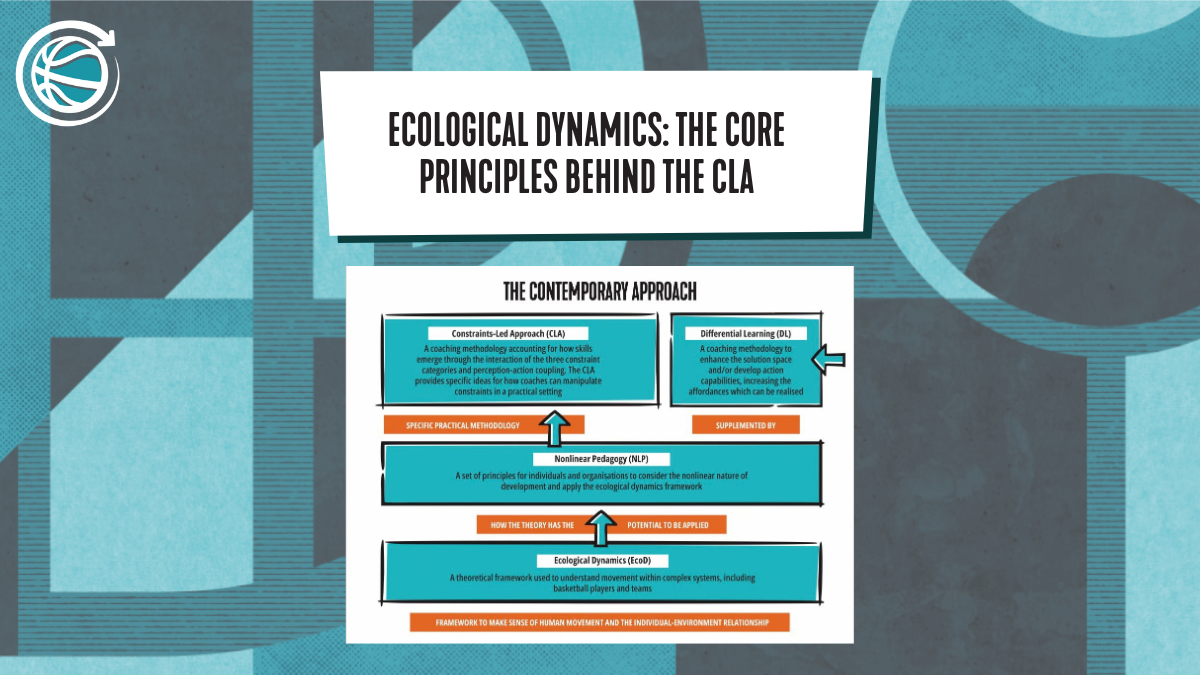
What is ecological dynamics and how is it connected to a constraints-led approach?
Dec 8, 2025
George Vaz

Are you searching for the best small sided games (SSGs) to improve your basketball practices? Want to replace boring, low-transfer drills with competitive games that actually develop player decision-making and in-game skills?
In this post, I’m sharing my top 5 favorite small-sided basketball games—designed to teach core concepts like closeouts, pick-and-roll, advantage creation, and transition offense and defense. These basketball SSGs are intense, purposeful, and built around real-game actions.
Whether you're coaching youth basketball, high school, or pros, these top small sided games will make your sessions more effective, more engaging, and more fun—for both players and coaches.
Let’s break down each game and how it can transform your practices.
Aug 4, 2025
George Vaz

Whether you’re coaching in the NBA, EuroLeague, or youth basketball, one thing remains universally true: the worst transition offense is still more efficient than the best half-court offense. Yet, many teams still struggle to fully capitalize on transition opportunities, often opting to slow down the game instead of pushing the pace. The question is, why? By running more intentionally, teams can create easier scoring opportunities. So why do some teams hesitate?
Apr 7, 2025
George Vaz
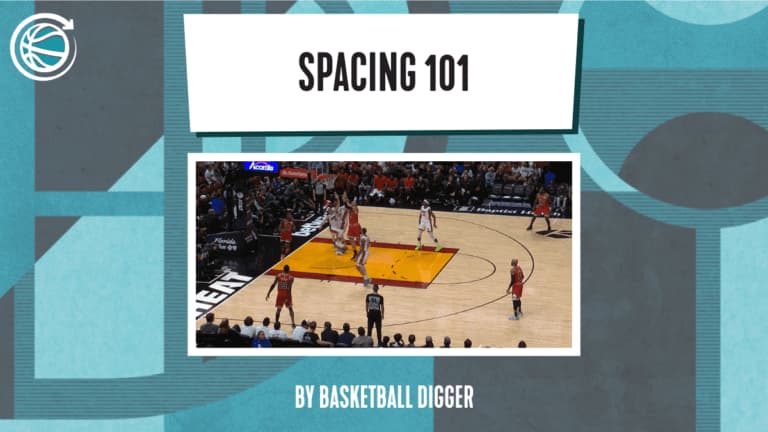
Spacing has changed the game. NBA offenses today look nothing like they did in the ’90s—more threes, better efficiency, and smarter shot selection. But why? The key lies in how teams use space to create and capitalize on advantages.
Mar 31, 2025
Simon Caret
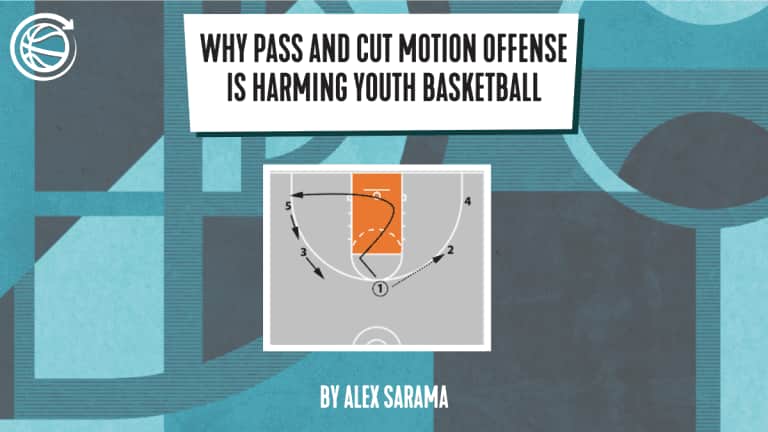
This article breaks down why pass and cut motion offense limits youth player development, and explores better ways to teach spacing, decision-making, and offensive creativity.
May 1, 2024
Alex Sarama
Approaches within the basketball industry are predominantly based upon experiential knowledge and traditions.


