

The Art of Off-Ball Screening




This blog provides an introduction into using off-ball screening actions. The idea is NOT to copy paste these ideas immediately into your offense, but provide a perspective of interesting off-ball screening concepts that could influence your half-court offense, dead ball sets, ATO design and more.
Within the blog, we explore the key details of creating advantages within off-ball screens, using NBA to highlight coverage solutions within each screening action.
How is the screen used?
A coverage solution is how the offense reads the defense and creates an advantage. In off-ball screening, this is related to the screener and receiver. It is worth noting that many of the off-ball screening actions shown below pair effectively with the use of the reject for the handler. This is a universal coverage solution that a handler should look to explore in virtually every scenario, out of every trigger. In the NBA, this is typically known as a “sneak drive”, when a handler rejects out of a screen-away or stagger scenario.
Below you will see three different screen-aways and three different coverages.
Fiebich is able to curl and attack the basket as Willams goes OVER the screen and the coverage is “stay with your own.”
Queta sets the away screen and Anderson point switches. Queta recognizes the affordance and slips the screen.
Hield does a great job of setting Pritchard up for a screen from the one of the best screen setters, Looney. Pritchard rides Hield until he decides at the last second to go under. Hield stops short for the 3PT shot.
There is never just one solution to the problem, which is part of what makes basketball such a dynamic sport. Here, for example, Hardy goes over to take away the 3PT shot, but Hield still finds an open shot as Looney makes enough contact on the screen to free him up.
Using Screens as a Teaching Tool
While knowing the names and types of off-ball screening actions can be useful, we believe youth coaches should simply focus on the most frequent screening actions: a wide (single screen-away), flare and stagger. This is all youth players need to know in order to play at a higher level.
Coaches should focus on how to teach players to read the defense in real-time and make decisions based on the affordances that appear.
One effective way to do this is through small-sided games (SSGs) that focus on a particular type of screen (e.g., flare or wide) and provide repetition without repetition in a live, variable context. This not only improves the players’ timing and communication but also sharpens their decision-making in dynamic situations.
Teaching Tips for Reading Coverage:
-
Ask, don’t always tell: Ask players, “What did you see?” after each possession involving a screen. Asking questions BEFORE direct instruction is a powerful tool. Reminder – it’s perfectly OK to instruct using principles of play. For example, “they switched the screen, you should have looked to slip or screen your own.”
-
Film breakdown: Show examples (like the clips above) where the same screen leads to different outcomes based on the defense’s actions.
-
Mix coverages in activities: Mix up the defensive coverage (switch, chase over, top lock, etc) so players are forced to focus on how the defense is guarding them.

This blog provides an introduction into using off-ball screening actions. The idea is NOT to copy paste these ideas immediately into your offense, but provide a perspective of interesting off-ball screening concepts that could influence your half-court offense, dead ball sets, ATO design and more.
Within the blog, we explore the key details of creating advantages within off-ball screens, using NBA to highlight coverage solutions within each screening action.
How is the screen used?
A coverage solution is how the offense reads the defense and creates an advantage. In off-ball screening, this is related to the screener and receiver. It is worth noting that many of the off-ball screening actions shown below pair effectively with the use of the reject for the handler. This is a universal coverage solution that a handler should look to explore in virtually every scenario, out of every trigger. In the NBA, this is typically known as a “sneak drive”, when a handler rejects out of a screen-away or stagger scenario.
Below you will see three different screen-aways and three different coverages.
Fiebich is able to curl and attack the basket as Willams goes OVER the screen and the coverage is “stay with your own.”
Queta sets the away screen and Anderson point switches. Queta recognizes the affordance and slips the screen.
Hield does a great job of setting Pritchard up for a screen from the one of the best screen setters, Looney. Pritchard rides Hield until he decides at the last second to go under. Hield stops short for the 3PT shot.
There is never just one solution to the problem, which is part of what makes basketball such a dynamic sport. Here, for example, Hardy goes over to take away the 3PT shot, but Hield still finds an open shot as Looney makes enough contact on the screen to free him up.
Using Screens as a Teaching Tool
While knowing the names and types of off-ball screening actions can be useful, we believe youth coaches should simply focus on the most frequent screening actions: a wide (single screen-away), flare and stagger. This is all youth players need to know in order to play at a higher level.
Coaches should focus on how to teach players to read the defense in real-time and make decisions based on the affordances that appear.
One effective way to do this is through small-sided games (SSGs) that focus on a particular type of screen (e.g., flare or wide) and provide repetition without repetition in a live, variable context. This not only improves the players’ timing and communication but also sharpens their decision-making in dynamic situations.
Teaching Tips for Reading Coverage:
-
Ask, don’t always tell: Ask players, “What did you see?” after each possession involving a screen. Asking questions BEFORE direct instruction is a powerful tool. Reminder – it’s perfectly OK to instruct using principles of play. For example, “they switched the screen, you should have looked to slip or screen your own.”
-
Film breakdown: Show examples (like the clips above) where the same screen leads to different outcomes based on the defense’s actions.
-
Mix coverages in activities: Mix up the defensive coverage (switch, chase over, top lock, etc) so players are forced to focus on how the defense is guarding them.




check what's trending

What is ecological dynamics and how is it connected to a constraints-led approach?
Dec 8, 2025
George Vaz

Are you searching for the best small sided games (SSGs) to improve your basketball practices? Want to replace boring, low-transfer drills with competitive games that actually develop player decision-making and in-game skills?
In this post, I’m sharing my top 5 favorite small-sided basketball games—designed to teach core concepts like closeouts, pick-and-roll, advantage creation, and transition offense and defense. These basketball SSGs are intense, purposeful, and built around real-game actions.
Whether you're coaching youth basketball, high school, or pros, these top small sided games will make your sessions more effective, more engaging, and more fun—for both players and coaches.
Let’s break down each game and how it can transform your practices.
Aug 4, 2025
George Vaz

Whether you’re coaching in the NBA, EuroLeague, or youth basketball, one thing remains universally true: the worst transition offense is still more efficient than the best half-court offense. Yet, many teams still struggle to fully capitalize on transition opportunities, often opting to slow down the game instead of pushing the pace. The question is, why? By running more intentionally, teams can create easier scoring opportunities. So why do some teams hesitate?
Apr 7, 2025
George Vaz
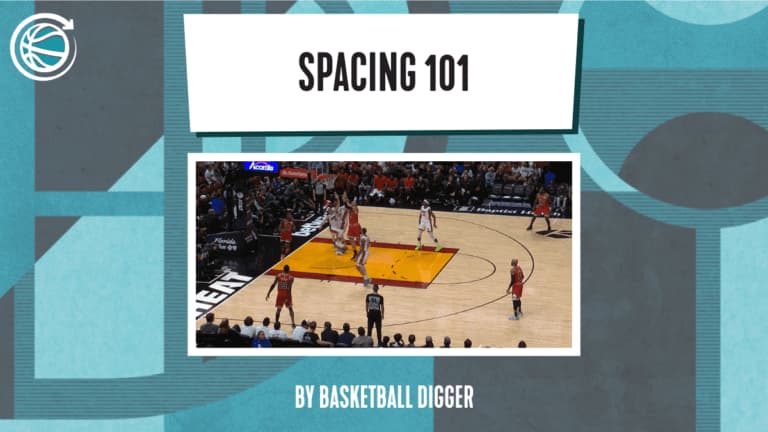
Spacing has changed the game. NBA offenses today look nothing like they did in the ’90s—more threes, better efficiency, and smarter shot selection. But why? The key lies in how teams use space to create and capitalize on advantages.
Mar 31, 2025
Simon Caret
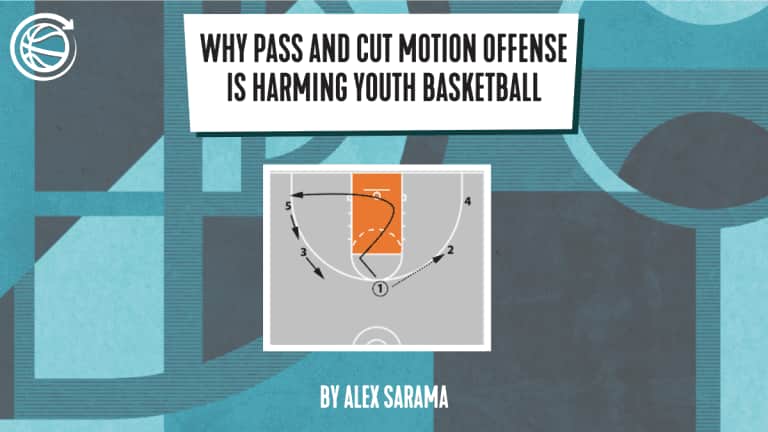
This article breaks down why pass and cut motion offense limits youth player development, and explores better ways to teach spacing, decision-making, and offensive creativity.
May 1, 2024
Alex Sarama
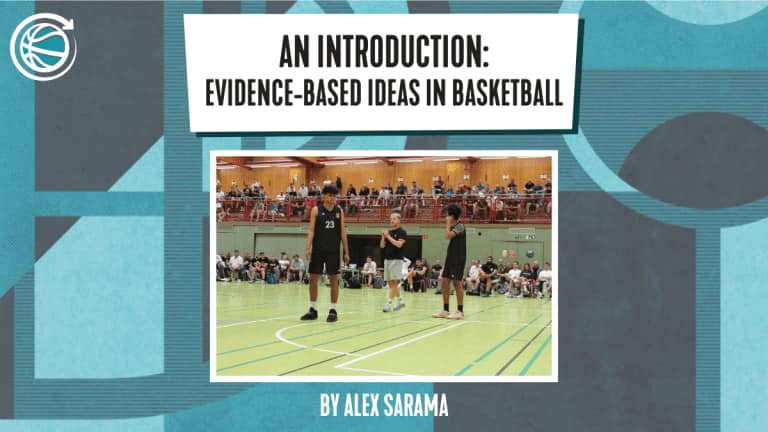
Approaches within the basketball industry are predominantly based upon experiential knowledge and traditions.


