

Warm-Up: Wrestling & Physicality – Using Combat Games to Build Essential Basketball Strength




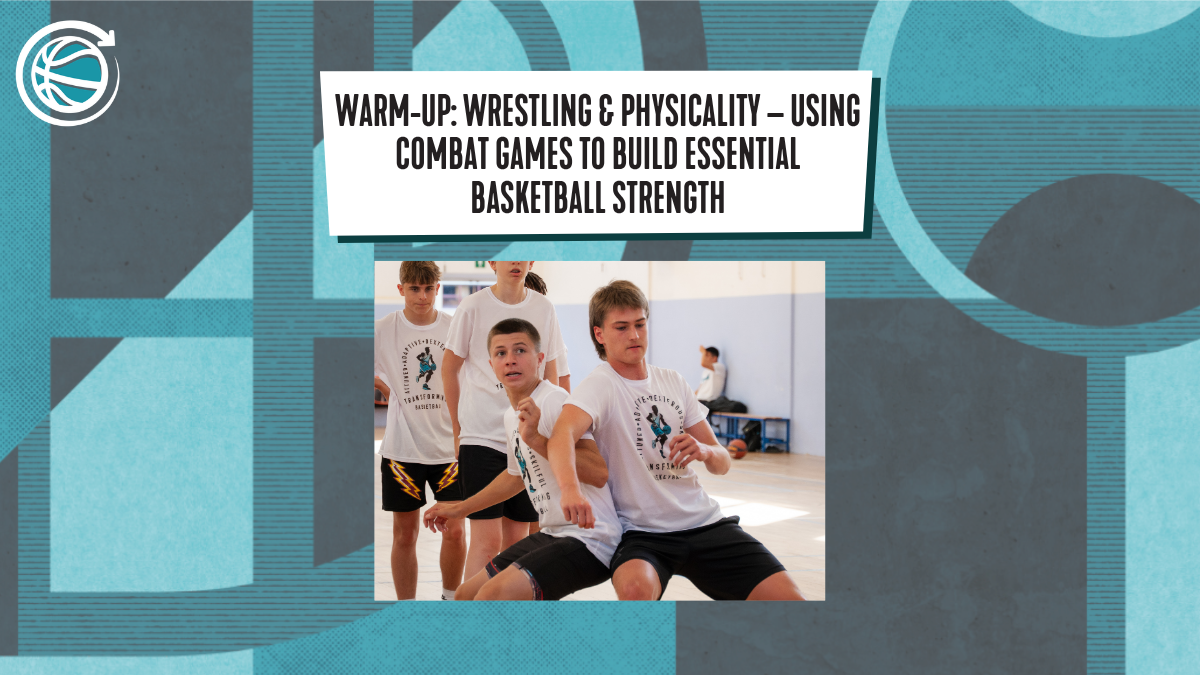
Are you building basketball players who shy away from contact, or robust athletes who thrive in the physical trenches of the game?
Combat games and functional strength are powerful tools for helping basketball players build the physical confidence, resilience, and contact-readiness they need to thrive in the modern game.
When we think of elite basketball, we naturally picture the finesse of a deep three-pointer or the fluid dexterity of a crossover. However, strip away the highlight-reel aesthetics, and basketball is an incredibly combative, contact-heavy sport. Every battle for a rebound is a wrestling match. Every drive into the paint requires the offensive player to absorb a heavy bump. Every post-up demands leverage, balance, and core stability against a resisting, unpredictable human being.
Yet, how do we traditionally prepare our athletes for this violent reality? We send them to the weight room to perform perfectly symmetrical squats, or we run them through sterile, unopposed layup lines. While traditional weightlifting is vital for building force potential, it completely fails to replicate the chaotic, human-to-human force expression required on the hardwood. To build truly anti-fragile basketball players, we must rethink our warm-ups and athletic development by introducing wrestling, grappling, and combat games.
The Gap Between the Weight Room and the Court
In a traditional strength and conditioning model, athletes train against inanimate objects. A barbell is heavy, but it does not aggressively push back or change its angle of resistance. However, when a player attacks the rim in a live game, they must navigate dynamic “perturbations” – sudden losses of balance caused by a rotating help defender.
If a player only ever experiences resistance in the controlled vacuum of a weight room, their degrees of freedom become frozen. When they inevitably collide with a defender in mid-air, they lack the movement vocabulary to contract, relax, and stabilize their bodies to finish the play. For instance, finishing against a taller, 6’8″ defender requires the offensive player to create meaningful contact, driving their shoulder through the defender’s chest to physically move them backward and create space. You simply cannot learn this specific timing and leverage without practicing against a live, resisting opponent.
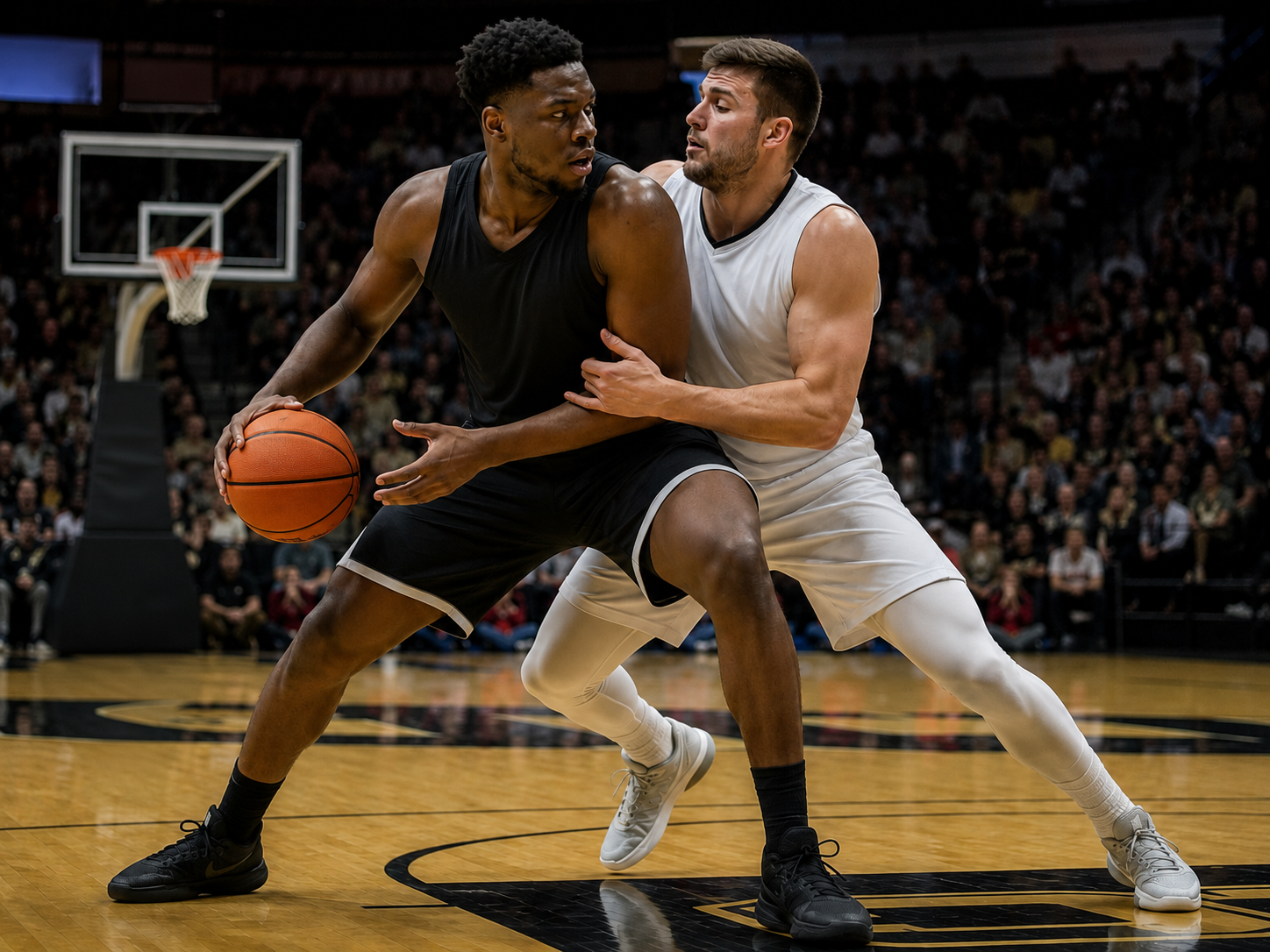
Two basketball players engaging in a high-post physical battle for position
The Power of “Roughhousing”
To bridge this gap, coaches should utilize the first 10 to 15 minutes of practice to implement combat and wrestling games, which encompasses pushing, pulling, and wrestling.
Integrating “roughhousing” into your warm-ups provides a multitude of physical and psychological benefits:
- Physical Adaptability: By engaging in wrestling games, athletes naturally explore different stances, lower their center of gravity, and discover where they are strongest.
- Injury Prevention: They learn to manage unstable environments, strengthening their joints and connective tissues in unpredictable patterns.
- Psychological Resilience: Combat games provide an environment of “safe uncertainty”. Players get comfortable with being uncomfortable.
- Social Cohesion: When players grapple and compete physically in a fun environment, they build deep camaraderie and learn how to appropriately manage their physical boundaries.
The Art of Falling
One of the most overlooked benefits of combative warm-ups is that they naturally teach athletes how to fall. From elementary school kids to NBA professionals, teaching a player how to interact with the floor safely is a fundamental skill of athleticism.
If a player is terrified of hitting the ground, they will unconsciously limit their own athleticism. They will avoid diving for loose balls, and they will shy away from taking the necessary risks required to finish acrobatically in traffic. By purposefully incorporating activities where players tumble, roll on the ground, and wrestle each other to the floor, you equip them with the physical “brakes” they need.
Once a player knows they can fall safely without breaking a wrist or ankle, they are mentally freed to jump higher, drive harder, and embrace contact in the air.
3 Combat SSGs for Your Next Warm-Up
You do not need a wrestling mat or a martial arts background to implement these concepts. Here are three highly engaging, constraints-led combat games you can safely use on the basketball court:
1. Fight for the Line (Tug of War)
This is a phenomenal activation game to teach leverage and lower-body strength.
- How it Works: Two players face each other, standing on a specific line on the court. They lock arms or grab each other’s shoulders. On the coach’s whistle, they must try to physically push their opponent backward so that both of their feet cross over the line.
- Constraint Variations: Instead of pushing, have both players firmly grab onto a single basketball. Use the ball as the leverage point.
2. Plank & Lunge Destabilization
This targets core stability and the ability to absorb contact without losing posture.
- How it Works: Have players partner up and get into a high plank position facing each other. They must try to grab their partner’s wrists or tap their shoulders to make them lose balance while maintaining their own plank.
- Constraint Variations: Move players into a deep, static lunge position. Partners use their hands to push and pull each other, forcing continuous muscle contraction and relaxation.
Demonstration of the Plank & Lunge Destabilization drill with two athletes
3. One-Leg Wrestle
This activity perfectly simulates the chaotic, single-leg balance required when jumping or landing in traffic.
- How it Works: Players partner up, stand on one leg, and hold each other’s right hand. They must hop around and try to push or pull their partner to force them to put their second foot down.
- Constraint Variations: Have players work “shoulder to shoulder” like a triangle, leaning weight into each other to simulate boxing out.
Two players competing in the One-Leg Wrestle drill
Further Learning
If you are a basketball coach or strength practitioner looking to completely reimagine your approach to athletic performance, we highly recommend listening to the Transforming Basketball Podcast Episode 97 featuring Jamie Smith from The U of Strength.
In this episode, Jamie provides a masterclass on moving away from rigid, robotic weight room traditions. He discusses the critical difference between force potential and force expression, and how using combat games, roughhousing, and unpredictable constraints builds athletes who are truly robust and adaptable.
Coach’s Note
Listen to the full interview with Jamie Smith in our Podcast Archive to learn more about the “U of Strength” methodology.
Conclusion
Basketball is a contact sport disguised as a finesse game. If you want your players to survive the physical demands of a long season, you cannot protect them in bubble wrap during practice.
Stop wasting your valuable warm-up time on mindless jogging and static stretching. Put the basketballs down for five minutes and let your players wrestle, romp, and fight. By integrating combat games into your sessions, you will build highly resilient, physically courageous athletes who don’t just tolerate contact—they actively seek it out.


Are you building basketball players who shy away from contact, or robust athletes who thrive in the physical trenches of the game?
Combat games and functional strength are powerful tools for helping basketball players build the physical confidence, resilience, and contact-readiness they need to thrive in the modern game.
When we think of elite basketball, we naturally picture the finesse of a deep three-pointer or the fluid dexterity of a crossover. However, strip away the highlight-reel aesthetics, and basketball is an incredibly combative, contact-heavy sport. Every battle for a rebound is a wrestling match. Every drive into the paint requires the offensive player to absorb a heavy bump. Every post-up demands leverage, balance, and core stability against a resisting, unpredictable human being.
Yet, how do we traditionally prepare our athletes for this violent reality? We send them to the weight room to perform perfectly symmetrical squats, or we run them through sterile, unopposed layup lines. While traditional weightlifting is vital for building force potential, it completely fails to replicate the chaotic, human-to-human force expression required on the hardwood. To build truly anti-fragile basketball players, we must rethink our warm-ups and athletic development by introducing wrestling, grappling, and combat games.
The Gap Between the Weight Room and the Court
In a traditional strength and conditioning model, athletes train against inanimate objects. A barbell is heavy, but it does not aggressively push back or change its angle of resistance. However, when a player attacks the rim in a live game, they must navigate dynamic “perturbations” – sudden losses of balance caused by a rotating help defender.
If a player only ever experiences resistance in the controlled vacuum of a weight room, their degrees of freedom become frozen. When they inevitably collide with a defender in mid-air, they lack the movement vocabulary to contract, relax, and stabilize their bodies to finish the play. For instance, finishing against a taller, 6’8″ defender requires the offensive player to create meaningful contact, driving their shoulder through the defender’s chest to physically move them backward and create space. You simply cannot learn this specific timing and leverage without practicing against a live, resisting opponent.
Two basketball players engaging in a high-post physical battle for position
The Power of “Roughhousing”
To bridge this gap, coaches should utilize the first 10 to 15 minutes of practice to implement combat and wrestling games, which encompasses pushing, pulling, and wrestling.
Integrating “roughhousing” into your warm-ups provides a multitude of physical and psychological benefits:
- Physical Adaptability: By engaging in wrestling games, athletes naturally explore different stances, lower their center of gravity, and discover where they are strongest.
- Injury Prevention: They learn to manage unstable environments, strengthening their joints and connective tissues in unpredictable patterns.
- Psychological Resilience: Combat games provide an environment of “safe uncertainty”. Players get comfortable with being uncomfortable.
- Social Cohesion: When players grapple and compete physically in a fun environment, they build deep camaraderie and learn how to appropriately manage their physical boundaries.
The Art of Falling
One of the most overlooked benefits of combative warm-ups is that they naturally teach athletes how to fall. From elementary school kids to NBA professionals, teaching a player how to interact with the floor safely is a fundamental skill of athleticism.
If a player is terrified of hitting the ground, they will unconsciously limit their own athleticism. They will avoid diving for loose balls, and they will shy away from taking the necessary risks required to finish acrobatically in traffic. By purposefully incorporating activities where players tumble, roll on the ground, and wrestle each other to the floor, you equip them with the physical “brakes” they need.
Once a player knows they can fall safely without breaking a wrist or ankle, they are mentally freed to jump higher, drive harder, and embrace contact in the air.
3 Combat SSGs for Your Next Warm-Up
You do not need a wrestling mat or a martial arts background to implement these concepts. Here are three highly engaging, constraints-led combat games you can safely use on the basketball court:
1. Fight for the Line (Tug of War)
This is a phenomenal activation game to teach leverage and lower-body strength.
- How it Works: Two players face each other, standing on a specific line on the court. They lock arms or grab each other’s shoulders. On the coach’s whistle, they must try to physically push their opponent backward so that both of their feet cross over the line.
- Constraint Variations: Instead of pushing, have both players firmly grab onto a single basketball. Use the ball as the leverage point.
2. Plank & Lunge Destabilization
This targets core stability and the ability to absorb contact without losing posture.
- How it Works: Have players partner up and get into a high plank position facing each other. They must try to grab their partner’s wrists or tap their shoulders to make them lose balance while maintaining their own plank.
- Constraint Variations: Move players into a deep, static lunge position. Partners use their hands to push and pull each other, forcing continuous muscle contraction and relaxation.
Demonstration of the Plank & Lunge Destabilization drill with two athletes
3. One-Leg Wrestle
This activity perfectly simulates the chaotic, single-leg balance required when jumping or landing in traffic.
- How it Works: Players partner up, stand on one leg, and hold each other’s right hand. They must hop around and try to push or pull their partner to force them to put their second foot down.
- Constraint Variations: Have players work “shoulder to shoulder” like a triangle, leaning weight into each other to simulate boxing out.
Two players competing in the One-Leg Wrestle drill
Further Learning
If you are a basketball coach or strength practitioner looking to completely reimagine your approach to athletic performance, we highly recommend listening to the Transforming Basketball Podcast Episode 97 featuring Jamie Smith from The U of Strength.
In this episode, Jamie provides a masterclass on moving away from rigid, robotic weight room traditions. He discusses the critical difference between force potential and force expression, and how using combat games, roughhousing, and unpredictable constraints builds athletes who are truly robust and adaptable.
Coach’s Note
Listen to the full interview with Jamie Smith in our Podcast Archive to learn more about the “U of Strength” methodology.
Conclusion
Basketball is a contact sport disguised as a finesse game. If you want your players to survive the physical demands of a long season, you cannot protect them in bubble wrap during practice.
Stop wasting your valuable warm-up time on mindless jogging and static stretching. Put the basketballs down for five minutes and let your players wrestle, romp, and fight. By integrating combat games into your sessions, you will build highly resilient, physically courageous athletes who don’t just tolerate contact—they actively seek it out.




check what's trending

What is ecological dynamics and how is it connected to a constraints-led approach?
Dec 8, 2025
George Vaz

Are you searching for the best small sided games (SSGs) to improve your basketball practices? Want to replace boring, low-transfer drills with competitive games that actually develop player decision-making and in-game skills?
In this post, I’m sharing my top 5 favorite small-sided basketball games—designed to teach core concepts like closeouts, pick-and-roll, advantage creation, and transition offense and defense. These basketball SSGs are intense, purposeful, and built around real-game actions.
Whether you're coaching youth basketball, high school, or pros, these top small sided games will make your sessions more effective, more engaging, and more fun—for both players and coaches.
Let’s break down each game and how it can transform your practices.
Aug 4, 2025
George Vaz

Whether you’re coaching in the NBA, EuroLeague, or youth basketball, one thing remains universally true: the worst transition offense is still more efficient than the best half-court offense. Yet, many teams still struggle to fully capitalize on transition opportunities, often opting to slow down the game instead of pushing the pace. The question is, why? By running more intentionally, teams can create easier scoring opportunities. So why do some teams hesitate?
Apr 7, 2025
George Vaz
Spacing has changed the game. NBA offenses today look nothing like they did in the ’90s—more threes, better efficiency, and smarter shot selection. But why? The key lies in how teams use space to create and capitalize on advantages.
Mar 31, 2025
Simon Caret
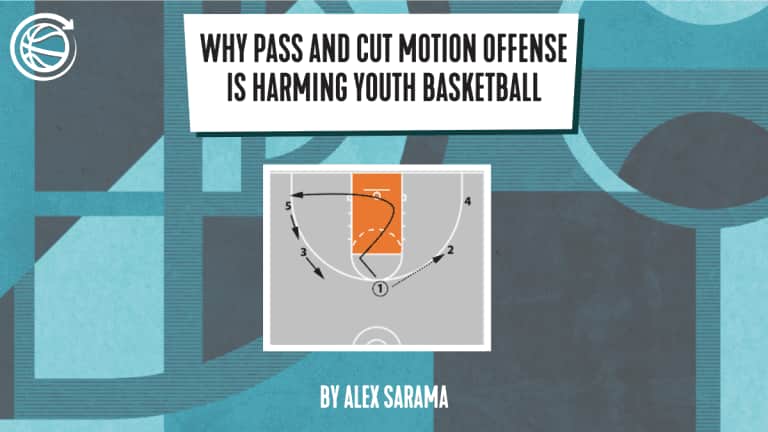
This article breaks down why pass and cut motion offense limits youth player development, and explores better ways to teach spacing, decision-making, and offensive creativity.
May 1, 2024
Alex Sarama
Approaches within the basketball industry are predominantly based upon experiential knowledge and traditions.


