

Warm-Up: Deception & Tag – How to Build Agility and Perception Through Play





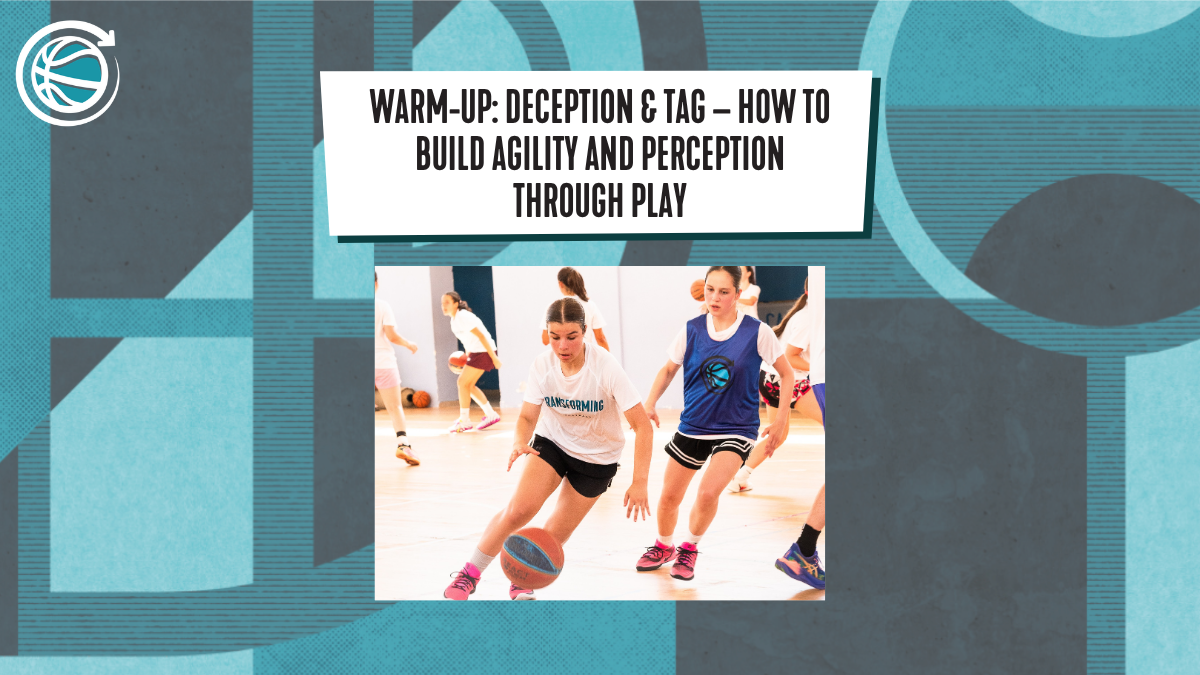
Are your warm-ups creating robotic direction-followers, or are they cultivating elusive, deceptive basketball players?
Are you utilizing our previous blog posts on effective warm-up design?
What does true basketball agility look like?
For a player, true agility is the ability to read a defender’s shifting weight, manipulate their momentum with a subtle fake, and explode into another direction or “shift gears”.
To build highly adaptable athletes who excel at deception, we must stop viewing the first 15 minutes of practice as a mere physical chore and transform it into a perception-rich learning environment.
The ultimate tool for achieving this? Gamified, constraints-led tag.
The Science of Agility and Deception
In an ecological dynamics framework, agility is not viewed as an isolated physical trait; it is the functional relationship between a player’s perception (what they see) and their action (what they do). When players run through an agility ladder, they are training action without perception—meaning they are completely missing the contextual cues required to react to a live, unpredictable opponent.
Deception is the art of manipulating time and space to coerce an opponent into a vulnerable movement pattern that can be ruthlessly exploited. To be elusive and deceptive on the basketball court, an athlete must possess an abundance of “degrees of freedom”. This means they must be able to physically contort their bodies, change their speeds, and act upon various opportunities for action (affordances).
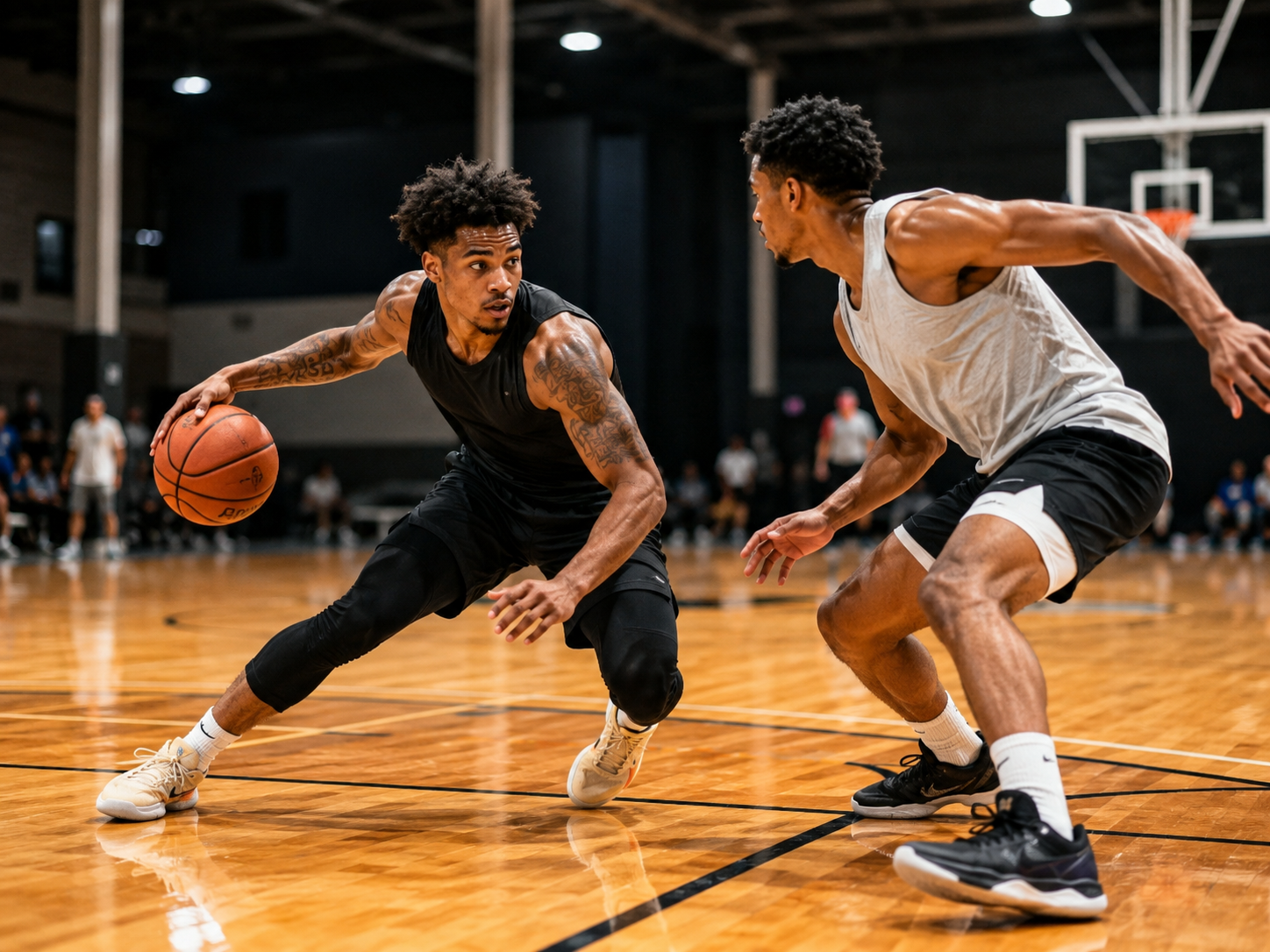
Basketball player using a crossover dribble to manipulate a defender’s center of gravity, illustrating degrees of freedom in agility.
Tag games naturally unfreeze these degrees of freedom. When an athlete is playing tag, the coach never has to stop the drill to lecture them on their biomechanics, posture, or change-of-direction angles. The athlete naturally explores new ranges of motion in their hips, knees, and ankles to evade capture because the environment demands it.
Learning Through Playful Constraints
Backyard games and tag variations provide a low-pressure, fun environment that naturally encourages motor exploration. When players are emotionally engaged, laughing, and competing, it elevates their focus and nervous system readiness, making the transition into the deeper cognitive work of your half-court practice much smoother.
If you want to bake decision-making, agility, and deception into every minute of your session, here are three highly effective, completely different warm-up games you can implement today:
1. 1-on-1 Around the World Tag
- The Setup: Players pair up around 4 cones set up.
- How it Works: One player is trying to tag the other player. They have to stay around the cone as they run around.
- Building Deception: Observe how players naturally change direction and try to throw the tagger of their track to avoid getting tagged.
3. Rock-Paper-Scissors (RPS) American Football
This is a brilliant, high-energy game that combines quick processing decision making with explosive, evasive running lines.
- The Setup: Players are placed in pairs on a sideline. A ball between them.
- How it Works: The players engage in a quick game of rock-paper-scissors. The winner must immediately turn and sprint away from their partner on the sideline. The loser must try to throw the ball at the winner to negate their point.
- Constraints: Coach
- How can coaches manipulate the rules in this game to work on deception even more?
Embrace the Chaos
If you want your players to be adaptable and to use their agility to solve problems on the court, you must expose them to chaos in practice.
By incorporating these SSGs into your warm-ups, you are utilizing the Constraints-Led Approach (CLA) to actively shape your athletes’ decision making in a real game context.


Are your warm-ups creating robotic direction-followers, or are they cultivating elusive, deceptive basketball players?
Are you utilizing our previous blog posts on effective warm-up design?
What does true basketball agility look like?
For a player, true agility is the ability to read a defender’s shifting weight, manipulate their momentum with a subtle fake, and explode into another direction or “shift gears”.
To build highly adaptable athletes who excel at deception, we must stop viewing the first 15 minutes of practice as a mere physical chore and transform it into a perception-rich learning environment.
The ultimate tool for achieving this? Gamified, constraints-led tag.
The Science of Agility and Deception
In an ecological dynamics framework, agility is not viewed as an isolated physical trait; it is the functional relationship between a player’s perception (what they see) and their action (what they do). When players run through an agility ladder, they are training action without perception—meaning they are completely missing the contextual cues required to react to a live, unpredictable opponent.
Deception is the art of manipulating time and space to coerce an opponent into a vulnerable movement pattern that can be ruthlessly exploited. To be elusive and deceptive on the basketball court, an athlete must possess an abundance of “degrees of freedom”. This means they must be able to physically contort their bodies, change their speeds, and act upon various opportunities for action (affordances).
Basketball player using a crossover dribble to manipulate a defender’s center of gravity, illustrating degrees of freedom in agility.
Tag games naturally unfreeze these degrees of freedom. When an athlete is playing tag, the coach never has to stop the drill to lecture them on their biomechanics, posture, or change-of-direction angles. The athlete naturally explores new ranges of motion in their hips, knees, and ankles to evade capture because the environment demands it.
Learning Through Playful Constraints
Backyard games and tag variations provide a low-pressure, fun environment that naturally encourages motor exploration. When players are emotionally engaged, laughing, and competing, it elevates their focus and nervous system readiness, making the transition into the deeper cognitive work of your half-court practice much smoother.
If you want to bake decision-making, agility, and deception into every minute of your session, here are three highly effective, completely different warm-up games you can implement today:
1. 1-on-1 Around the World Tag
- The Setup: Players pair up around 4 cones set up.
- How it Works: One player is trying to tag the other player. They have to stay around the cone as they run around.
- Building Deception: Observe how players naturally change direction and try to throw the tagger of their track to avoid getting tagged.
3. Rock-Paper-Scissors (RPS) American Football
This is a brilliant, high-energy game that combines quick processing decision making with explosive, evasive running lines.
- The Setup: Players are placed in pairs on a sideline. A ball between them.
- How it Works: The players engage in a quick game of rock-paper-scissors. The winner must immediately turn and sprint away from their partner on the sideline. The loser must try to throw the ball at the winner to negate their point.
- Constraints: Coach
- How can coaches manipulate the rules in this game to work on deception even more?
Embrace the Chaos
If you want your players to be adaptable and to use their agility to solve problems on the court, you must expose them to chaos in practice.
By incorporating these SSGs into your warm-ups, you are utilizing the Constraints-Led Approach (CLA) to actively shape your athletes’ decision making in a real game context.




check what's trending
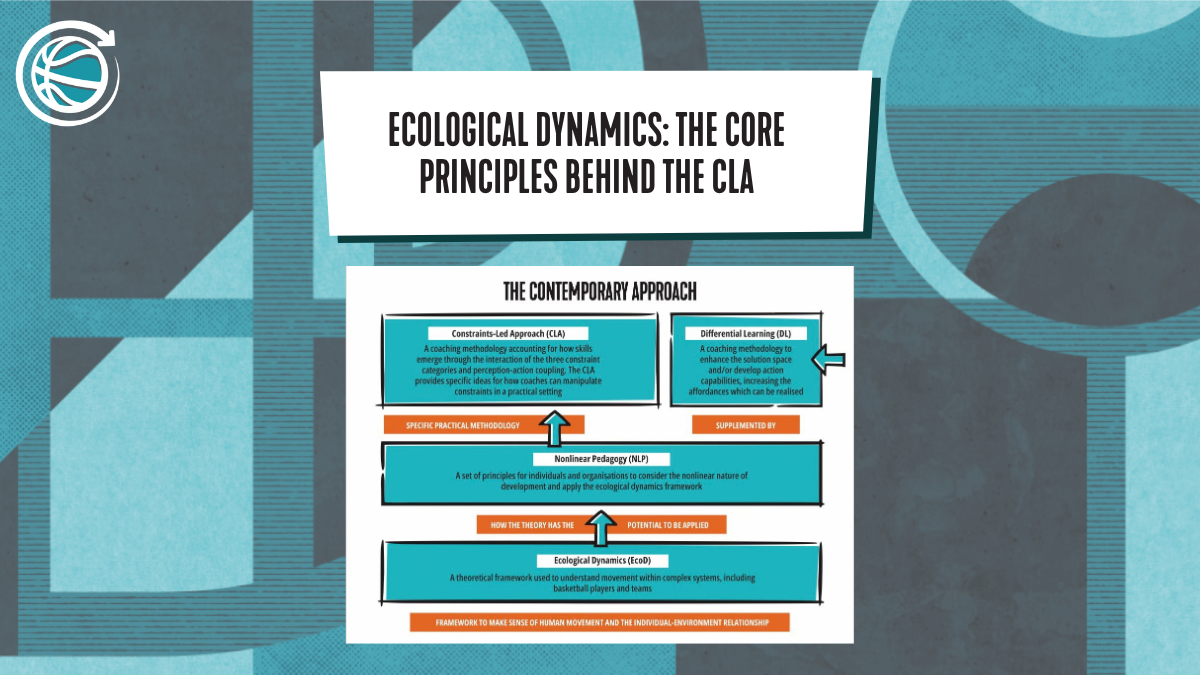
What is ecological dynamics and how is it connected to a constraints-led approach?
Dec 8, 2025
George Vaz

Are you searching for the best small sided games (SSGs) to improve your basketball practices? Want to replace boring, low-transfer drills with competitive games that actually develop player decision-making and in-game skills?
In this post, I’m sharing my top 5 favorite small-sided basketball games—designed to teach core concepts like closeouts, pick-and-roll, advantage creation, and transition offense and defense. These basketball SSGs are intense, purposeful, and built around real-game actions.
Whether you're coaching youth basketball, high school, or pros, these top small sided games will make your sessions more effective, more engaging, and more fun—for both players and coaches.
Let’s break down each game and how it can transform your practices.
Aug 4, 2025
George Vaz

Whether you’re coaching in the NBA, EuroLeague, or youth basketball, one thing remains universally true: the worst transition offense is still more efficient than the best half-court offense. Yet, many teams still struggle to fully capitalize on transition opportunities, often opting to slow down the game instead of pushing the pace. The question is, why? By running more intentionally, teams can create easier scoring opportunities. So why do some teams hesitate?
Apr 7, 2025
George Vaz
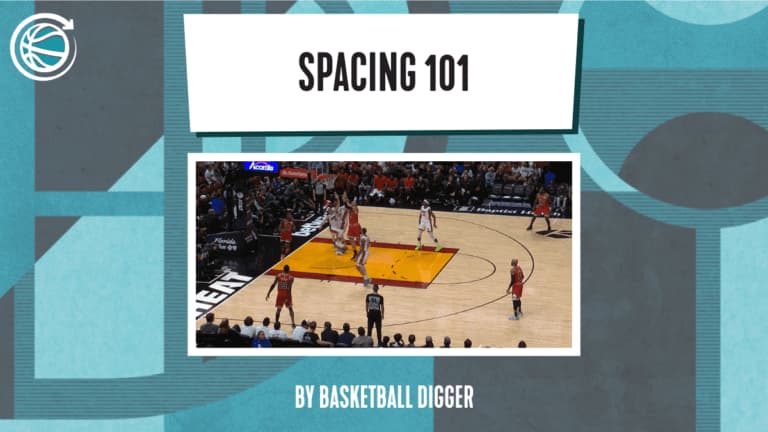
Spacing has changed the game. NBA offenses today look nothing like they did in the ’90s—more threes, better efficiency, and smarter shot selection. But why? The key lies in how teams use space to create and capitalize on advantages.
Mar 31, 2025
Simon Caret
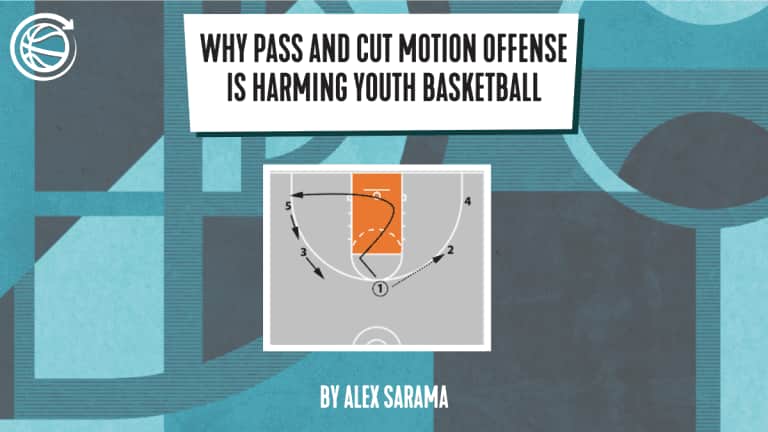
This article breaks down why pass and cut motion offense limits youth player development, and explores better ways to teach spacing, decision-making, and offensive creativity.
May 1, 2024
Alex Sarama
Approaches within the basketball industry are predominantly based upon experiential knowledge and traditions.


