

The Complete Guide for Coaching Force Weak Defense




On-ball defense is one of the most debated aspects of basketball coaching. Should players force the ball to the sideline, middle, or weak hand? The answer isn’t one-size-fits-all—it’s influenced by a coach’s philosophy, their team’s strengths, and the make-up of the league your team plays in. While many coaches advocate for forcing the ball to the sidelines to limit passing options, but there is no one-size-fits-all. Success can be found in forcing to the weak hand, regardless of the location on the floor (e.g. sending the handler left towards the middle, even on the right side).
In this blog, we’ll explore why forcing the weak can not only neutralize the offense but also improve your players’ ability to defend and react to various situations. Plus, we’ll dive into small-sided games to help your team perfect the art of forcing weak.
Why Force Weak?
When defending the ball, should players force it to the sideline, to the middle, or towards the ballhandler’s weak hand? The answer isn’t black and white—it depends on your coaching philosophy, personnel, level of competition, and what you value most on defense (e.g. what your base coverages are. For instance, forcing weak everywhere could be incompatible with downing pick and rolls on the right side).
Many coaches opt to force the sideline to limit passing angles and keep the ball out of the middle of the floor. However, is there an advantage to forcing into making plays with their non-dominant hand? Even in the NBA, some elite players heavily frequent driving towards their dominant hand, and are inefficient when forced to go left.
The rationale for forcing weak include the following points:
-
- Players are less able to make plays with their weak hand
- In practice, it improves the ability of your players to make plays with their weak hand if you have good amounts of practice time going against it.
- Improves defensive efficiency in isolation scenarios.
- Can be married to certain coverages
How Can the Force Weak Defense Be Effectively Introduced?
1-on-1+1 Gap is a small-sided game that we use frequently at Transforming Basketball. Here are the steps for setting it up with your team…
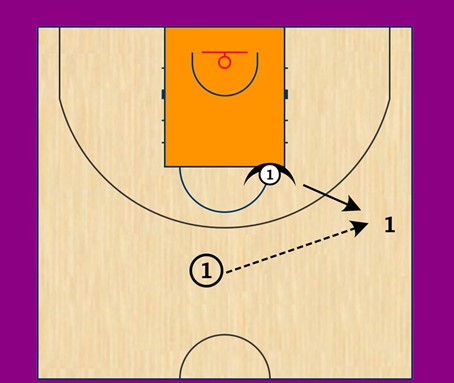
Step One: A live defender starts in the gap help position (not guarding the ball directly), simulating the real defensive spacing encouraged in 5-on-5 situations. The passer starts with the ball and has no defender on them.
Step Two: On the pass, the 1-on-1 is live. This format encourages the primary defender to contain the ball off a short closeout, while forcing the offensive player in a specific direction (e.g., weak hand).
Step Three: You can then quickly add a second defender on the passer. They must sprint to the correct gap position on the first pass. This 2-on-2 version then allows the second defender to provide adequate gap help, working the stunt-recover without over helping. The main constraint is that the offense immediately gains 4 points if they are able to take two simultaneous dribbles going right on any drive.
Other Constraint Ideas:
-
- Defense goes to offense if they are able to force a stop while forcing weak. If offense goes to their strong hand and misses, they still stay on!
- Defense scoring only. Defense gets a point if they force weak and offense misses. Offense goes to defense if they score. First to 4 points wins.
- You can always change the start position of this game. For example, different locations around the court, or beginning with a dynamic start and moving out to space.
Why This SSG is Effective
-
- Encourages realistic spacing and awareness of single gap positioning.
- Builds habits for defending within a team system, not just 1-on-1 isolation.
- Reinforces forcing weak with an immediate consequence for defenders if they allow strong-hand drives.
It allows for constraints to be tweaked easily, like giving points only if a player successfully forces weak.
Recommended Coaching Resources:
Take your on-ball defense and small-sided games to the next level with these recommended Transforming Basketball resources:
- 📘 Small-Sided Games Book (PDF) – Packed with competitive, constraint-based games like 1-on-1+1 Gap to reinforce defensive principles in real game scenarios.
- 🧠 Skill Acquisition Workshop – Learn how players develop skills through play and how to design practices that create real, transferable learning.
- 🏀 Small-Sided Games Collection – A full set of SSGs to improve both offensive and defensive decision-making.

On-ball defense is one of the most debated aspects of basketball coaching. Should players force the ball to the sideline, middle, or weak hand? The answer isn’t one-size-fits-all—it’s influenced by a coach’s philosophy, their team’s strengths, and the make-up of the league your team plays in. While many coaches advocate for forcing the ball to the sidelines to limit passing options, but there is no one-size-fits-all. Success can be found in forcing to the weak hand, regardless of the location on the floor (e.g. sending the handler left towards the middle, even on the right side).
In this blog, we’ll explore why forcing the weak can not only neutralize the offense but also improve your players’ ability to defend and react to various situations. Plus, we’ll dive into small-sided games to help your team perfect the art of forcing weak.
Why Force Weak?
When defending the ball, should players force it to the sideline, to the middle, or towards the ballhandler’s weak hand? The answer isn’t black and white—it depends on your coaching philosophy, personnel, level of competition, and what you value most on defense (e.g. what your base coverages are. For instance, forcing weak everywhere could be incompatible with downing pick and rolls on the right side).
Many coaches opt to force the sideline to limit passing angles and keep the ball out of the middle of the floor. However, is there an advantage to forcing into making plays with their non-dominant hand? Even in the NBA, some elite players heavily frequent driving towards their dominant hand, and are inefficient when forced to go left.
The rationale for forcing weak include the following points:
-
- Players are less able to make plays with their weak hand
- In practice, it improves the ability of your players to make plays with their weak hand if you have good amounts of practice time going against it.
- Improves defensive efficiency in isolation scenarios.
- Can be married to certain coverages
How Can the Force Weak Defense Be Effectively Introduced?
1-on-1+1 Gap is a small-sided game that we use frequently at Transforming Basketball. Here are the steps for setting it up with your team…
Step One: A live defender starts in the gap help position (not guarding the ball directly), simulating the real defensive spacing encouraged in 5-on-5 situations. The passer starts with the ball and has no defender on them.
Step Two: On the pass, the 1-on-1 is live. This format encourages the primary defender to contain the ball off a short closeout, while forcing the offensive player in a specific direction (e.g., weak hand).
Step Three: You can then quickly add a second defender on the passer. They must sprint to the correct gap position on the first pass. This 2-on-2 version then allows the second defender to provide adequate gap help, working the stunt-recover without over helping. The main constraint is that the offense immediately gains 4 points if they are able to take two simultaneous dribbles going right on any drive.
Other Constraint Ideas:
-
- Defense goes to offense if they are able to force a stop while forcing weak. If offense goes to their strong hand and misses, they still stay on!
- Defense scoring only. Defense gets a point if they force weak and offense misses. Offense goes to defense if they score. First to 4 points wins.
- You can always change the start position of this game. For example, different locations around the court, or beginning with a dynamic start and moving out to space.
Why This SSG is Effective
-
- Encourages realistic spacing and awareness of single gap positioning.
- Builds habits for defending within a team system, not just 1-on-1 isolation.
- Reinforces forcing weak with an immediate consequence for defenders if they allow strong-hand drives.
It allows for constraints to be tweaked easily, like giving points only if a player successfully forces weak.
Recommended Coaching Resources:
Take your on-ball defense and small-sided games to the next level with these recommended Transforming Basketball resources:
- 📘 Small-Sided Games Book (PDF) – Packed with competitive, constraint-based games like 1-on-1+1 Gap to reinforce defensive principles in real game scenarios.
- 🧠 Skill Acquisition Workshop – Learn how players develop skills through play and how to design practices that create real, transferable learning.
- 🏀 Small-Sided Games Collection – A full set of SSGs to improve both offensive and defensive decision-making.




check what's trending

What is ecological dynamics and how is it connected to a constraints-led approach?
Dec 8, 2025
George Vaz

Are you searching for the best small sided games (SSGs) to improve your basketball practices? Want to replace boring, low-transfer drills with competitive games that actually develop player decision-making and in-game skills?
In this post, I’m sharing my top 5 favorite small-sided basketball games—designed to teach core concepts like closeouts, pick-and-roll, advantage creation, and transition offense and defense. These basketball SSGs are intense, purposeful, and built around real-game actions.
Whether you're coaching youth basketball, high school, or pros, these top small sided games will make your sessions more effective, more engaging, and more fun—for both players and coaches.
Let’s break down each game and how it can transform your practices.
Aug 4, 2025
George Vaz

Whether you’re coaching in the NBA, EuroLeague, or youth basketball, one thing remains universally true: the worst transition offense is still more efficient than the best half-court offense. Yet, many teams still struggle to fully capitalize on transition opportunities, often opting to slow down the game instead of pushing the pace. The question is, why? By running more intentionally, teams can create easier scoring opportunities. So why do some teams hesitate?
Apr 7, 2025
George Vaz
Spacing has changed the game. NBA offenses today look nothing like they did in the ’90s—more threes, better efficiency, and smarter shot selection. But why? The key lies in how teams use space to create and capitalize on advantages.
Mar 31, 2025
Simon Caret
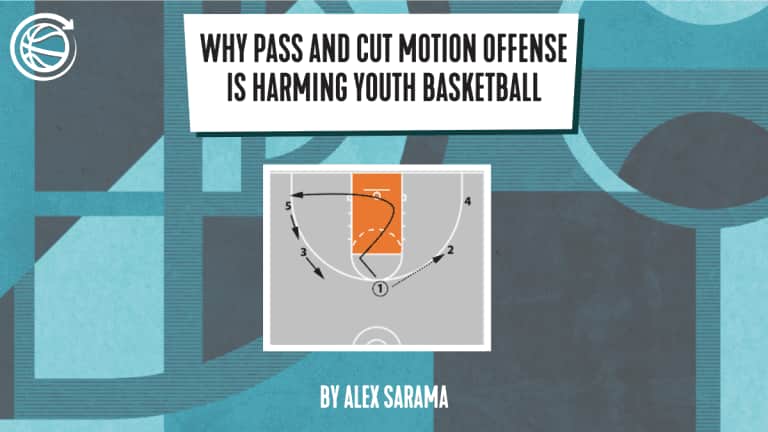
This article breaks down why pass and cut motion offense limits youth player development, and explores better ways to teach spacing, decision-making, and offensive creativity.
May 1, 2024
Alex Sarama
Approaches within the basketball industry are predominantly based upon experiential knowledge and traditions.


