

4 Creative Ways to Beat a Zone Defense in Youth Basketball
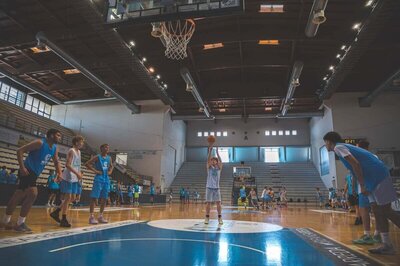




One of the most frequented questions we receive at Transforming is how to beat a zone offense.
Within our membership community, we posed the question to our members in one of our monthly challenges. It was so amazing to see all the incredible responses from our community. Many of our coaches have taken unique Transforming ideas and principles within their membership to think about their own creative ways to beat a zone.
4 Quick-Hitting Ideas to Beat the Zone
Below are 4 quick hitting ideas that you can implement in your practices immediately…
1. Constrain the Zone
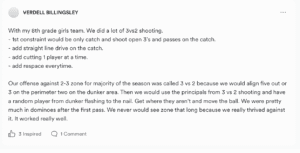
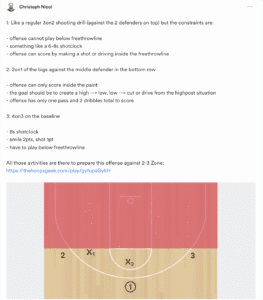
Constraining parts of the zone, like Christoph has explained here, is a particularly effective solution. You can also constrain one side of the zone only, such as the left corner and left wing in a conventional 2-3 zone.
2. Use Dynamic Starts and Bursts
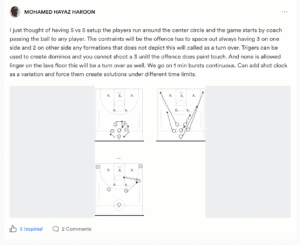
Mohamed has achieved much success in his native Sri Lanka using Transforming principles. This is a great activity he suggested on using a dynamic start paired with bursts to get lots of repetition without repetition against the zone.
3. Emphasize Zero Second Decisions
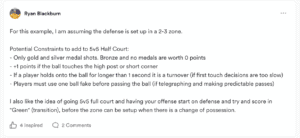
Ryan from Illnois shared some excellent constraint ideas. The shot selection component is even more important against the zone. We particularly love the zero seconds or turnover concept. The indecision and holding the ball is the biggest error many youth players make when playing against zone. Unless waiting for a trigger, players must play in zero seconds to avoid the defense getting back to their positions within the zone.
4. Isolate Zone Spaces Through Constraints

Longtime Transforming coach, Ryan Josephson, chipped in with this suggestion. Ryan has had great success using a conceptual offense and CLA with Camas High School in Washington. Ryan creatively shows how to constrain the playing space, while then isolating parts of the zone. You can take this concept and apply it to any zone you play against.
Building Smarter Offenses Through Transforming Principles
These activities show how small adjustments in constraints and principles can dramatically improve a team’s ability to play against a zone. By using modern ecological ideas, youth players learn to attack zones with creativity, confidence, and purpose — not by memorizing set plays.



One of the most frequented questions we receive at Transforming is how to beat a zone offense.
Within our membership community, we posed the question to our members in one of our monthly challenges. It was so amazing to see all the incredible responses from our community. Many of our coaches have taken unique Transforming ideas and principles within their membership to think about their own creative ways to beat a zone.
4 Quick-Hitting Ideas to Beat the Zone
Below are 4 quick hitting ideas that you can implement in your practices immediately…
1. Constrain the Zone
Constraining parts of the zone, like Christoph has explained here, is a particularly effective solution. You can also constrain one side of the zone only, such as the left corner and left wing in a conventional 2-3 zone.
2. Use Dynamic Starts and Bursts
Mohamed has achieved much success in his native Sri Lanka using Transforming principles. This is a great activity he suggested on using a dynamic start paired with bursts to get lots of repetition without repetition against the zone.
3. Emphasize Zero Second Decisions
Ryan from Illnois shared some excellent constraint ideas. The shot selection component is even more important against the zone. We particularly love the zero seconds or turnover concept. The indecision and holding the ball is the biggest error many youth players make when playing against zone. Unless waiting for a trigger, players must play in zero seconds to avoid the defense getting back to their positions within the zone.
4. Isolate Zone Spaces Through Constraints
Longtime Transforming coach, Ryan Josephson, chipped in with this suggestion. Ryan has had great success using a conceptual offense and CLA with Camas High School in Washington. Ryan creatively shows how to constrain the playing space, while then isolating parts of the zone. You can take this concept and apply it to any zone you play against.
Building Smarter Offenses Through Transforming Principles
These activities show how small adjustments in constraints and principles can dramatically improve a team’s ability to play against a zone. By using modern ecological ideas, youth players learn to attack zones with creativity, confidence, and purpose — not by memorizing set plays.




check what's trending

What is ecological dynamics and how is it connected to a constraints-led approach?
Dec 8, 2025
George Vaz

Are you searching for the best small sided games (SSGs) to improve your basketball practices? Want to replace boring, low-transfer drills with competitive games that actually develop player decision-making and in-game skills?
In this post, I’m sharing my top 5 favorite small-sided basketball games—designed to teach core concepts like closeouts, pick-and-roll, advantage creation, and transition offense and defense. These basketball SSGs are intense, purposeful, and built around real-game actions.
Whether you're coaching youth basketball, high school, or pros, these top small sided games will make your sessions more effective, more engaging, and more fun—for both players and coaches.
Let’s break down each game and how it can transform your practices.
Aug 4, 2025
George Vaz

Whether you’re coaching in the NBA, EuroLeague, or youth basketball, one thing remains universally true: the worst transition offense is still more efficient than the best half-court offense. Yet, many teams still struggle to fully capitalize on transition opportunities, often opting to slow down the game instead of pushing the pace. The question is, why? By running more intentionally, teams can create easier scoring opportunities. So why do some teams hesitate?
Apr 7, 2025
George Vaz
Spacing has changed the game. NBA offenses today look nothing like they did in the ’90s—more threes, better efficiency, and smarter shot selection. But why? The key lies in how teams use space to create and capitalize on advantages.
Mar 31, 2025
Simon Caret
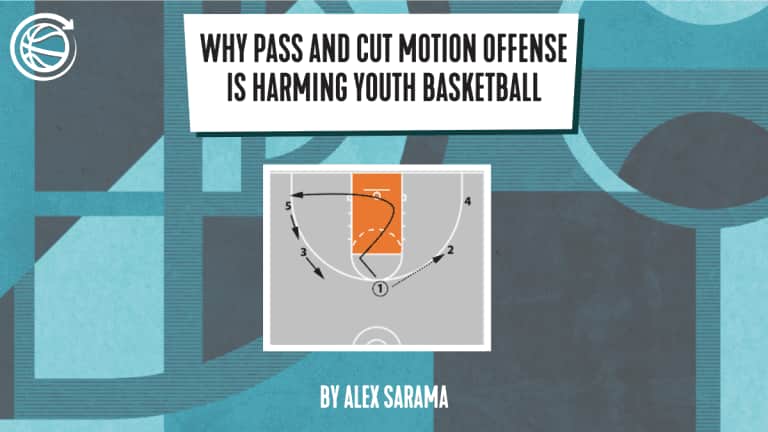
This article breaks down why pass and cut motion offense limits youth player development, and explores better ways to teach spacing, decision-making, and offensive creativity.
May 1, 2024
Alex Sarama
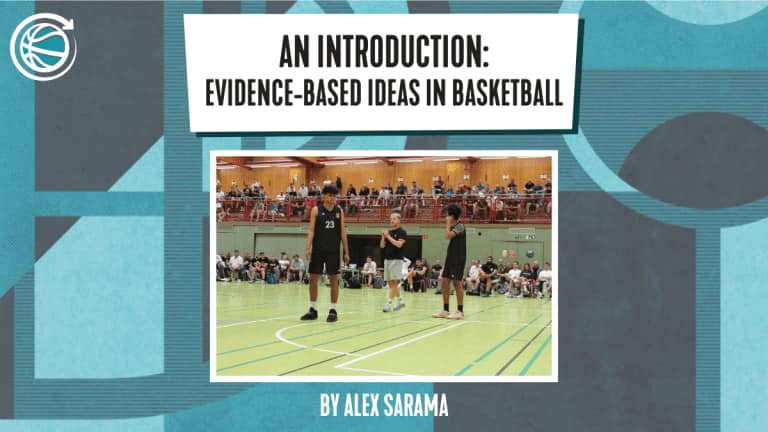
Approaches within the basketball industry are predominantly based upon experiential knowledge and traditions.


