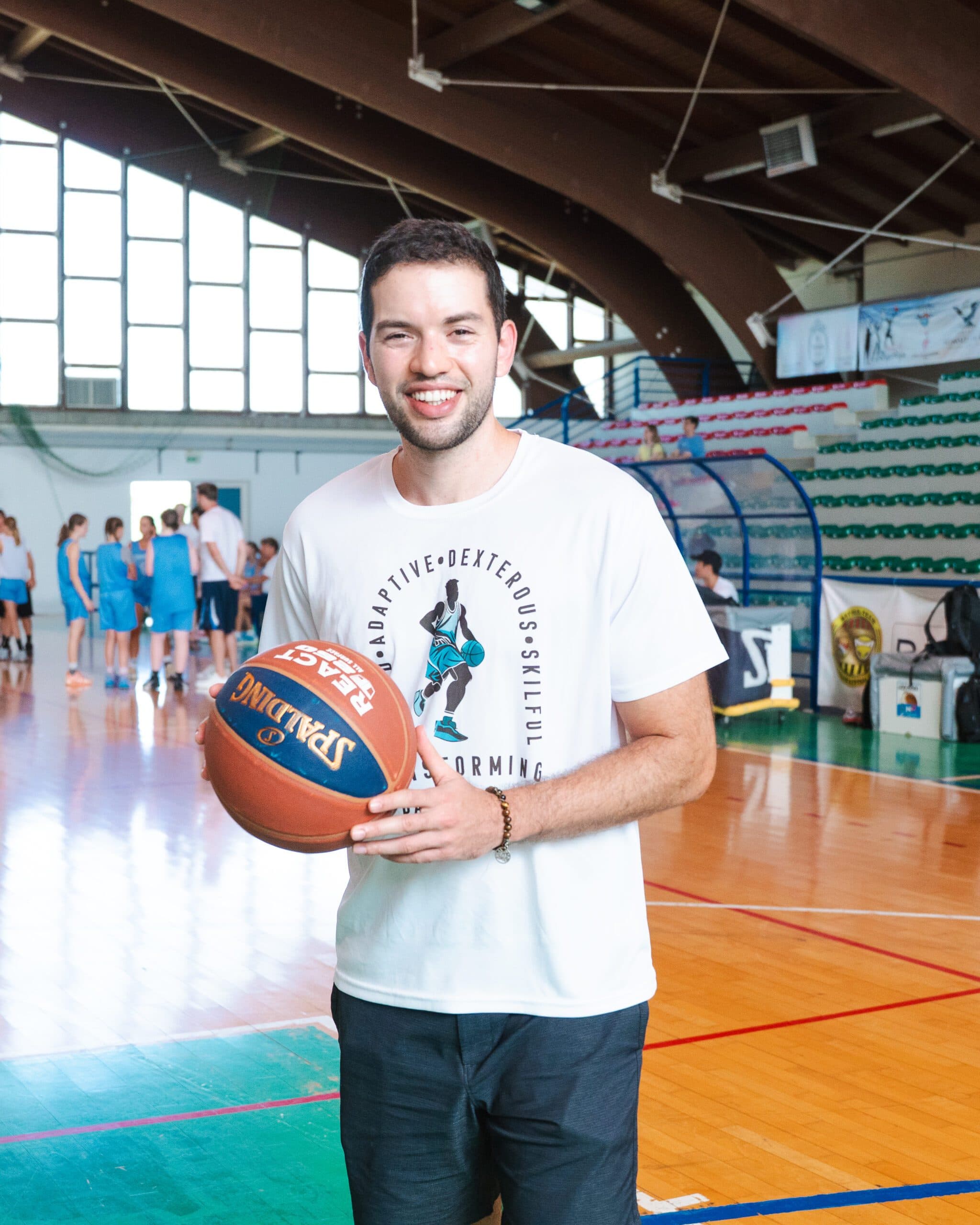

Transition principles help teammates coordinate while responding to the opportunities in front of them. Advancing the ball, filling useful space and recognizing an open scoring chance give the group a shared intention without requiring every possession to follow the same route.
Why do Principles of Play lead to more success than Rules?
In transition offense, it’s crucial to focus on guiding players with principles rather than enforcing strict rules. Instead of relying on specific "you must run here" based instructions, coaches should allow players the freedom to react to the opportunities presented to them during the game. This approach empowers players to make decisions in the moment, which leads to more effective play on the court. By trusting players to act on their instincts and the situation at hand, the offense becomes more fluid and unpredictable.
A Lesson in Trusting Principles Over Rules
When Bill Russell entered the NBA his coach, the legendary ‘Red’ Aurbach did not like that Russell would jump to block shots. Insisting that this was the ‘correct’ way to play defense. Bill Russell was a supreme athlete and jumping was a major advantage he had over his peers. So why not use it? His coach's insistence to keep his feet on the ground when contesting shots coupled with moving to a new city led to slow start for the Celtics #1 overall pick. However, Russell ignored the teachings of his coach and persisted in jumping to contest shots. What transpired is one of the greatest careers in NBA history and one of the pioneers of what has led to become the NBA we all love today.
The point of the story is not to say that Red was a ‘bad’ coach, instead, it is to highlight that even some of the most brilliant minds can always learn from the players!

Transitioning to the fast break, it is important to have a set of principles for players to follow vs instructing the rebounder to “always trail the play”, for example. Sometimes the same rebounder might have an advantage to bust out a dribble up the floor, creating an advantage for their team. Here are some of the transition principles we use at Transforming Basketball:
Transition principles:
- Bust out dribble (rebounding and pushing the ball up the floor)
- Lag free reaction (sprinting immediately after a possession change)
- Rim run
- Keep the highway clear (keeping the middle of the floor free for the dribble push)
- Zip outlets
- Kick ahead passes
- Land like a Quarterback (rebounding facing the other basket to save time and race to the opposing 3PT line within 3 seconds)
- Two side break
- ‘Bomb’ inbound (after a score)
- Clapback (score within 5 seconds of being scored on)
To learn more about these, check out our clinic on implementing a conceptual offense.
It is important for players to learn through constrained small-sided games which of these principles might produce the most advantageous situations for themselves or their teammates. For example, let's say a small-sided game is being used of 4-on-3 full court with 2 trips: the 4 players on offense will start at their own FT line, while the 3 defenders start on the half court line. As soon as the offense moves it is live.
As a coach, you can add constraints to this SSG
- Turnover (TO) = if a player runs in the highway in front of the ball (The Miami Heat call this the Mack truck lane), unless it is a rim run.
- TO = if a player does not land like a QB
- Double points = any score from a two side break
If we give instructions to players to "always outlet the ball to the point guard" on a rebound, depending on where the point guard is on the court, it might take a second or 2 to get the ball to the point guard which will reduce the chances of scoring in transition. If that same rebounder can make a decision on whether to throw a quick outlet pass OR bust out dribble then your team will not only have more players that can create advantages in transition, but will also have more scoring opportunities in transition.
To dive deeper into how constraints can enhance transition offense and overall player decision-making, check out this clinic video featuring Alex Sarama. In this video, Alex demonstrates practical ideas like the "floor is lava" drill, playing with a seven-second shot clock, and introducing further constraint adaptations. These strategies are designed to reinforce the key principles of play, pushing players to think and react in real-time, ultimately solving some of youth basketball's biggest challenges.
Recommendations
To help coaches implement the principles of transition offense and create a more dynamic, creative team, we highly recommend two powerful resources from Transforming Basketball: the Introduction to Conceptual Offense Clinic and the Game Coaching Workshop.
The Conceptual Offense clinics offers a comprehensive collection of small-sided games that focus on teaching players to use the transition principles described in this blog. With a focus on principles over rules, this clinic will help you unlock the full potential of your team's transition offense.
For coaches looking to dive deeper into the strategic aspects of the game, the Game Coaching Workshop is an invaluable resource. This workshop covers everything from designing effective practices to coaching in-game adjustments, all while emphasizing the importance of guiding principles in fast-break situations.
Check them out today and take your coaching to the next level!