
Engaging youth practices
Who it's for
Coaches of young and beginner players.
Takeaway
How to keep youth practice fun and active while still developing real skill.
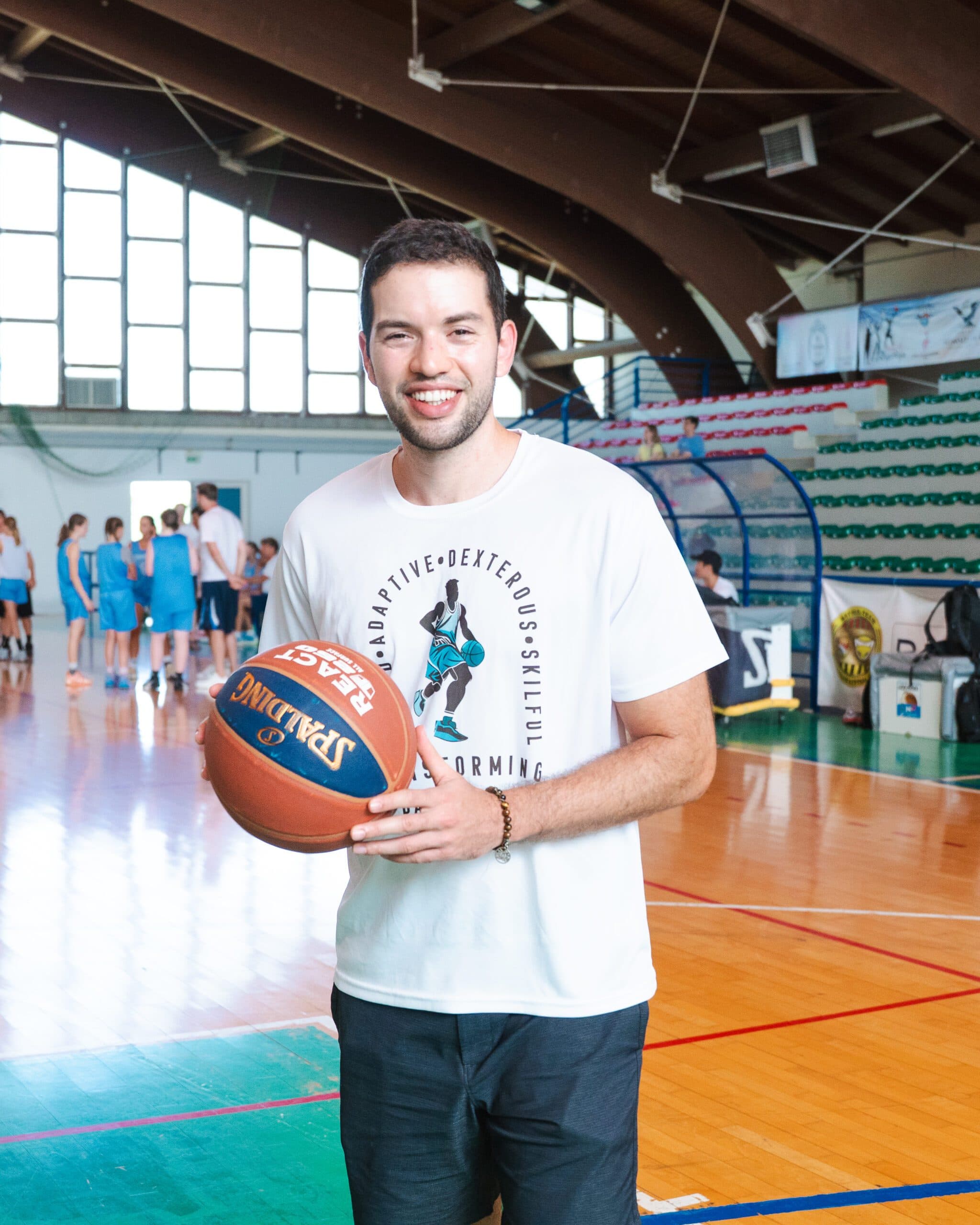
Coach educator & host of The Transforming Basketball Podcast
Goiânia, Brazil
George Vaz is a basketball coach consultant and the host of The Transforming Basketball Podcast. Based in Goiânia, Goiás, Brazil, he works with coaches, players and organizations — and as podcast host he explores the ideas behind modern, evidence-informed coaching with guests from across the game.
Youth practice· 10:24
George leads a U11 practice built around engaging, game-relevant dribbling activities.
Watch on YouTubeWho it's for
Coaches of young and beginner players.
Takeaway
How to keep youth practice fun and active while still developing real skill.
Who it's for
Coaches designing practice that transfers to games.
Takeaway
How to design activities that represent real game demands so learning transfers to play.
Who it's for
Coaches moving a team toward a conceptual, principles-based offense.
Takeaway
How to introduce conceptual offense, work through the messy phase and earn buy-in.
Context
In this Transforming Basketball video, George leads a U11 practice built around dribbling activities designed for young players.
Approach
He uses playful, representative activities that keep young players engaged while still challenging real ball-handling and decision-making.
What coaches can explore
How to design youth dribbling practice that stays fun and game-relevant, and how activity design shapes what young players actually work on.
Official Transforming Basketball videos and podcast episodes featuring George.
George explains representative practice design and coaching to the demands of the game.
Listen on SpotifyGeorge on transitioning to conceptual offense, the messy phase and stakeholder buy-in.
Listen on SpotifyAs a Transforming Clinician and the podcast's host, George brings youth-practice design and conceptual-offense ideas to camps and clinics, and helps coaches connect the show's conversations to what they run on court.
Showing 28–36 の 65 articles
What Does This Mean? The landscape of basketball coaching is shifting. It is moving towards a dynamic, player-centered approach that prioritizes decision-making and adaptability.
A conceptual offense is one where players are playing with triggers and constantly reading the defense, looking to create and exploit advantages.
Developed by psychologists Edward Deci and Richard Ryan in the 1980s, Self-Determination Theory (SDT) explains how human motivation operates on a spectrum. Rather than simply being “motivated” or “unmotivated,” SDT focuses on the quality of motivation.
In the world of sports coaching and skill acquisition, Ecological Dynamics has emerged as a powerful framework for understanding how athletes learn, adapt their movements, and perform on the court.
The dribble hand-off is one example of a trigger you can use within your conceptual offense. One of the challenges in our membership community was centered around how you would implement this trigger through a constraints-led approach.
In this blog, we touch on all the considerations coaches should take into account when creating a practice plan. It is important to write and save each practice plan.
On a recent member post (thanks to Brian Loomis), it got us thinking about a problem a lot of us have come up against at different points in our career……
Firstly, what is a trigger? A trigger is an offensive action that will ‘trigger’ or cause the first domino to fall - creating an advantage.
You may have read our first marquee blog which challenged the very nature of fundamentals.
Bring George to your club, academy or federation for a Transforming camp or clinic. Dates and clinician availability are agreed with our team when you enquire.