

Effective Player Development: The Essential Shift from “Drilling” to “Co-Designing”




If you were to ask the average person to draw a picture of a sports coach, they would likely sketch a stern figure equipped with a whistle, barking rigid instructions at exhausted athletes running between cones. For generations, the coaching profession has been synonymous with the image of a dictator or an all-knowing drill-master.
The traditional coach acts as the conductor of a classical orchestra, demanding that every player perfectly replicate their specific instructions to produce a pre-determined outcome. However, as our understanding of human movement and skill acquisition evolves, this archaic, top-down image is rapidly being dismantled. To truly maximize effective player development, the modern coach must completely reframe their role: we must shift away from “drilling” our players and move toward “co-designing” with them.
The Trap of the Drill-Master
Traditional coaching environments heavily rely on isolated, decontextualized drills where players mindlessly repeat technical movements without live defenders or realistic game pressures. In these settings, athletes are frequently treated like robots or mere cogs in a machine, expected to blindly execute rehearsed patterns.
The fundamental flaw here is that practicing actions in isolation strips away the very essence of the sport: the dynamic coupling of perception and action. When a coach dictates every movement and immediately steps in to correct any deviation from a “textbook” form, they rob the athlete of their autonomy and their natural ability to problem-solve and self organize. While these highly choreographed drills might make a practice look incredibly neat, organized, and compliant, they fail to teach players how to think, adapt, or survive the chaotic unpredictability of a real basketball game.
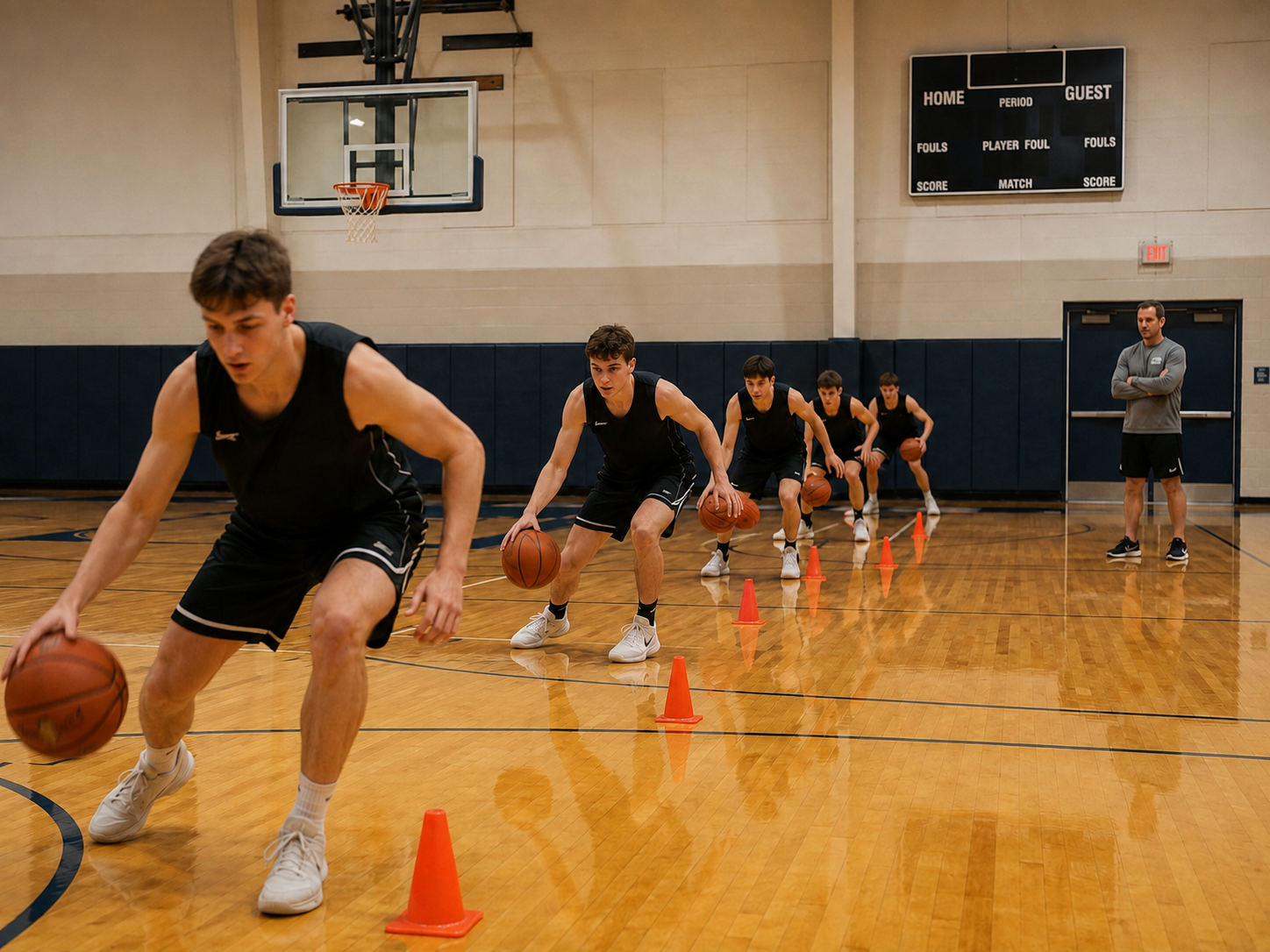
Traditional basketball coaching drill using orange cones in an isolated environment lacking game-like constraints.
Coach’s Note
To better understand why isolated drills often fail to transfer to game night, check out our deep dive into Ecological Dynamics in Basketball.
The Evolution: Coach as a “Learning Designer”
To cultivate highly adaptable, intelligent, and robust athletes, coaches must adopt the role of a “learning designer.” The ecological dynamics framework emphasizes that co-designing is a collaborative process where the coach works with the athlete to identify and manipulate the key constraints of their practice environment.
Instead of imposing a rigid instructional model, the coach and the players form a partnership. This approach places the athlete, their unique individual constraints, and their specific developmental needs at the absolute center of the learning process. By transitioning from a prescriptive instructor to a co-designer, you stop forcing players to memorize your solutions and instead empower them to discover their own.
Practical Steps to Co-Design Your Environment
If you are ready to put away the whistle and start collaborating with your players, here are three highly effective ways to implement co-designing into your player development program:
1. Empower Players to Shape Practice Constraints
Co-designing on the practice floor means granting players the autonomy to shape the rules of the games they are playing. For example, during a small-sided practice game, a coach might pause the action, step back, and give the players 20 seconds to identify and apply a new constraint to the activity.
By asking players, “How can we change this game to make it better or more challenging?”, you intentionally shift the cognitive load onto them. When players identify their own constraints—like restricting the number of dribbles, altering the scoring system, or changing the playing space—they develop critical communication and leadership skills. Practice transforms from a dictatorship into a shared laboratory of discovery, and players quickly realize that their voice holds genuine value in their own development.
Youth basketball players collaborating to co-design practice constraints and rules for a small-sided game.
2. Co-Create Player Development Plans (PDPs)
Co-designing extends far beyond the boundaries of a single practice activity; it must form the foundation of a player’s long-term developmental journey. The traditional method of player development often features a coach handing a player a generic list of weaknesses they must fix. In a co-designed environment, the coach and player sit down together to actively build an individualized Player Development Plan (PDP).
This involves a two-way dialogue where the athlete helps identify their own “rate limiters” (the physical, cognitive, or emotional barriers holding them back), their current strengths, and their future roles within the team. When a player is given true ownership and input over their PDP, they become far more intrinsically motivated to put in the necessary work and contribute to the team’s overarching goals.
Pro-Tip
Listen to our podcast episode “EP121: “Athlete-Centered Coaching – Building Autonomy, Mastery, and Purpose with Loren Anderson.”
3. Transform Your Feedback Loop: Ask, Don’t Tell
The shift from drilling to co-designing also revolutionizes how coaches deliver feedback. The outdated instructional model—where a coach tells a player what to do, watches them fail, immediately tells them what they did wrong, and prescribes the “correct” fix—completely short-circuits the athlete’s natural learning process.
In a co-designed environment, the coach acts as a guide who asks thought-provoking questions rather than providing all the answers. If a player makes a poor pass or a bad read, a co-designing coach might ask:
- “What did you see on that play?”
- “What opportunity were you trying to act upon?”
By validating the player’s perspective, the coach helps them fine-tune their attention to the environment, allowing the athlete to internally recognize their mistake rather than relying on a coach-mandated solution.
Embracing the Messiness of Growth
Why is it so difficult for coaches to abandon the drill-master persona? Often, it comes down to a fear of losing control. When you co-design practices and utilize live, constraint-led games, the environment is inherently messy, unpredictable, and filled with mistakes.
However, a co-designed environment naturally normalizes these mistakes. Because players are actively experimenting with and exploring different solutions rather than trying to perfectly replicate a sterile drill, failure is reframed as a necessary and productive step in the learning journey. It requires humility for a coach to admit that they do not hold all the answers, and that a player might organically discover a superior, individualized movement solution that the coach had never even considered.
Conclusion: Transformational over Transactional
Co-designing is the ultimate expression of transformational coaching. When we collaborate with our athletes, we treat them as complex, intelligent human beings rather than subordinates who must blindly follow orders under the threat of punishment.
The days of the autocratic, joystick-controlling basketball coach are numbered. If we want to prepare our athletes for the chaotic, dynamic realities of competition, we cannot train them in heavily dictated, robotic environments. By embracing the principles of ecological dynamics and transitioning from “drilling” to “co-designing,” we stop manufacturing compliant direction-followers and start cultivating independent, creative problem-solvers. When you share the driver’s seat with your players, you don’t lose control of your team—you empower them to reach destinations you never could have navigated to alone.




If you were to ask the average person to draw a picture of a sports coach, they would likely sketch a stern figure equipped with a whistle, barking rigid instructions at exhausted athletes running between cones. For generations, the coaching profession has been synonymous with the image of a dictator or an all-knowing drill-master.
The traditional coach acts as the conductor of a classical orchestra, demanding that every player perfectly replicate their specific instructions to produce a pre-determined outcome. However, as our understanding of human movement and skill acquisition evolves, this archaic, top-down image is rapidly being dismantled. To truly maximize effective player development, the modern coach must completely reframe their role: we must shift away from “drilling” our players and move toward “co-designing” with them.
The Trap of the Drill-Master
Traditional coaching environments heavily rely on isolated, decontextualized drills where players mindlessly repeat technical movements without live defenders or realistic game pressures. In these settings, athletes are frequently treated like robots or mere cogs in a machine, expected to blindly execute rehearsed patterns.
The fundamental flaw here is that practicing actions in isolation strips away the very essence of the sport: the dynamic coupling of perception and action. When a coach dictates every movement and immediately steps in to correct any deviation from a “textbook” form, they rob the athlete of their autonomy and their natural ability to problem-solve and self organize. While these highly choreographed drills might make a practice look incredibly neat, organized, and compliant, they fail to teach players how to think, adapt, or survive the chaotic unpredictability of a real basketball game.
Traditional basketball coaching drill using orange cones in an isolated environment lacking game-like constraints.
Coach’s Note
To better understand why isolated drills often fail to transfer to game night, check out our deep dive into Ecological Dynamics in Basketball.
The Evolution: Coach as a “Learning Designer”
To cultivate highly adaptable, intelligent, and robust athletes, coaches must adopt the role of a “learning designer.” The ecological dynamics framework emphasizes that co-designing is a collaborative process where the coach works with the athlete to identify and manipulate the key constraints of their practice environment.
Instead of imposing a rigid instructional model, the coach and the players form a partnership. This approach places the athlete, their unique individual constraints, and their specific developmental needs at the absolute center of the learning process. By transitioning from a prescriptive instructor to a co-designer, you stop forcing players to memorize your solutions and instead empower them to discover their own.
Practical Steps to Co-Design Your Environment
If you are ready to put away the whistle and start collaborating with your players, here are three highly effective ways to implement co-designing into your player development program:
1. Empower Players to Shape Practice Constraints
Co-designing on the practice floor means granting players the autonomy to shape the rules of the games they are playing. For example, during a small-sided practice game, a coach might pause the action, step back, and give the players 20 seconds to identify and apply a new constraint to the activity.
By asking players, “How can we change this game to make it better or more challenging?”, you intentionally shift the cognitive load onto them. When players identify their own constraints—like restricting the number of dribbles, altering the scoring system, or changing the playing space—they develop critical communication and leadership skills. Practice transforms from a dictatorship into a shared laboratory of discovery, and players quickly realize that their voice holds genuine value in their own development.
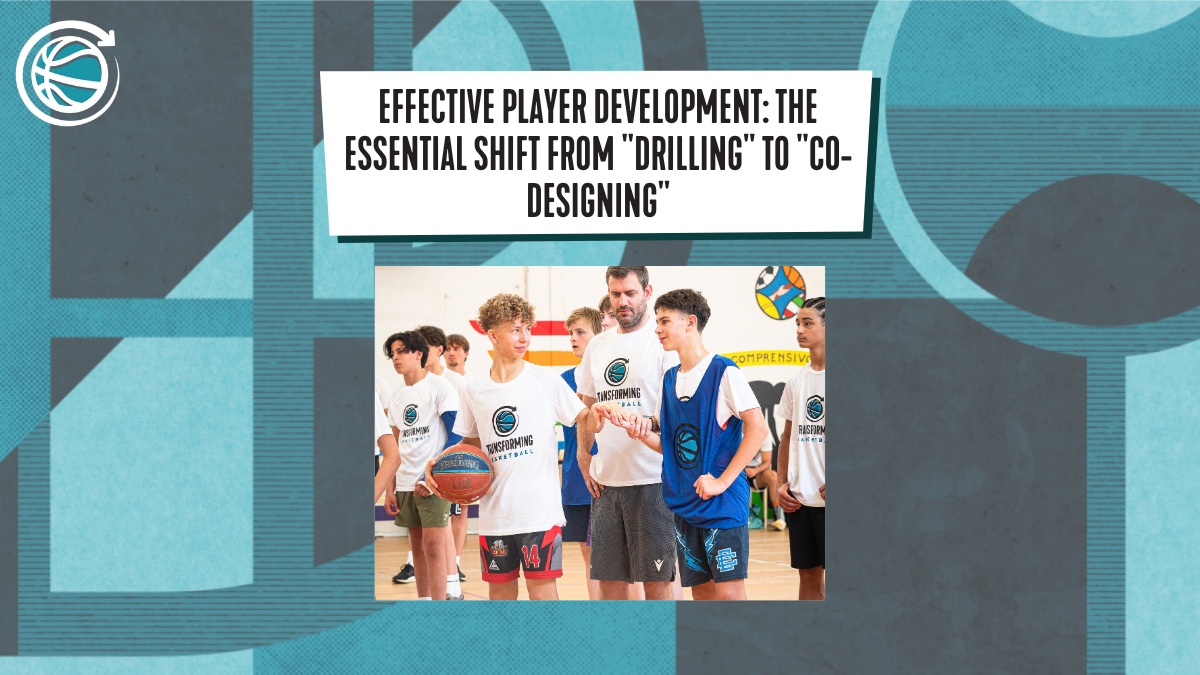
Youth basketball players collaborating to co-design practice constraints and rules for a small-sided game.
2. Co-Create Player Development Plans (PDPs)
Co-designing extends far beyond the boundaries of a single practice activity; it must form the foundation of a player’s long-term developmental journey. The traditional method of player development often features a coach handing a player a generic list of weaknesses they must fix. In a co-designed environment, the coach and player sit down together to actively build an individualized Player Development Plan (PDP).
This involves a two-way dialogue where the athlete helps identify their own “rate limiters” (the physical, cognitive, or emotional barriers holding them back), their current strengths, and their future roles within the team. When a player is given true ownership and input over their PDP, they become far more intrinsically motivated to put in the necessary work and contribute to the team’s overarching goals.
Pro-Tip
Listen to our podcast episode “EP121: “Athlete-Centered Coaching – Building Autonomy, Mastery, and Purpose with Loren Anderson.”
3. Transform Your Feedback Loop: Ask, Don’t Tell
The shift from drilling to co-designing also revolutionizes how coaches deliver feedback. The outdated instructional model—where a coach tells a player what to do, watches them fail, immediately tells them what they did wrong, and prescribes the “correct” fix—completely short-circuits the athlete’s natural learning process.
In a co-designed environment, the coach acts as a guide who asks thought-provoking questions rather than providing all the answers. If a player makes a poor pass or a bad read, a co-designing coach might ask:
- “What did you see on that play?”
- “What opportunity were you trying to act upon?”
By validating the player’s perspective, the coach helps them fine-tune their attention to the environment, allowing the athlete to internally recognize their mistake rather than relying on a coach-mandated solution.
Embracing the Messiness of Growth
Why is it so difficult for coaches to abandon the drill-master persona? Often, it comes down to a fear of losing control. When you co-design practices and utilize live, constraint-led games, the environment is inherently messy, unpredictable, and filled with mistakes.
However, a co-designed environment naturally normalizes these mistakes. Because players are actively experimenting with and exploring different solutions rather than trying to perfectly replicate a sterile drill, failure is reframed as a necessary and productive step in the learning journey. It requires humility for a coach to admit that they do not hold all the answers, and that a player might organically discover a superior, individualized movement solution that the coach had never even considered.
Conclusion: Transformational over Transactional
Co-designing is the ultimate expression of transformational coaching. When we collaborate with our athletes, we treat them as complex, intelligent human beings rather than subordinates who must blindly follow orders under the threat of punishment.
The days of the autocratic, joystick-controlling basketball coach are numbered. If we want to prepare our athletes for the chaotic, dynamic realities of competition, we cannot train them in heavily dictated, robotic environments. By embracing the principles of ecological dynamics and transitioning from “drilling” to “co-designing,” we stop manufacturing compliant direction-followers and start cultivating independent, creative problem-solvers. When you share the driver’s seat with your players, you don’t lose control of your team—you empower them to reach destinations you never could have navigated to alone.




check what's trending
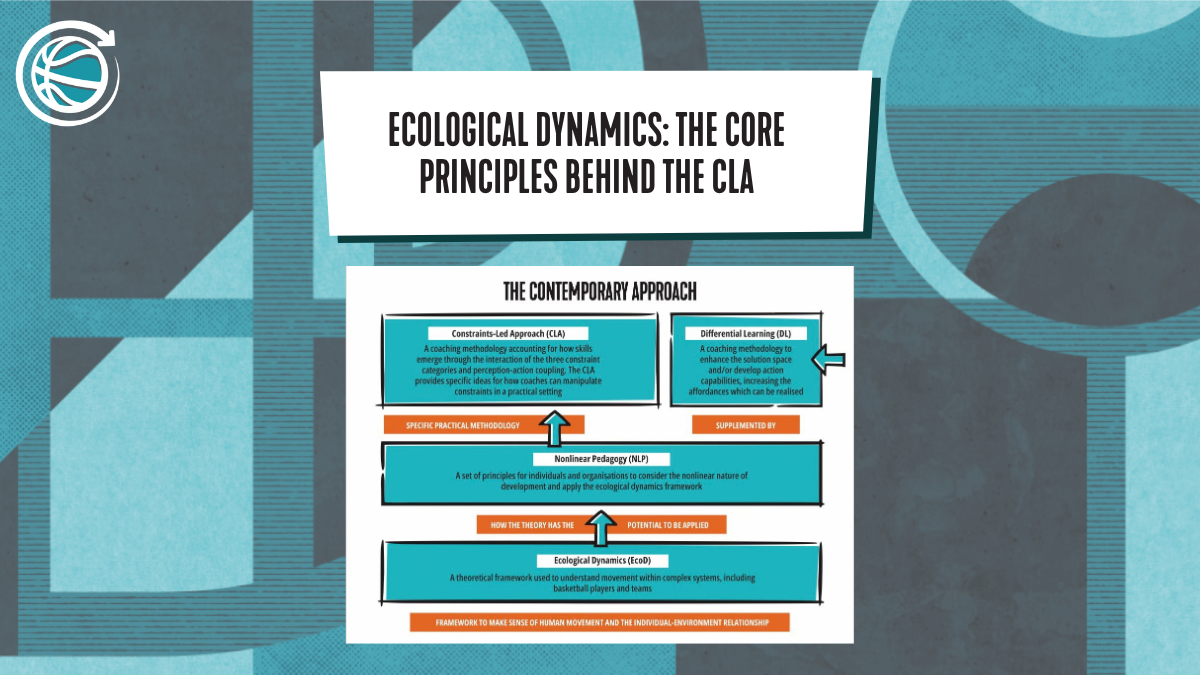
What is ecological dynamics and how is it connected to a constraints-led approach?
Dec 8, 2025
George Vaz

Are you searching for the best small sided games (SSGs) to improve your basketball practices? Want to replace boring, low-transfer drills with competitive games that actually develop player decision-making and in-game skills?
In this post, I’m sharing my top 5 favorite small-sided basketball games—designed to teach core concepts like closeouts, pick-and-roll, advantage creation, and transition offense and defense. These basketball SSGs are intense, purposeful, and built around real-game actions.
Whether you're coaching youth basketball, high school, or pros, these top small sided games will make your sessions more effective, more engaging, and more fun—for both players and coaches.
Let’s break down each game and how it can transform your practices.
Aug 4, 2025
George Vaz

Whether you’re coaching in the NBA, EuroLeague, or youth basketball, one thing remains universally true: the worst transition offense is still more efficient than the best half-court offense. Yet, many teams still struggle to fully capitalize on transition opportunities, often opting to slow down the game instead of pushing the pace. The question is, why? By running more intentionally, teams can create easier scoring opportunities. So why do some teams hesitate?
Apr 7, 2025
George Vaz
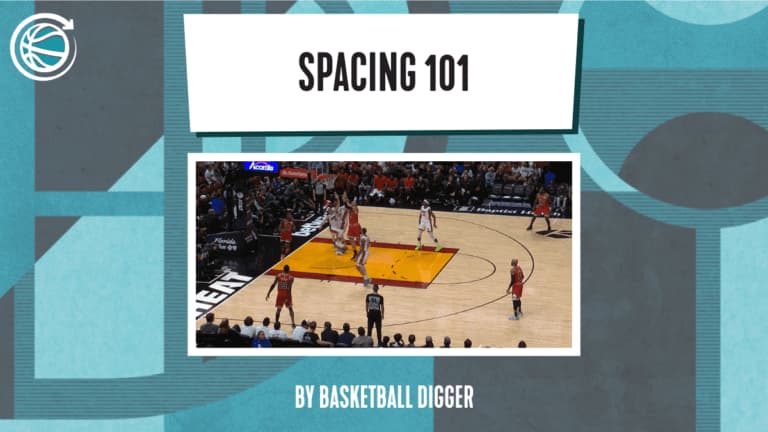
Spacing has changed the game. NBA offenses today look nothing like they did in the ’90s—more threes, better efficiency, and smarter shot selection. But why? The key lies in how teams use space to create and capitalize on advantages.
Mar 31, 2025
Simon Caret
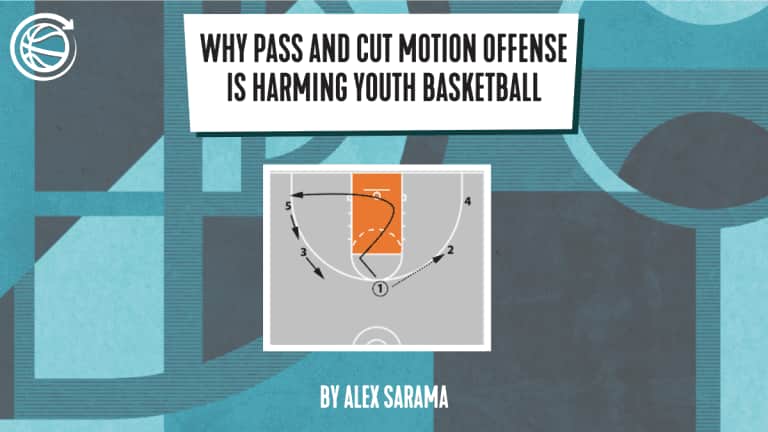
This article breaks down why pass and cut motion offense limits youth player development, and explores better ways to teach spacing, decision-making, and offensive creativity.
May 1, 2024
Alex Sarama
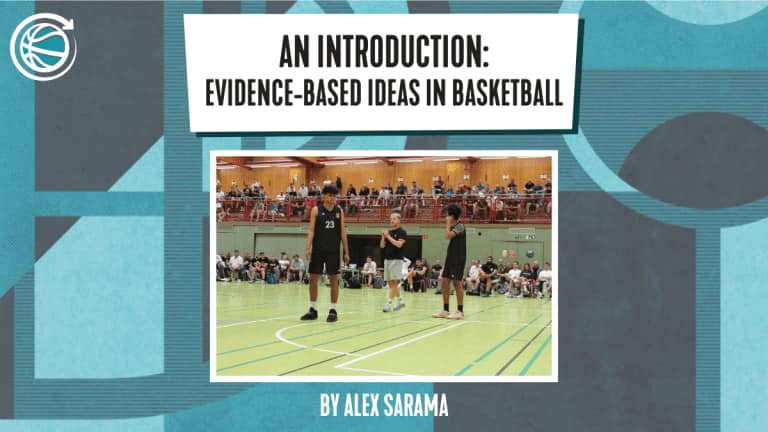
Approaches within the basketball industry are predominantly based upon experiential knowledge and traditions.


