

Why Scrap the Mikan Drill? An Alternative Way to Build Elite Variable Finishing
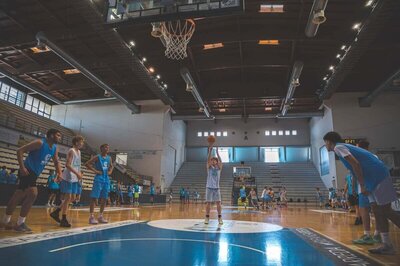




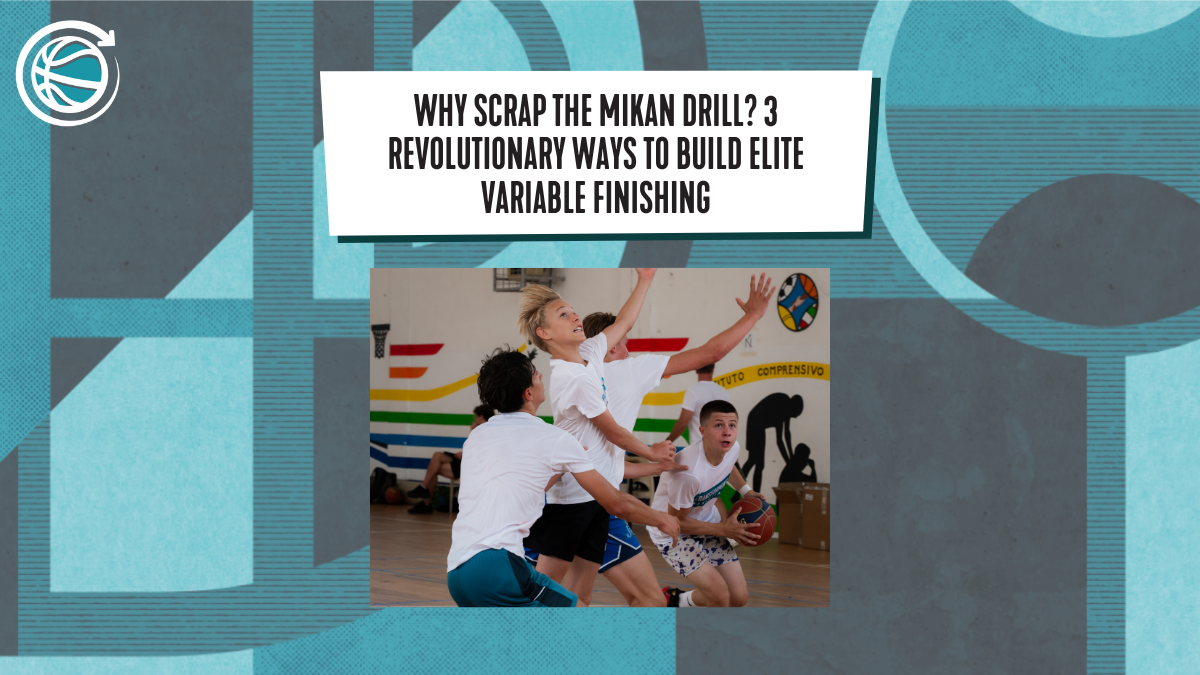
Mikan drill alternatives are becoming essential for basketball coaches who want players to finish effectively in real game situations, not just look good in empty-gym workouts.
The Illusion of Competence: Why Traditional Drills Fail
The fundamental flaw of the Mikan drill is that it operates in a complete vacuum. This drill contains absolutely no physical contact, no live defense, and zero decision-making. Because the environment is entirely sterile and predictable, players quickly achieve a 90% to 95% success rate as soon as they get familiar with the rhythm.
This creates a dangerous “illusion of competence,” developing what we call “workout warriors”—players who look incredible executing perfectly rehearsed moves in an empty gym but freeze when it comes to game time.
In a real basketball game, finishing is never a closed, predictable loop. Basketball is an open, dynamic environment where the defense constantly dictates what is and is not possible. When athletes spend hours perfecting the exact same rhythmic layup against air, they are essentially training their bodies for choreography, not for the unpredictable chaos of competition.
Practicing moves “on-air” effectively destroys perception-action coupling because it trains players to execute an action without first perceiving a live, shifting environment.
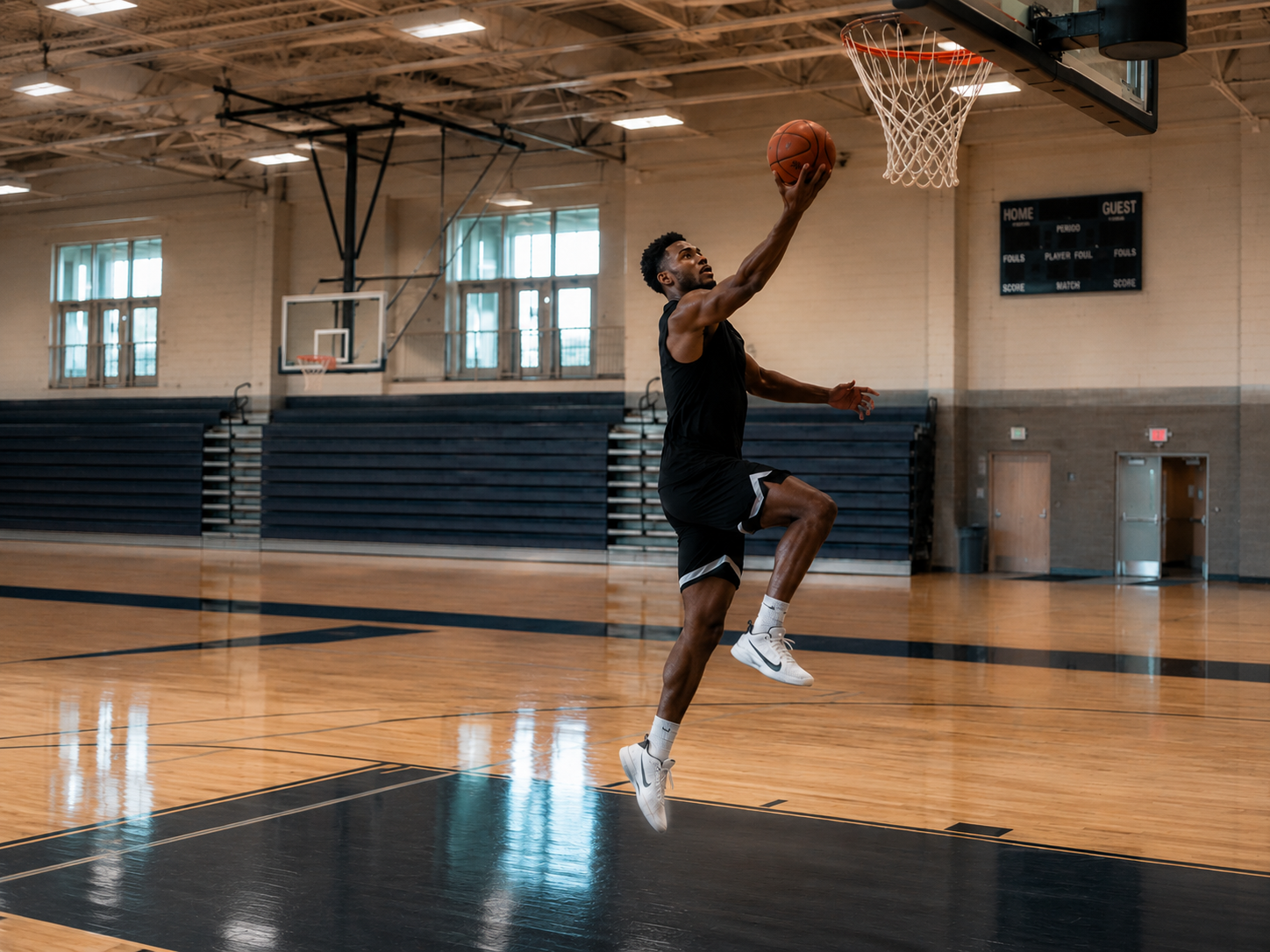
Basketball player performing isolated finishing drills in an empty gym showing lack of game-like constraints.
Coach’s Note: For more on how perception-action coupling dictates elite scoring, check out our internal guide on The Science of Game-Speed Skill Acquisition.
The Science of Variable Finishing: Repetition Without Repetition
To build truly elite finishers, we must redefine what skill actually is. Skill is not a robotic technique or a “muscle memory” stored in the brain; rather, skill is an adaptive, functional relationship between the player and their environment.
Because the landscape of a basketball game is constantly changing, no two finishes at the rim will ever be exactly the same. The distance from the hoop, the angle of the defender’s arms, and the player’s momentum will always vary. Therefore, demanding that players repeat the exact same footwork or hand placement over and over again actively hinders their development.
Unlocking Movement Degeneracy
Instead of rote repetition, athletes need “repetition without repetition.” This concept emphasizes repeating the cognitive and physical process of solving a problem, rather than just repeating a single, idealized solution. By moving away from isolated drills, coaches can help players unlock:
- Degeneracy: The ability to use multiple different movement solutions to achieve the same task goal.
- Degrees of Freedom: Learning to finish off one foot or two feet, using inside or outside hands.
- Body Contortion: Finding creative ways to score from awkward, non-traditional angles.
Pro-Tip: Think about how to design SSGs and manipulate the constraints where players will naturally explore these type of finishes.
The Ultimate Alternative: “Smile 1-on-1”
If we abandon the Mikan drill, how do we effectively teach finishing? The answer lies in using the Constraints-Led Approach (CLA) to design small-sided games that look and feel like real basketball.
One of the best direct replacements for the Mikan drill is an activity called “Smile 1-on-1.” Essentially, this SSG is the Mikan Drill with a defender.
How to Play “Smile 1-on-1”:
- 2 Players start in the “smile” under the basket.
- No Stoppage: If the player misses or makes the shot, the play continues. Whoever rebounds the ball tries to score again.
- High Score wins after a set amount of time.
Drill demonstration of Smile 1-on-1 highlighting physical contact and rebounding transitions.
Manipulating Constraints to Guide Development
The beauty of variable finishing games like the one above is that a coach can manipulate task constraints to target specific weaknesses.
- Bursts: Offense stays for a certain amount of time. Eg., 45 seconds.
- Use Guided Defense: If live 1-on-1 is too chaotic, have the defender hold a medicine ball or restrict them from jumping. This is an example of “Task Simplification”.
- Add a Dribble: Offense has 1 dribble every time they gain possession.
- Change Scoring Systems: This could be specific to the player’s weaknesses. eg., Weak hand scores = double points
Coach’s Note: To hear more about designing these environments, listen to Episode 122 of The Transforming Basketball Podcast where we discuss building adaptable finishers with guided defenders.
Conclusion: Embrace the Chaos
The Mikan drill belongs in a museum, not in a modern basketball practice. By stripping away the defense, the decision-making, and the chaos of the game, traditional finishing drills rob players of the very experiences they need to become elite performers. To build highly adaptable, resilient finishers, coaches must embrace functional variability. Throw out the cones, add a live defender, and let the unpredictable nature of the game become your greatest teacher.


Mikan drill alternatives are becoming essential for basketball coaches who want players to finish effectively in real game situations, not just look good in empty-gym workouts.
The Illusion of Competence: Why Traditional Drills Fail
The fundamental flaw of the Mikan drill is that it operates in a complete vacuum. This drill contains absolutely no physical contact, no live defense, and zero decision-making. Because the environment is entirely sterile and predictable, players quickly achieve a 90% to 95% success rate as soon as they get familiar with the rhythm.
This creates a dangerous “illusion of competence,” developing what we call “workout warriors”—players who look incredible executing perfectly rehearsed moves in an empty gym but freeze when it comes to game time.
In a real basketball game, finishing is never a closed, predictable loop. Basketball is an open, dynamic environment where the defense constantly dictates what is and is not possible. When athletes spend hours perfecting the exact same rhythmic layup against air, they are essentially training their bodies for choreography, not for the unpredictable chaos of competition.
Practicing moves “on-air” effectively destroys perception-action coupling because it trains players to execute an action without first perceiving a live, shifting environment.
Basketball player performing isolated finishing drills in an empty gym showing lack of game-like constraints.
Coach’s Note: For more on how perception-action coupling dictates elite scoring, check out our internal guide on The Science of Game-Speed Skill Acquisition.
The Science of Variable Finishing: Repetition Without Repetition
To build truly elite finishers, we must redefine what skill actually is. Skill is not a robotic technique or a “muscle memory” stored in the brain; rather, skill is an adaptive, functional relationship between the player and their environment.
Because the landscape of a basketball game is constantly changing, no two finishes at the rim will ever be exactly the same. The distance from the hoop, the angle of the defender’s arms, and the player’s momentum will always vary. Therefore, demanding that players repeat the exact same footwork or hand placement over and over again actively hinders their development.
Unlocking Movement Degeneracy
Instead of rote repetition, athletes need “repetition without repetition.” This concept emphasizes repeating the cognitive and physical process of solving a problem, rather than just repeating a single, idealized solution. By moving away from isolated drills, coaches can help players unlock:
- Degeneracy: The ability to use multiple different movement solutions to achieve the same task goal.
- Degrees of Freedom: Learning to finish off one foot or two feet, using inside or outside hands.
- Body Contortion: Finding creative ways to score from awkward, non-traditional angles.
Pro-Tip: Think about how to design SSGs and manipulate the constraints where players will naturally explore these type of finishes.
The Ultimate Alternative: “Smile 1-on-1”
If we abandon the Mikan drill, how do we effectively teach finishing? The answer lies in using the Constraints-Led Approach (CLA) to design small-sided games that look and feel like real basketball.
One of the best direct replacements for the Mikan drill is an activity called “Smile 1-on-1.” Essentially, this SSG is the Mikan Drill with a defender.
How to Play “Smile 1-on-1”:
- 2 Players start in the “smile” under the basket.
- No Stoppage: If the player misses or makes the shot, the play continues. Whoever rebounds the ball tries to score again.
- High Score wins after a set amount of time.
Drill demonstration of Smile 1-on-1 highlighting physical contact and rebounding transitions.
Manipulating Constraints to Guide Development
The beauty of variable finishing games like the one above is that a coach can manipulate task constraints to target specific weaknesses.
- Bursts: Offense stays for a certain amount of time. Eg., 45 seconds.
- Use Guided Defense: If live 1-on-1 is too chaotic, have the defender hold a medicine ball or restrict them from jumping. This is an example of “Task Simplification”.
- Add a Dribble: Offense has 1 dribble every time they gain possession.
- Change Scoring Systems: This could be specific to the player’s weaknesses. eg., Weak hand scores = double points
Coach’s Note: To hear more about designing these environments, listen to Episode 122 of The Transforming Basketball Podcast where we discuss building adaptable finishers with guided defenders.
Conclusion: Embrace the Chaos
The Mikan drill belongs in a museum, not in a modern basketball practice. By stripping away the defense, the decision-making, and the chaos of the game, traditional finishing drills rob players of the very experiences they need to become elite performers. To build highly adaptable, resilient finishers, coaches must embrace functional variability. Throw out the cones, add a live defender, and let the unpredictable nature of the game become your greatest teacher.




check what's trending

What is ecological dynamics and how is it connected to a constraints-led approach?
Dec 8, 2025
George Vaz

Are you searching for the best small sided games (SSGs) to improve your basketball practices? Want to replace boring, low-transfer drills with competitive games that actually develop player decision-making and in-game skills?
In this post, I’m sharing my top 5 favorite small-sided basketball games—designed to teach core concepts like closeouts, pick-and-roll, advantage creation, and transition offense and defense. These basketball SSGs are intense, purposeful, and built around real-game actions.
Whether you're coaching youth basketball, high school, or pros, these top small sided games will make your sessions more effective, more engaging, and more fun—for both players and coaches.
Let’s break down each game and how it can transform your practices.
Aug 4, 2025
George Vaz

Whether you’re coaching in the NBA, EuroLeague, or youth basketball, one thing remains universally true: the worst transition offense is still more efficient than the best half-court offense. Yet, many teams still struggle to fully capitalize on transition opportunities, often opting to slow down the game instead of pushing the pace. The question is, why? By running more intentionally, teams can create easier scoring opportunities. So why do some teams hesitate?
Apr 7, 2025
George Vaz
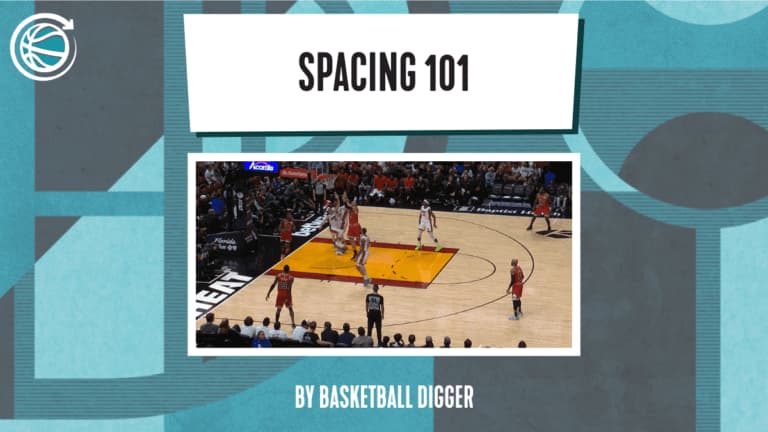
Spacing has changed the game. NBA offenses today look nothing like they did in the ’90s—more threes, better efficiency, and smarter shot selection. But why? The key lies in how teams use space to create and capitalize on advantages.
Mar 31, 2025
Simon Caret
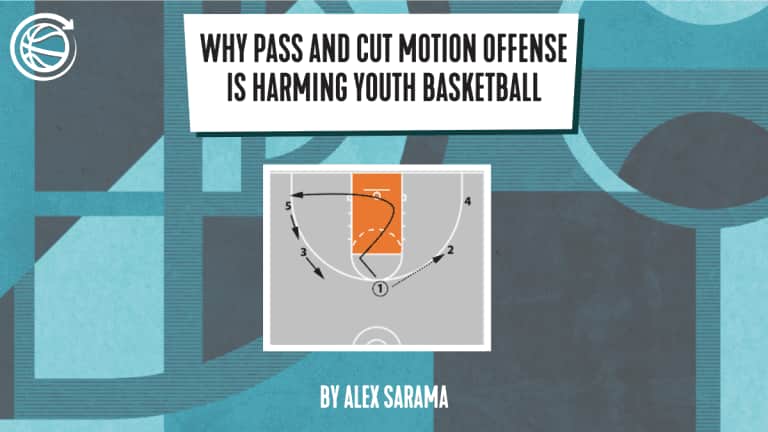
This article breaks down why pass and cut motion offense limits youth player development, and explores better ways to teach spacing, decision-making, and offensive creativity.
May 1, 2024
Alex Sarama
Approaches within the basketball industry are predominantly based upon experiential knowledge and traditions.


