

The Trap of Path Dependency: 4 Essential Ways to Stop Coaching Like it’s 1990
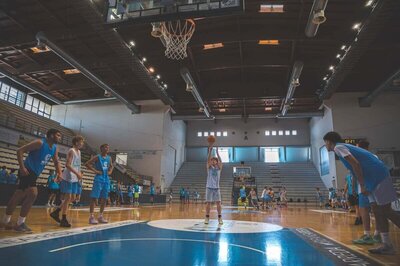




Walk into almost any basketball gymnasium around the world, and you will likely witness a remarkably familiar scene. You will see players jogging in straight lines, performing static stretching routines, participating in 1-on-0 layup lines, and executing highly choreographed three-man weaves. The practices look neat, organized, and compliant.
But if you stop and ask the coach why they are running these specific drills, the most common underlying answer is startlingly simple: “Because that is how my coach did it.”
This phenomenon is known in coaching research as the custodial approach. It refers to the tendency for coaches to design their sessions based entirely on their own history as players. This creates a vicious cycle of path dependency, where practitioners continue to rely on outdated, traditional approaches despite the existence of superior, evidence-based ideas regarding human movement.
The basketball world has become plagued by a “copy and paste” mentality, where coaches blindly replicate systems from celebrity mentors without considering if those methods actually serve the athletes in front of them.
The Comfort of Tradition and the Illusion of Competence
Why is path dependency so hard to break? In short, tradition is comforting. When a coach implements a rigid, 5-on-0 offensive sequence, the players eventually memorize the pattern, and it looks beautiful in an empty gym.
These traditional drills—which often remove the defense entirely—make coaches feel invaluable. They allow the coach to constantly provide instruction, correct technique, and micromanage every movement. This creates an illusion of competence; the players look good in practice, but that skill rarely translates to the scoreboard.
The Problem with “Muscle Memory”
Furthermore, there are intense sociocultural pressures at play. Parents and administrators have preconceived expectations of what a “good” practice looks like. If a practice is chaotic, loud, and full of mistakes, traditionalists often view it as a failure of coaching.
However, this paradigm is rooted in an outdated “Information Processing” theory. It falsely assumes the human brain operates like a computer that stores fixed “muscle memory.” By breaking the game down into isolated technical components—like repeating a crossover against a static cone—coaches are training their players for choreography, not the chaos of basketball.
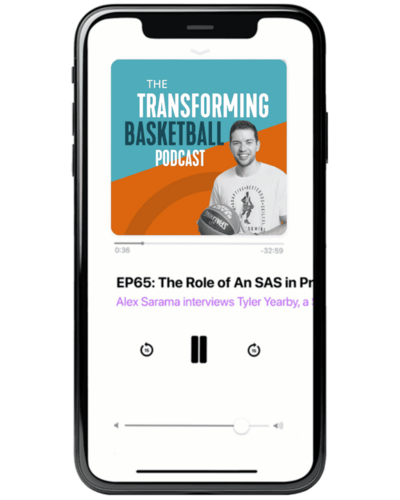
Episode 87 of The Transforming Basketball Podcast: This is your primary resource for a deep dive into the topic. The entire episode is dedicated to unpacking the controversy around muscle memory. The hosts discuss the traditional “information processing” view—which treats the brain like a central executive issuing orders—and contrast it with ecological dynamics. They specifically highlight the “storage problem,” questioning how it would be physically possible for the body to store a separate, idealized movement pattern for every single contextual variation a player might face in a game
Coach’s Note: Want to dive deeper into why “muscle memory” is a myth? Check out our podcast above.
Why the Traditional Approach Fails on Game Day
The greatest flaw in coaching the way we were coached is that it actively destroys perception-action coupling. In a live basketball game, movement is never pre-planned; it is a problem-solving activity driven by what the player perceives in their shifting environment.
Players do not execute a pass just because a rigid offensive pattern tells them to; they should pass because they perceive a specific opportunity for action, known as an affordance.
The Training Disconnect
When athletes spend hours perfecting isolated moves on-air, they are training action without perception.
- They might look like magicians in a sterile gym.
- The moment they face live, unpredictable defenders, they freeze.
- Rehearsed techniques fall apart because players haven’t learned to adapt.
As Professor Keith Davids aptly put it, “You cannot adapt to an environment you do not inhabit.” If your practice lacks defenders and live decisions, it lacks the very essence of basketball.
Technical demonstration showing the difference between a cone drill and a 1-on-1 small-sided game with a live defender.
4 Ways to Break the Cycle: Embracing an Evidence-Based Approach
If we want to develop truly intelligent, adaptable athletes, we must have the courage to break free from path dependency. This requires a fundamental paradigm shift toward Ecological Dynamics and the Constraints-Led Approach (CLA).
1. Redefine What “Skill” Actually Means
Stop viewing skill as a fixed technique that a player repeats. Instead, see skill as an adaptive, functional relationship between the player and their environment. A skilled player is one who can constantly self-organize their body to solve whatever unique problem the game presents in real-time.
2. Ditch the Cones and Add a Live Defender
To ensure your practices actually transfer to game day, you must embrace representative learning design. This means practice tasks must look and feel like the real game. The simplest way to break out of traditional drilling is to remove the cones and ensure there is a live defender and a real decision to be made in almost every activity.
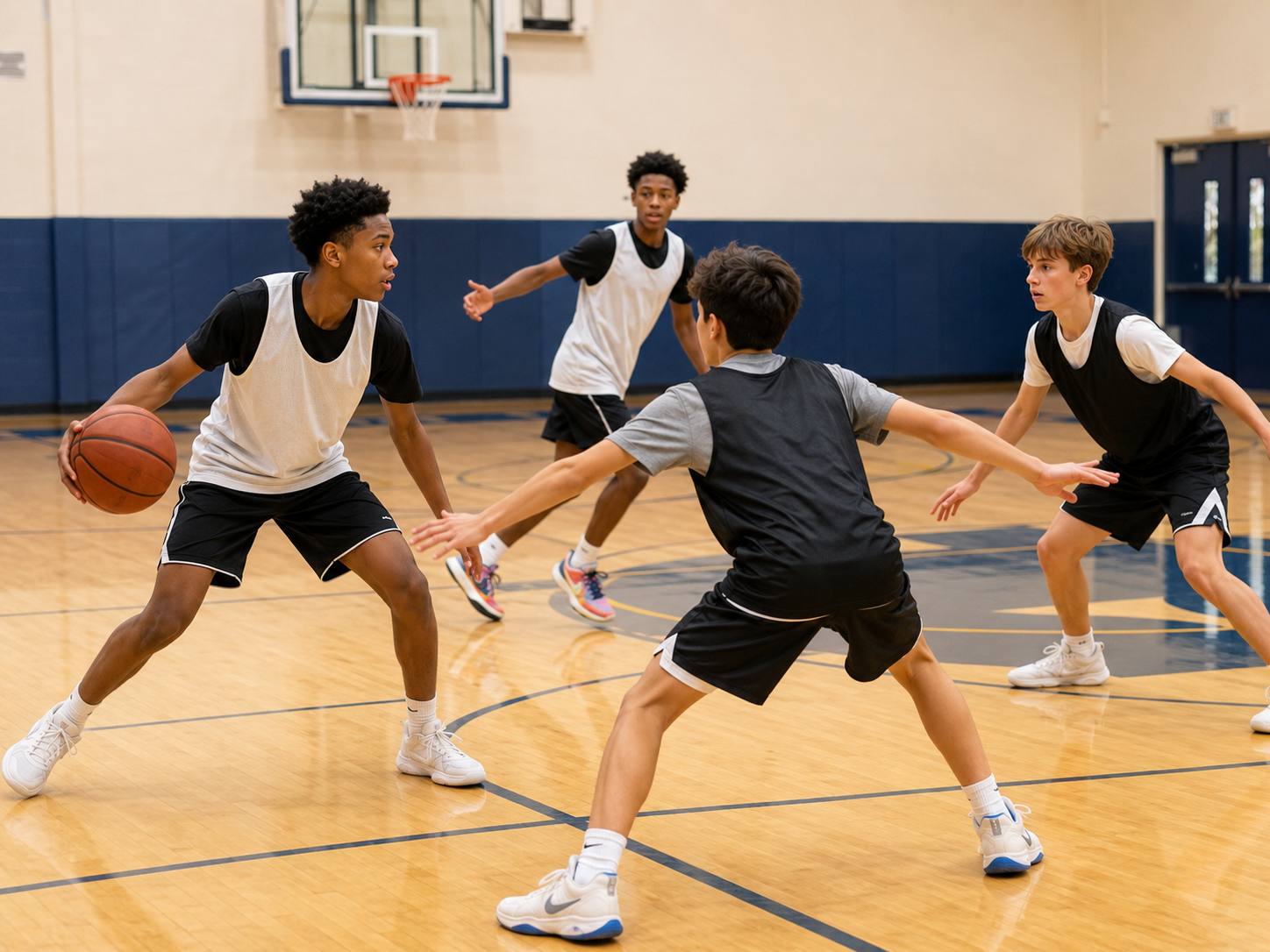
Youth basketball players engaging in a 2-on-2 small-sided game to practice perception-action coupling and decision making.
3. Become a Game Designer, Not a Drill Master
Instead of stopping practice every thirty seconds to deliver a monologue, shift your role to that of an architect. Using the CLA, manipulate specific task constraints to guide players toward discovering solutions.
- Example: If you want to stop contested mid-range jumpers, change the scoring system so rim finishes are worth 3 points and mid-range shots are worth minus-1. The environment becomes the teacher.
4. Embrace the Messiness of Learning
True learning is non-linear and inherently messy. When you introduce live, small-sided games, players will initially turn the ball over and look uncoordinated. You must resist the urge to revert to “safe,” unopposed drills. By suffering through the chaos, you are building robust, resilient athletes.
Conclusion: Challenging the Status Quo
The game of basketball has evolved tremendously, and our coaching methods must evolve with it. By stepping away from the comforting traditions of the past and embracing an evidence-based approach, we stop creating robotic instruction-followers and start developing adaptable, creative, and highly skilled basketball players.



Walk into almost any basketball gymnasium around the world, and you will likely witness a remarkably familiar scene. You will see players jogging in straight lines, performing static stretching routines, participating in 1-on-0 layup lines, and executing highly choreographed three-man weaves. The practices look neat, organized, and compliant.
But if you stop and ask the coach why they are running these specific drills, the most common underlying answer is startlingly simple: “Because that is how my coach did it.”
This phenomenon is known in coaching research as the custodial approach. It refers to the tendency for coaches to design their sessions based entirely on their own history as players. This creates a vicious cycle of path dependency, where practitioners continue to rely on outdated, traditional approaches despite the existence of superior, evidence-based ideas regarding human movement.
The basketball world has become plagued by a “copy and paste” mentality, where coaches blindly replicate systems from celebrity mentors without considering if those methods actually serve the athletes in front of them.
The Comfort of Tradition and the Illusion of Competence
Why is path dependency so hard to break? In short, tradition is comforting. When a coach implements a rigid, 5-on-0 offensive sequence, the players eventually memorize the pattern, and it looks beautiful in an empty gym.
These traditional drills—which often remove the defense entirely—make coaches feel invaluable. They allow the coach to constantly provide instruction, correct technique, and micromanage every movement. This creates an illusion of competence; the players look good in practice, but that skill rarely translates to the scoreboard.
The Problem with “Muscle Memory”
Furthermore, there are intense sociocultural pressures at play. Parents and administrators have preconceived expectations of what a “good” practice looks like. If a practice is chaotic, loud, and full of mistakes, traditionalists often view it as a failure of coaching.
However, this paradigm is rooted in an outdated “Information Processing” theory. It falsely assumes the human brain operates like a computer that stores fixed “muscle memory.” By breaking the game down into isolated technical components—like repeating a crossover against a static cone—coaches are training their players for choreography, not the chaos of basketball.
Episode 87 of The Transforming Basketball Podcast: This is your primary resource for a deep dive into the topic. The entire episode is dedicated to unpacking the controversy around muscle memory. The hosts discuss the traditional “information processing” view—which treats the brain like a central executive issuing orders—and contrast it with ecological dynamics. They specifically highlight the “storage problem,” questioning how it would be physically possible for the body to store a separate, idealized movement pattern for every single contextual variation a player might face in a game
Coach’s Note: Want to dive deeper into why “muscle memory” is a myth? Check out our podcast above.
Why the Traditional Approach Fails on Game Day
The greatest flaw in coaching the way we were coached is that it actively destroys perception-action coupling. In a live basketball game, movement is never pre-planned; it is a problem-solving activity driven by what the player perceives in their shifting environment.
Players do not execute a pass just because a rigid offensive pattern tells them to; they should pass because they perceive a specific opportunity for action, known as an affordance.
The Training Disconnect
When athletes spend hours perfecting isolated moves on-air, they are training action without perception.
- They might look like magicians in a sterile gym.
- The moment they face live, unpredictable defenders, they freeze.
- Rehearsed techniques fall apart because players haven’t learned to adapt.
As Professor Keith Davids aptly put it, “You cannot adapt to an environment you do not inhabit.” If your practice lacks defenders and live decisions, it lacks the very essence of basketball.
Technical demonstration showing the difference between a cone drill and a 1-on-1 small-sided game with a live defender.
4 Ways to Break the Cycle: Embracing an Evidence-Based Approach
If we want to develop truly intelligent, adaptable athletes, we must have the courage to break free from path dependency. This requires a fundamental paradigm shift toward Ecological Dynamics and the Constraints-Led Approach (CLA).
1. Redefine What “Skill” Actually Means
Stop viewing skill as a fixed technique that a player repeats. Instead, see skill as an adaptive, functional relationship between the player and their environment. A skilled player is one who can constantly self-organize their body to solve whatever unique problem the game presents in real-time.
2. Ditch the Cones and Add a Live Defender
To ensure your practices actually transfer to game day, you must embrace representative learning design. This means practice tasks must look and feel like the real game. The simplest way to break out of traditional drilling is to remove the cones and ensure there is a live defender and a real decision to be made in almost every activity.
Youth basketball players engaging in a 2-on-2 small-sided game to practice perception-action coupling and decision making.
3. Become a Game Designer, Not a Drill Master
Instead of stopping practice every thirty seconds to deliver a monologue, shift your role to that of an architect. Using the CLA, manipulate specific task constraints to guide players toward discovering solutions.
- Example: If you want to stop contested mid-range jumpers, change the scoring system so rim finishes are worth 3 points and mid-range shots are worth minus-1. The environment becomes the teacher.
4. Embrace the Messiness of Learning
True learning is non-linear and inherently messy. When you introduce live, small-sided games, players will initially turn the ball over and look uncoordinated. You must resist the urge to revert to “safe,” unopposed drills. By suffering through the chaos, you are building robust, resilient athletes.
Conclusion: Challenging the Status Quo
The game of basketball has evolved tremendously, and our coaching methods must evolve with it. By stepping away from the comforting traditions of the past and embracing an evidence-based approach, we stop creating robotic instruction-followers and start developing adaptable, creative, and highly skilled basketball players.




check what's trending

What is ecological dynamics and how is it connected to a constraints-led approach?
Dec 8, 2025
George Vaz

Are you searching for the best small sided games (SSGs) to improve your basketball practices? Want to replace boring, low-transfer drills with competitive games that actually develop player decision-making and in-game skills?
In this post, I’m sharing my top 5 favorite small-sided basketball games—designed to teach core concepts like closeouts, pick-and-roll, advantage creation, and transition offense and defense. These basketball SSGs are intense, purposeful, and built around real-game actions.
Whether you're coaching youth basketball, high school, or pros, these top small sided games will make your sessions more effective, more engaging, and more fun—for both players and coaches.
Let’s break down each game and how it can transform your practices.
Aug 4, 2025
George Vaz

Whether you’re coaching in the NBA, EuroLeague, or youth basketball, one thing remains universally true: the worst transition offense is still more efficient than the best half-court offense. Yet, many teams still struggle to fully capitalize on transition opportunities, often opting to slow down the game instead of pushing the pace. The question is, why? By running more intentionally, teams can create easier scoring opportunities. So why do some teams hesitate?
Apr 7, 2025
George Vaz
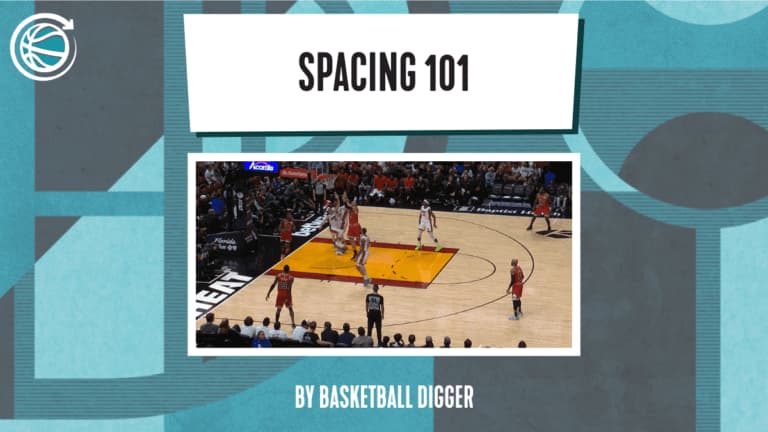
Spacing has changed the game. NBA offenses today look nothing like they did in the ’90s—more threes, better efficiency, and smarter shot selection. But why? The key lies in how teams use space to create and capitalize on advantages.
Mar 31, 2025
Simon Caret
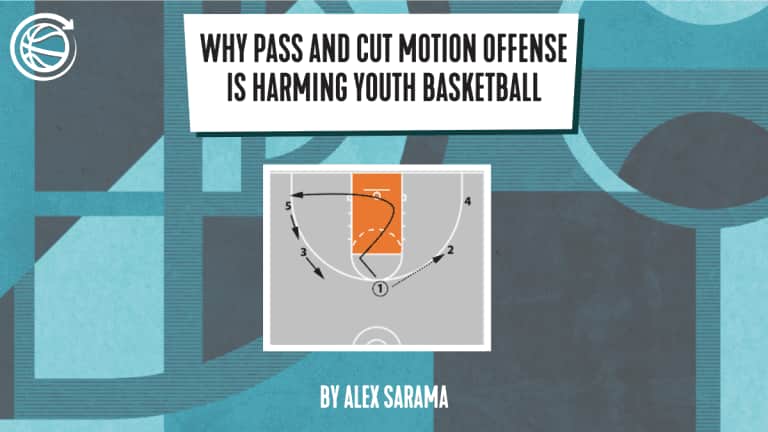
This article breaks down why pass and cut motion offense limits youth player development, and explores better ways to teach spacing, decision-making, and offensive creativity.
May 1, 2024
Alex Sarama
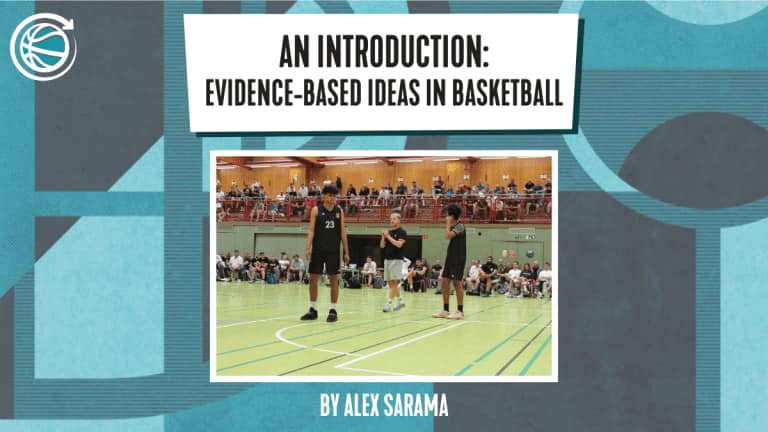
Approaches within the basketball industry are predominantly based upon experiential knowledge and traditions.


