

Basketball Performance: 3 Essential Ways to Integrate Tactical, Physical, and Mental Training





Traditional sports organizations tend to operate in isolated departments. The athletic performance staff, the basketball coaches, and the medical or mental skills experts rarely speak the same language or share the same theoretical framework. The problem with this reductionist method is the eagerness of individual specialists to quantify progress in isolated, de-contextualized components.
But basketball is not played in a vacuum. A player does not experience physical fatigue, mental stress, and tactical decision-making as separate events; they experience them all at once in the chaotic, dynamic environment of a live game. To truly maximize player development, we must tear down these silos and build a unified, integrated approach.
The Problem with the Assembly Line Approach
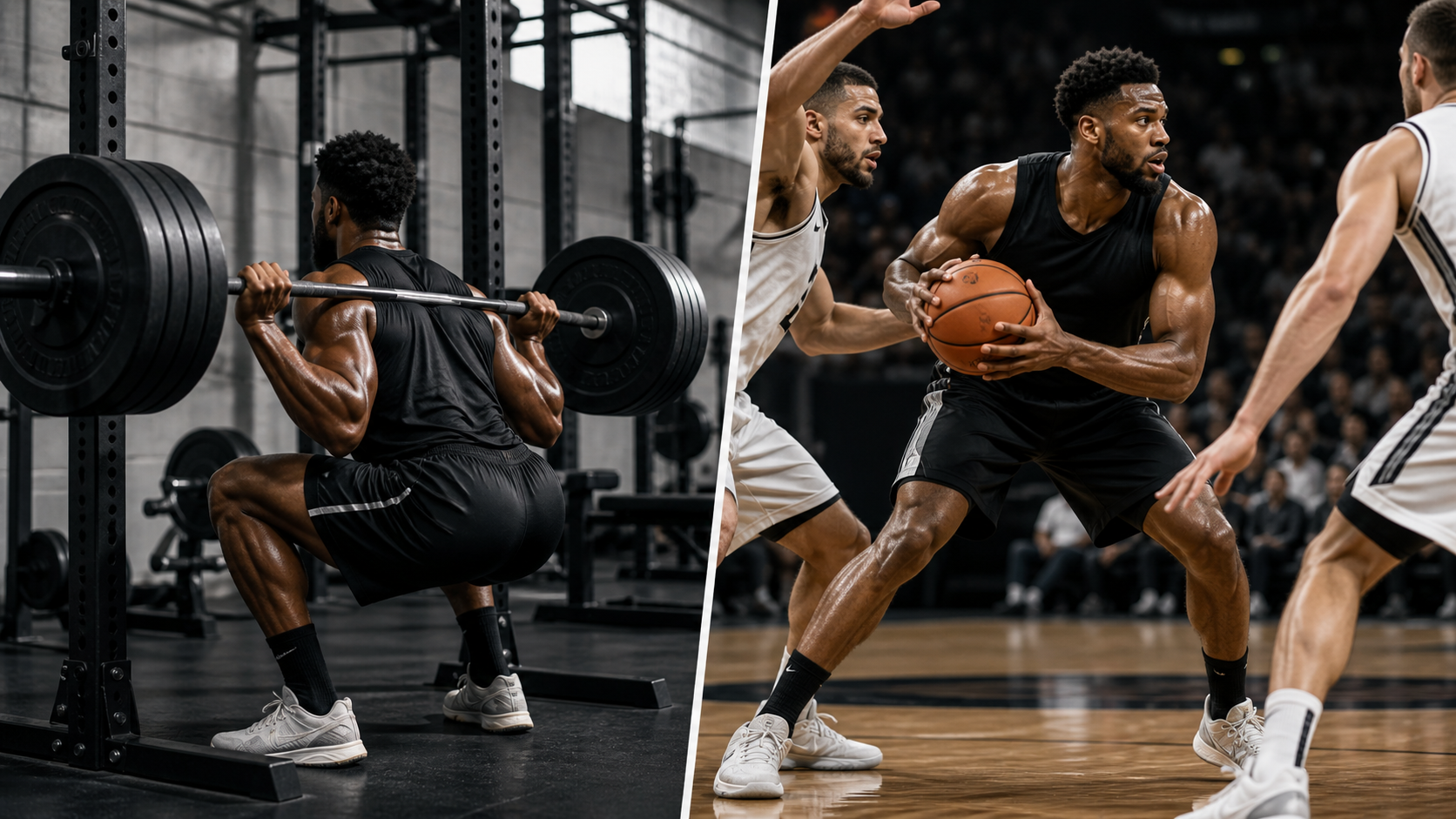
When departments work in silos, the learning environment becomes fragile. For instance, an S&C coach might measure success by how much a player’s bench press or vertical jump increases. However, raw action capabilities do not automatically translate to basketball skill if the player does not know how to wield those physical tools in context.
If a player develops immense lower-body strength but cannot couple that strength to the perception of a shifting defender, the strength is essentially useless on the court. Similarly, teaching mental skills in an isolated classroom setting divorces psychology from action. A player might understand the concept of “resilience” while looking at a whiteboard, but if they have never been forced control their emotions during the last minute of the 4th quarter after a “bad” call by the referee, that classroom knowledge will rapidly break down under the lights.
Coach’s Note: To learn more about why isolated drills often fail to transfer to the game, check out our category on Representative Learning Design.
1. Creating a Department of Methodology
The solution to siloed thinking is adopting a shared theoretical framework across the entire organization. In an ecological dynamics framework, skill is viewed as the adaptive, functional relationship between the player and their environment.
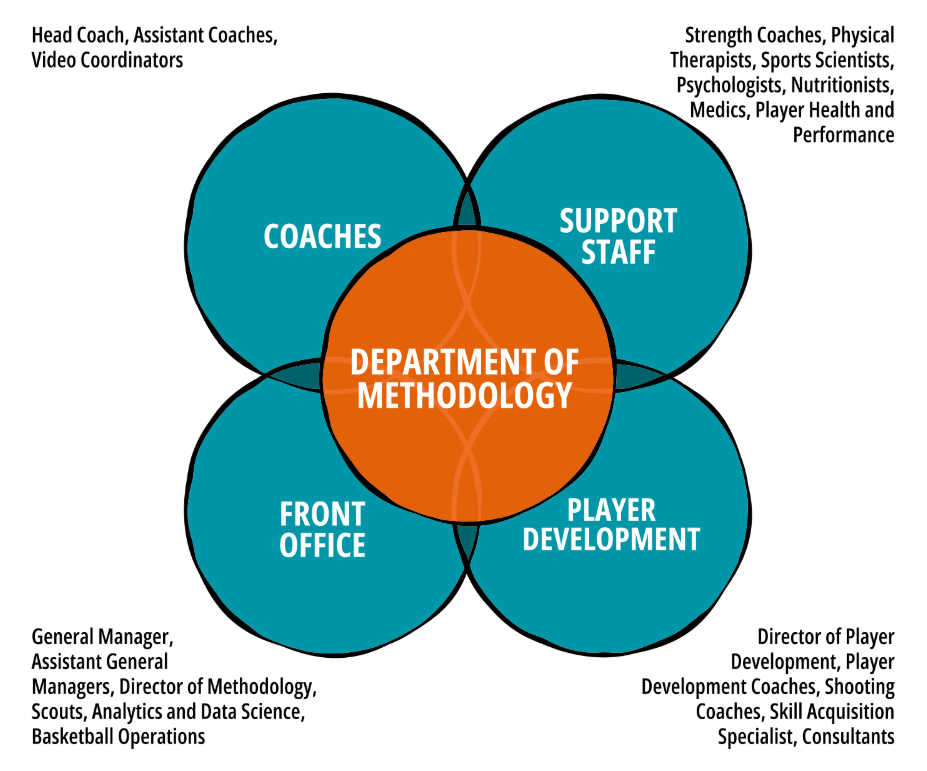 If every practitioner—from the head coach to the physical therapist—understands concepts like affordances, perception-action coupling, and the Constraints-Led Approach (CLA), the entire program aligns. Some elite programs are beginning to structure this alignment by creating a “Department of Methodology.” This acts as a central hub where:
- Staff from tactical, physical, and mental departments meet regularly.
- They co-design practice tasks that integrate physical conditioning.
- They ensure emotional regulation and movement reorganization occur under pressure.
Pro-Tip: Consider linking this section to your internal staff handbook or a podcast episode on Building a Coaching Philosophy.
2. Integrating S&C: Beyond the Weight Room
To break the S&C silo, athletic performance coaches must step across the bridge and meet basketball coaches on the court. Instead of rigid, block-practice movements, the weight room and movement prep sessions should embrace repetition without repetition. As practitioners like Zay West and Jamie Smith highlight, we can use the weight room as a problem-solving environment where athletes explore different:
- Stances
- Velocities
- Force vectors
Furthermore, warm-ups should cease being monotonous agility ladders or dynamic stretching lines. Movement prep is the perfect time to integrate physical readiness with perception and decision-making.
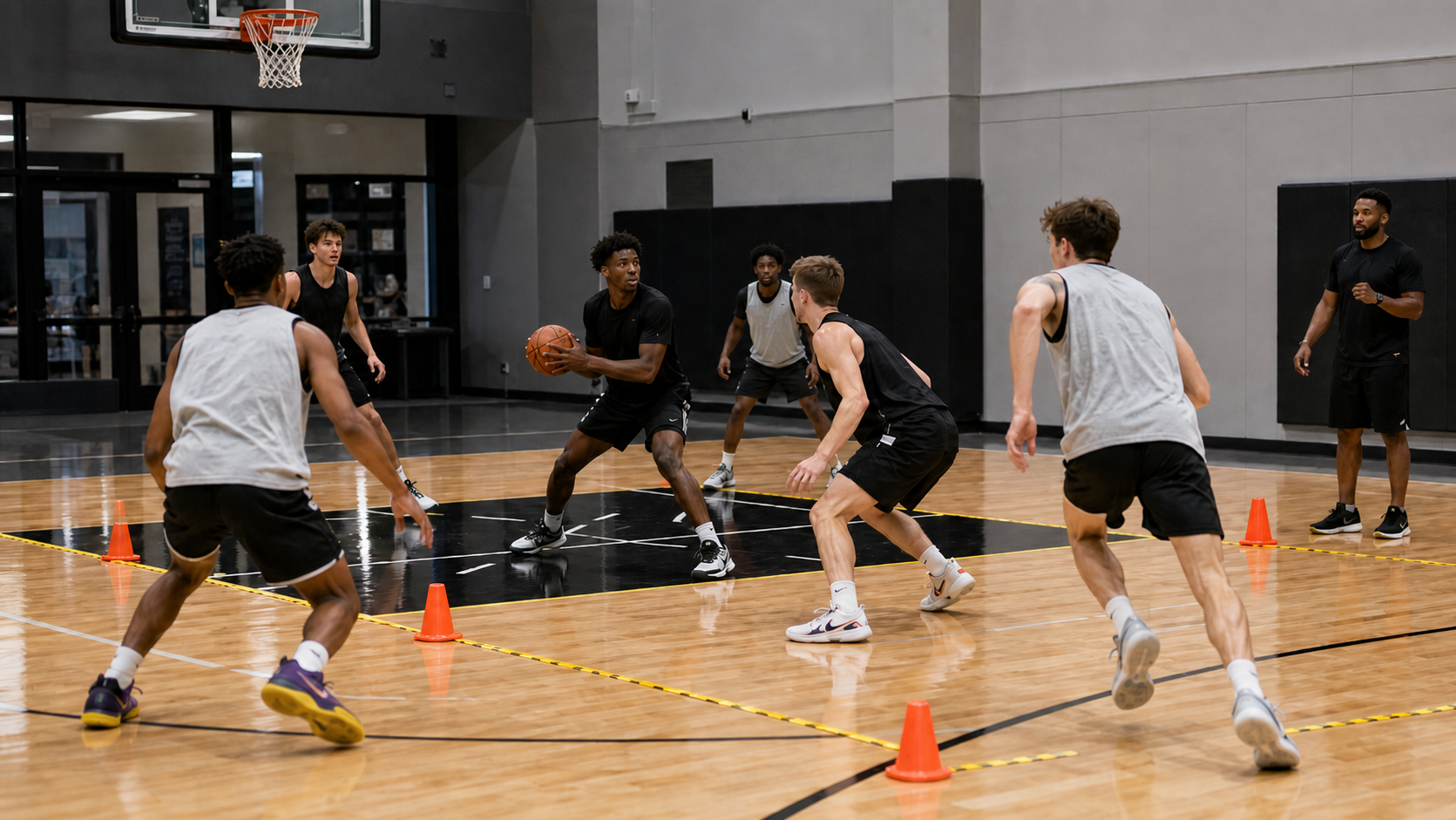
Basketball players engaging in a constraint-based warm-up game that integrates reactive agility and decision-making.
Further Learning: For coaches looking to see this physical and tactical integration in real-time, our Transforming Basketball YouTube video, “The Best Evidence-Based Warm-Ups for Basketball,” demonstrates how to replace dead time with dynamic, constraint-based games. These warm-ups teach spacing, anticipation, and tight-space operation while fully preparing the athlete’s body for competition.
3. Integrating Mental Performance: Micro-Dosing in the Chaos
Mental performance should not be an extracurricular activity; it must be baked directly into the practice design. A player’s emotional state acts as an individual constraint that heavily influences the affordances they can perceive. If a player is overwhelmed by a mistake, their perception narrows, and their adaptability plummets.
Instead of lecturing players on mental toughness, coaches and sports psychologists should collaborate to “micro-dose” mental training directly into practice:
- Manipulate Constraints: Create highly frustrating or chaotic small-sided games (SSGs).
- Real-time Intervention: Practice emotional regulation in the moment of failure.
- Shared Language: Use consistent cues across all departments to ground the athlete.
Technical Demonstration: A coach using a brief 10-second timeout during a high-intensity drill to implement a breathwork intervention.
Further Learning: To dive deeper into how to seamlessly blend psychology with on-court performance, listen to Episode 139 of The Transforming Basketball Podcast featuring mental performance coach Jon Giesbrecht. In this episode, Jon explains how to use “sugar words” and brief breathwork interventions during practice stoppages and timeouts, empowering athletes to regulate their nervous systems dynamically in the heat of competition.
The 360-Degree Coach
Ultimately, the goal is to develop a holistic environment where every drill, game, and interaction serves a unified purpose. When the tactical coach, the strength coach, and the mental performance expert are all manipulating constraints to guide a player toward the same principles of play, the rate of learning accelerates exponentially.
You do not necessarily need an NBA budget or a massive staff to achieve this. At the high school or youth level, the head coach often wears all these hats. The key is ensuring that you do not silo your own coaching. When you design a small-sided game, ask yourself:
- How is this physically loading the athlete?
- What tactical decision is being forced?
- What psychological stress is this environment creating?
Further Learning: To understand how this holistic framework applies across an entire program, read our blog article, “How the CLA Transcends Basketball: A 360 Degree Perspective.” In this piece, Adam De Groot breaks down his journey of implementing the CLA not just in X’s and O’s, but across physical literacy and social-emotional learning platforms to develop the complete athlete.
By shattering the silos and integrating the physical, mental, and tactical elements of basketball into representative, game-like environments, we stop coaching robotic mechanics and start developing highly adaptable, resilient, and intelligent human beings.


Traditional sports organizations tend to operate in isolated departments. The athletic performance staff, the basketball coaches, and the medical or mental skills experts rarely speak the same language or share the same theoretical framework. The problem with this reductionist method is the eagerness of individual specialists to quantify progress in isolated, de-contextualized components.
But basketball is not played in a vacuum. A player does not experience physical fatigue, mental stress, and tactical decision-making as separate events; they experience them all at once in the chaotic, dynamic environment of a live game. To truly maximize player development, we must tear down these silos and build a unified, integrated approach.
The Problem with the Assembly Line Approach
When departments work in silos, the learning environment becomes fragile. For instance, an S&C coach might measure success by how much a player’s bench press or vertical jump increases. However, raw action capabilities do not automatically translate to basketball skill if the player does not know how to wield those physical tools in context.
If a player develops immense lower-body strength but cannot couple that strength to the perception of a shifting defender, the strength is essentially useless on the court. Similarly, teaching mental skills in an isolated classroom setting divorces psychology from action. A player might understand the concept of “resilience” while looking at a whiteboard, but if they have never been forced control their emotions during the last minute of the 4th quarter after a “bad” call by the referee, that classroom knowledge will rapidly break down under the lights.
Coach’s Note: To learn more about why isolated drills often fail to transfer to the game, check out our category on Representative Learning Design.
1. Creating a Department of Methodology
The solution to siloed thinking is adopting a shared theoretical framework across the entire organization. In an ecological dynamics framework, skill is viewed as the adaptive, functional relationship between the player and their environment.
If every practitioner—from the head coach to the physical therapist—understands concepts like affordances, perception-action coupling, and the Constraints-Led Approach (CLA), the entire program aligns. Some elite programs are beginning to structure this alignment by creating a “Department of Methodology.” This acts as a central hub where:
- Staff from tactical, physical, and mental departments meet regularly.
- They co-design practice tasks that integrate physical conditioning.
- They ensure emotional regulation and movement reorganization occur under pressure.
Pro-Tip: Consider linking this section to your internal staff handbook or a podcast episode on Building a Coaching Philosophy.
2. Integrating S&C: Beyond the Weight Room
To break the S&C silo, athletic performance coaches must step across the bridge and meet basketball coaches on the court. Instead of rigid, block-practice movements, the weight room and movement prep sessions should embrace repetition without repetition. As practitioners like Zay West and Jamie Smith highlight, we can use the weight room as a problem-solving environment where athletes explore different:
- Stances
- Velocities
- Force vectors
Furthermore, warm-ups should cease being monotonous agility ladders or dynamic stretching lines. Movement prep is the perfect time to integrate physical readiness with perception and decision-making.
Basketball players engaging in a constraint-based warm-up game that integrates reactive agility and decision-making.
Further Learning: For coaches looking to see this physical and tactical integration in real-time, our Transforming Basketball YouTube video, “The Best Evidence-Based Warm-Ups for Basketball,” demonstrates how to replace dead time with dynamic, constraint-based games. These warm-ups teach spacing, anticipation, and tight-space operation while fully preparing the athlete’s body for competition.
3. Integrating Mental Performance: Micro-Dosing in the Chaos
Mental performance should not be an extracurricular activity; it must be baked directly into the practice design. A player’s emotional state acts as an individual constraint that heavily influences the affordances they can perceive. If a player is overwhelmed by a mistake, their perception narrows, and their adaptability plummets.
Instead of lecturing players on mental toughness, coaches and sports psychologists should collaborate to “micro-dose” mental training directly into practice:
- Manipulate Constraints: Create highly frustrating or chaotic small-sided games (SSGs).
- Real-time Intervention: Practice emotional regulation in the moment of failure.
- Shared Language: Use consistent cues across all departments to ground the athlete.
Technical Demonstration: A coach using a brief 10-second timeout during a high-intensity drill to implement a breathwork intervention.
Further Learning: To dive deeper into how to seamlessly blend psychology with on-court performance, listen to Episode 139 of The Transforming Basketball Podcast featuring mental performance coach Jon Giesbrecht. In this episode, Jon explains how to use “sugar words” and brief breathwork interventions during practice stoppages and timeouts, empowering athletes to regulate their nervous systems dynamically in the heat of competition.
The 360-Degree Coach
Ultimately, the goal is to develop a holistic environment where every drill, game, and interaction serves a unified purpose. When the tactical coach, the strength coach, and the mental performance expert are all manipulating constraints to guide a player toward the same principles of play, the rate of learning accelerates exponentially.
You do not necessarily need an NBA budget or a massive staff to achieve this. At the high school or youth level, the head coach often wears all these hats. The key is ensuring that you do not silo your own coaching. When you design a small-sided game, ask yourself:
- How is this physically loading the athlete?
- What tactical decision is being forced?
- What psychological stress is this environment creating?
Further Learning: To understand how this holistic framework applies across an entire program, read our blog article, “How the CLA Transcends Basketball: A 360 Degree Perspective.” In this piece, Adam De Groot breaks down his journey of implementing the CLA not just in X’s and O’s, but across physical literacy and social-emotional learning platforms to develop the complete athlete.
By shattering the silos and integrating the physical, mental, and tactical elements of basketball into representative, game-like environments, we stop coaching robotic mechanics and start developing highly adaptable, resilient, and intelligent human beings.




check what's trending

What is ecological dynamics and how is it connected to a constraints-led approach?
Dec 8, 2025
George Vaz

Are you searching for the best small sided games (SSGs) to improve your basketball practices? Want to replace boring, low-transfer drills with competitive games that actually develop player decision-making and in-game skills?
In this post, I’m sharing my top 5 favorite small-sided basketball games—designed to teach core concepts like closeouts, pick-and-roll, advantage creation, and transition offense and defense. These basketball SSGs are intense, purposeful, and built around real-game actions.
Whether you're coaching youth basketball, high school, or pros, these top small sided games will make your sessions more effective, more engaging, and more fun—for both players and coaches.
Let’s break down each game and how it can transform your practices.
Aug 4, 2025
George Vaz

Whether you’re coaching in the NBA, EuroLeague, or youth basketball, one thing remains universally true: the worst transition offense is still more efficient than the best half-court offense. Yet, many teams still struggle to fully capitalize on transition opportunities, often opting to slow down the game instead of pushing the pace. The question is, why? By running more intentionally, teams can create easier scoring opportunities. So why do some teams hesitate?
Apr 7, 2025
George Vaz
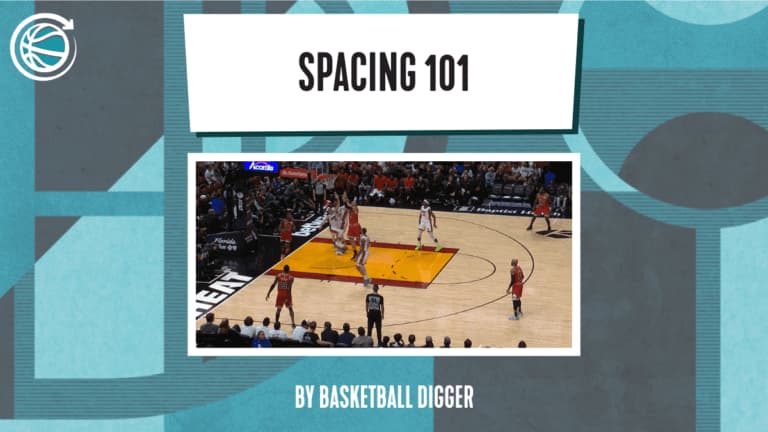
Spacing has changed the game. NBA offenses today look nothing like they did in the ’90s—more threes, better efficiency, and smarter shot selection. But why? The key lies in how teams use space to create and capitalize on advantages.
Mar 31, 2025
Simon Caret
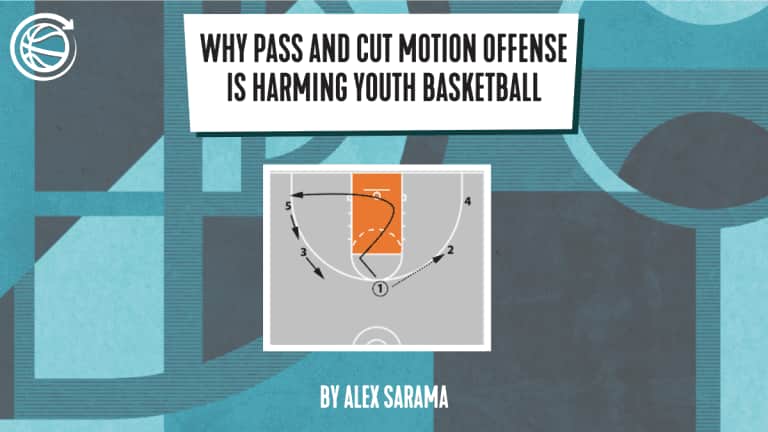
This article breaks down why pass and cut motion offense limits youth player development, and explores better ways to teach spacing, decision-making, and offensive creativity.
May 1, 2024
Alex Sarama
Approaches within the basketball industry are predominantly based upon experiential knowledge and traditions.


