Podcast
EP182: Building Confidence and Trust with Jamie Ransberry
George is joined by Jamie Ransberry during the Transforming Summer Camp 2026 in Roseto, Italy.
14 minListen
George welcomes Chris Fowler, Associate Head Coach at Western Michigan University and the all-time assist leader at Central Michigan University.
Keep listening while you explore. Your episode keeps playing as you browse other pages on this site.
In this episode, George welcomes Chris Fowler, Associate Head Coach at Western Michigan University and the all-time assist leader at Central Michigan University. Chris discusses his journey from an assistant to an associate head coach, emphasizing his application of evidence-based ideas such as the Constraints-Led Approach (CLA). He shares insights on practice design, player development, building trust, and balancing team strategies with individual growth. Chris also touches on integrating cross-disciplinary collaboration in coaching and reflects on how adopting a player-centered approach can transform both coaching effectiveness and players' adaptability on and off the court.
Select a chapter to start listening from that moment.
Select a chapter to start listening from that moment.
Useful for your staff or players? Share this episode—or a specific moment—with them.
Questa trascrizione segue l’audio originale in inglese.
That's the hardest part of it to me. Like, I have to take a step back. It's no longer about me and how I feel. It's what my players understand when they leave. It's speeding up the learning process is what we've tried to do and how my practice design has kind of changed.
Because in a team concept, they'll only see it Maybe twice in practice, where if I set up a drill individually, I can see it, or they can see it 30 times in an individual session.
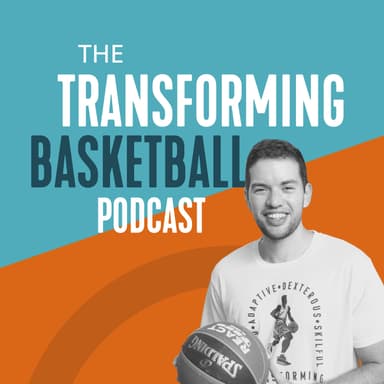
Hello, and welcome to another episode of the Transforming Basketball Podcast. On today's episode, we have Chris Fowler. Chris is the associate head coach at Western Michigan University. Chris is also the all-time assist leader at Central Michigan University. And Chris today is going to share with us some of his tips and tricks and how he progressed from an assistant to an associate by applying evidence-based ideas.
Explore Transforming Basketball membership and continue your coach development.
George is joined by Jamie Ransberry during the Transforming Summer Camp 2026 in Roseto, Italy.
George is joined by João Pacheco, a coach from Portugal who has been living and coaching in Germany for nearly 14 years.
Use deception, tag games and live opponents to build basketball agility, perception and decision-making in your warm-up.
So Chris, welcome to the show.
Thank you. Thanks for having me.
So Chris, how did you get involved with the CLA evidence-based ideas? What kind of led you to kind of like look for more?
It's crazy because once you learn about it, you realize you've been doing it all along. It's something that has been applicable in a lot of practices. It just necessarily didn't have a name. Right. But I think when I really started to learn about it, when I was a graduate assistant at Michigan State University, I got my master's in sports coaching and leadership.
And the head of the program, Dr. Andrew Driska, you know, they was talked about in a lot of different classes that I, that I was taking. So I believe that was the first time I kind of got introduced to it by name. And then as a graduate assistant, you get a lot of leeway at Michigan State, at least under Coach Izzo.
What you did was you got a lot of leeway into, you know, player development. And what I was able to do was try some of these evidence-based practices on some of the players there, had some pretty good success with it, and kind of just ran from it, ran with it from there.
And how did those first practices look like for you?
Well, from an individual standpoint, you kind of gain the trust of the players there. And, you know, it was kind of different and messy because you're kind of just tweaking and trying to figure out not necessarily what works for you, but also what works for them.
And if their engagement leads a lot to their learning capability. So like, I got a chance to work with quite a few, if not every player, and some of them would engage with it better than others. And that engagement is what kind of led me to kind of keep continuing with some.
And then some other guys just felt comfortable with some other things. So you kind of dial back off of it. But those who it worked for, those who did it and it worked for it, it had great success.
Yeah, amazing. And just fast forward now, like, yeah, you're associate head coach, been there for about a year, if I'm correct?
I've been here for 3 years. I was an assistant my first 2 and just got promoted this past year. Yes.
And how's that transition been like for you? Like, what kind of helped you get promoted after 2 years assisting to become the associate?
I have to really credit my boss, you know, Coach Dewayne Stephens, seeing, you know, my potential and what I have the opportunity to be. And he's just continuing to put me in places where I have to expand my leadership capabilities and who I am as a coach.
And what he sees for me and what he's pushing me to be is what allowed him to put me in this position. And then, you know, the players that have trusted me. And also, you know, you work with great guys. You kind of can't take credit for it in this business because you don't necessarily promote yourself.
Somebody has to see those qualities and capabilities in you. And then the other people around you have to uplift you to that level. And I believe that that is what happened for me, where my head coach saw that those capabilities in me, the other staff members uplifted me towards that position and pushed me towards that leadership capabilities.
And the players trusted me as well. And that's what all led to it.
Yeah.
What are some practical examples that you did with the players that maybe led to you gaining that trust from them?
Well, there is always individual workouts, getting in the gym with you, because you're spending time with players outside of the practice space and outside of the team practice space, in which they get to know you a little bit better. You get to know them a little bit better.
And the time before and after workouts, whether it's 5 or 10 minutes, are completely valuable. Because a player walks into the gym, if they walk in and You can see it on their face that there's something going on, and you get to talk to them.
And maybe over time, it'll bring it out. Or you see a session that didn't necessarily go their way, whether they're reacting to negative situations a little bit worse than they were, than they normally do. They get a chance to confide in you as a person.
And you're spending time with those guys individually that have nothing to do with basketball ultimately helps them trust you a little bit better. on the basketball court because they have you. They know that no matter what you're saying or what you're doing, you have their best interest in mind at the end of the day.
And you can't necessarily gain that from just the 2-hour practice space that you have. It comes from quite a bit of time that you're required to spend with these individual players.
Yeah, because you don't really get a chance to speak to them, like, during practice because you're so focused on what you're doing. So those 10 minutes you get before, maybe after practice, just to check in on them, like, How's it going? How's your day at school?
I always made it a priority of mine as well to just— even in my practice plans, I would always write, check in with the players. Like, make sure you get a fist bump in there or whatever, just to kind of like— I always find touch is so important when you're in a room with somebody.
You get to see guys in the athletic training room. You get to see guys in study table when you go up there and check on them because you're checking on them academically. Or it's simple, like you checking in with their parents and things of that nature that allow you to get to know them a little bit better than you would just from coaching them from a basketball standpoint.
It all builds trust because these players, especially nowadays, there's so many people that see them from the time that they're younger to the time that they get to college. So many people that has had their hands on them that trust is kind of hard to come by for a lot of them.
And it's something that has to be built in the correct way in order for them to trust you in your skill development process.
And just pivoting on from that, some core ideas So going back to the CLA and evidence-based coaching, what are some core ideas from this approach that has helped you stand out and maybe like ask players or other coaches to kind of like, oh, like, why are you doing this?
What are some of those core ideas or key principles that you can share?
I think my favorite one is that things can't be siloed. You know, can't athletic training, performance strength and performance training, and then basketball skill development training. are not separate from one another. And I think over the course of time in the CLA that I've been thinking about is like, if everybody's not on the same page, then the player development is not going to be as good as it can because my job may be the basketball skill development part.
But if this player has tendonitis in their knees or they are not necessarily mobile enough in their hips and in their ankles, developing a jump shot is going to be very difficult because they can't bend the way that they want to bend or Developing a dribble move is going to be very difficult because they can't create the action capabilities that they need in order for that move to be effective.
Right. And over the course of time, as I've been diving deeper into it, it's bringing more people aboard and everybody having a specific plan for how to get this player to do what we need them to do according to the system. And that, I mean, that's my favorite idea is how can, if I need a bigger guy to stay low, Well, how can that thing be introduced by the athletic trainer and be reinforced by the strength coach and then be again reinforced by the basketball skill developer and then come into a team value, right?
So there's not much you can do just by yelling and screaming at this person to stay low and demand it if his body does not allow him to create those positions. And everybody kind of has to be on board with that. Everybody has to know.
So there's The athletic trainer can't be absent at practice and not basically be watching and paying attention to what the head coach is saying. And the strength coach can't be not there and do the same thing. And the basketball coach has to know what's going on in those other places in order for that to occur the way you want it to.
It's not exact, but that's my favorite part to it.
Yeah, I work with some kids here and they're so tough to the point where they're not going to tell you that, oh, my ankle's hurt or I'm a bit stiff. And I don't know what your practice schedule is like, but I imagine it's brutal in terms of how many times guys are actually on the court.
So for us, they're practicing and playing so much that recovery is almost an afterthought sometimes. But then my point is, and to your point, it's so important to not only build that trust so that they can speak to you, coach, I'm not really feeling well today.
I'm feeling like this. So then they can go out to the strength and conditioning coach and work with them. But it's very important that we have that kind of communication going both ways as well, so that the players will talk to you and then vice versa.
It's so difficult now because you want to build an environment where that toughness is there, but you also want to build an environment where the communication takes place that allows you to be honest about what you're feeling. And then we can address what you're feeling instead of, you know, just passing it by and then it ends up affecting you in another way.
Agreed. So let's talk about practice design. And you said, you know, you work a lot with skill development. And I want to talk a little bit more about what that actually looks like. I listened to your podcast episode on Tony Miller's podcast, if I got the name correct.
Yep. And you showed some drills and some of the things that you do with the guys. If you could just talk. So as you took on more responsibility, I don't know what you were doing as an assistant, but if it, maybe it might've been the same thing, but how did you refine your practice design to be both effective and
Hey coach, are you tired of running the same old small-sided games and wondering why your team isn't reaching their full potential?
Our community of like-minded coaches are dedicated to transforming basketball principles. Gain access to 20% off all Transforming PDFs, clinics, workshops, and courses. Join hundreds of coaches who are already part of the Transforming movement. Whether you're dealing with zone offense, tryouts, or managing parents, we've got you covered.
Access our game-changing community via transformingbball.com. Join us in transforming how the game is coached.
Well, I kind of— especially in a team landscape, You kind of want to take guys. It's nowadays where there's a— in college basketball, the transfer portal is very prevalent and players leaving and coming to your program year after year requires you to create a new team, right?
So one of the things that I have been obsessive about in terms of learning is how do you decrease the amount of time that it takes for players to understand what you want them to understand conceptually? Right? Because the basketball language in our program at Western Michigan is completely different than the basketball language at a different program.
We might be saying the same things, but the language and how our terminology may be different, right? We might— it might mean the same thing, but it could be said differently.
Do you guys have like a glossary?
Not written out. And over the course of time, like we probably should, right? Like write it out. But we do know, and we try to address it a lot in the summertime with, you know, some of the drills that we've been trying to do is In our individual workouts, in our team workouts in the summer, we try to use as many terms that we'll use during the year so people can just pick up our terminology and how to do it.
But trying to decrease that time in which a player understands what you're looking for from them. So a lot of players, especially high school players or even college players that haven't played a lot, what you used to get is over the course of 4 years, that player would see a situation enough in which they would just adapt to it and then be able to do it.
Well, now I don't necessarily get 4 years in order for you to see this situation enough for you to be good at it in live action, right? So you usually wait till somebody becomes a junior, they've seen the situation enough. Now they're able to be good in that situation because they've seen it enough, or they're able to problem solve in that situation and become adaptable to the point where it works for them.
Because you don't have that time, now I have to replicate practice to a point where you have to make 10 to 20 decisions to every one that you may have to make in a game, and I can speed up that learning curve. And that was the whole point of, you know, some of introducing the CLA to some of our practice standpoint is how do I get a big who hasn't played in a whole lot of short roll situations to understand them and be able to solve that problem or be adaptable to that problem before the
game starts. Because you might only see it twice or 3 times in the game. But you have to be prepared to make the decision right the majority of the time, hopefully 100% of the time, till you make the right decision. But if you've never seen it, I don't want the first time for you to see it is in the game.
I don't want you to see it more times in the game than you've ever seen it in practice. So how do I recreate an environment that forces you to make multiple decisions over and over again in order to speed up that process? So now when we get to the season, You're ready for it and you're prepared to make those decisions because I might only get this year and you might be good enough to leave or you might be frustrated and want to leave or things like that happen.
It's speeding up the learning process is what we've tried to do and how my practice design has kind of changed.
Yeah. And like the short roll is one example, because I know you had a few clips, but I think the first one on that video was the short roll and how you would start, you would basically start the game. It would be like a 3-on-3 game and you would start the game with a short roll.
And then from here, the big has to make a decision depending on what the defense does. Right. And then as that 3rd defender recovers, the big pretty much has to read. So to your point, like when they get the ball in the short roll, it's not the first time that they're in that situation when it happens in a game.
But if we change that scenario from the short roll, and let's just say it's like a 2-on-2 pick and roll, and then the handler's going off and having to find that pocket pass, or maybe it's a skip pass. Because that help defender, that tag defender is coming over.
My question is, how do you like see what's most important? What's going to happen based on obviously your offense, but then obviously what your guys are maybe having difficulty with in the games. How do you like go about, okay, at practice this week or this month, we really want to focus on this, on these principles here.
Well, in the summertime, there has to be an intention behind every day that allows you, especially when you come up with the overall framework of how you're trying to play offense or how you're trying to play defense. Then you can break it down in the weeks that you have in the summertime.
Like, okay, in week 1, we're going to just overall implement the overall system. And then we're going to go against drop coverage. What are our coverage solutions against drop coverage? And how does that— how can we create some small-sided games or implement the CLA in order to help people understand how we want to attack drop coverage?
Then the next week, you can review drop coverage and say, okay, now this week, we're going to go against the hedge and we're going to talk about The coverage solutions, that how we can solve when people jump out on us. And then you talk about the ice, and then you talk about the switch, and then, then you can review it all.
So you understand what your system is, how people will guard it, and what they could possibly do against you. And then you then create small-sided games that allow you to take advantage of those coverage solutions in which people could understand what they could possibly see.
So you put them in a situation so much that When they see it, they're ready for it. And then you put them in random situations where if they've never seen it, they can be adaptable to those problems, right? And that's essentially how we try to do it.
Can we have you see it enough to the point where you're accustomed to it? And if you haven't seen it, can you adapt to it?
I love that. It's like something that, at least in my perspective, they don't do too much in the NBA, but they do a little bit more in European basketball. It's just like a random blitz. Like in defensive possession. And I always like at practice, that's what I like to do.
I'll just go over to maybe the team that's on the side, like, listen, next possession, just for the next one, you're going to blitz the ball. Just to your point, just see what the offense does and how they adapt to that situation. So what are one or maybe a couple, a few if you got it, principles that other coaches can apply right away to hopefully transform their practice environment?
Well, you have to, one, understand what your overall system is and what you're trying to accomplish, you know, with your offensive and defensive system. And then you try your best to create an environment around that system that, you know, allows you to come up with the answers or allows your team to come up with the answers without you saying a whole lot.
Right. And that's one of the things that you have to do. But also, this is the biggest thing that was hard for me. And I think it's hard for some coaches when you're applying the CLA is the practice environment no longer becomes about you.
And how you're feeling about it. And I think a lot of what we do with block practice drills is when block practice drills go well, then it allows us to think practice went well, right? Like, oh, there's a lot of energy, there's people flying around, and they understand what they do because the practice is blocked.
And it allows us as coaches to be like, okay, that was a good practice, they understand it. When you implement the CLA, one of the things that you have to come accustomed to or become very comfortable with is It might not look great, or it might not be clean.
It could be messy. But there is a lot of unintended learning that is going on in how do people keep evolving towards becoming cleaner in this decision-making environment, right? And, and I think that's the hardest part for some coaches in terms of implementing is because you kind of take your own control away and you're giving it to the drill.
In a sense, you're giving it to the environment and allowing the player To become the one that is learning through those mistakes. And one, so after understanding your overall system and then trying to do your best to create an environment that implements that system so people see in the drill what you're trying to help them see, then it's stepping back and allowing it to be kind of messy.
And then over time, watching it grow and it become cleaner and people adapt to it. I kind of think of it like, especially after learning the CLA, And watching my own kids grow up, because they're still young, it's like a baby that's learning how to walk.
We don't necessarily pick a baby up and say, all right, right foot now, left foot now, right foot now, right? Because they don't understand what you're saying. But if you keep things that they can keep pulling themselves up on, they keep pulling themselves up on the chair, they keep pulling themselves and they try to take a step forward and then they fall, right?
So what do we do as parents? Well, we try to move things out of the way that could hurt them. Right? Give them more space. Put carpet down on the floor that allows them comfort with, when I fall, this won't hurt. Right? So we just keep trying to create that environment.
They keep lifting themselves up. They keep putting one foot in front of the other. They keep lifting themselves up. They keep putting one foot in front of the other. And by the time you blink, they're walking and they're moving. Right? That's kind of how it is from a perspective of learning the CLA.
It's just keep adjusting and recreating the environment until it clicks. And when it clicks, you'll see them do it so naturally that you're like, oh, well, there it is. That's what we were going for.
Yeah. And I think that's the challenge as coaches, like finding the rules or the constraints of a particular game to get the desired behaviors. So again, like you said at the beginning, it's like you've always been using constraints, but I feel like maybe before it was like, I was the same.
And I'm sure, you know, a lot of coaches can relate. It's like before I constrained to constrain, but whereas now it's like I'm constraining to afford, I'm constraining to hopefully see the desired behavior so I don't have to keep on yelling on the sideline, do this, do this.
It's like, no, let me change this rule and let's see if they start doing this now.
We did this drill in practice where we were like, because we want to play fast. So if we're playing a full court drill and you want to play fast, we could keep yelling to play fast, keep yelling to play fast. Or we could put 12 seconds on the shot clock.
Now you have 12, 14 seconds to get off a shot or to get off a good shot. Well, players still want to win and they still want to get off the best shot possible. Well, they're going to play faster because they have to play faster.
But you see people sprint into actions differently when they know they don't have a whole lot of time. So instead of just keep yelling it, we'll change one of the rules and we'll constrain the clock. So now you're forced to do it. And if you don't do it, you're going to get a bad shot on every possession.
Is there any other constraints? I know that you, so obviously you just mentioned time. Any other constraints that you kind of use to kind of hopefully get that speed in your offense?
Time is one. Sometimes you kind of limit the dribble, so you create more passes to people to advance the ball up the floor, but for the speed in the offense, the time, especially from a full court standpoint, time has been the best one for us.
Yeah, no, that's awesome. And so now obviously we spoke about skill development in the players. But how do you balance skill development, the team, obviously development, like, you know, strategically, tactically, but then also your own development? How do you find time to balance all of that?
And, you know, obviously do it like as a graduate assistant, you discovered evidence-based ideas. So then is how do you find time to like, one, the actual time, but then two, like what feeds your curiosity?
Well, I think when you do the individual skill, well, it all kind of works together. So when I do the individual skill development, it's based off what I may have watched or seen from that person of it in game or practice. And then if I can't figure out what I'm looking to figure out, then it feeds the curiosity in terms to try to go research what I'm trying to find, right?
Because I don't have all the answers. And I am a really, really good thief of knowledge. Like, you go find something and you steal it from somebody else, and then you can implement it and see if it works, right? And I think the best of us, the best learners are kind of thieves now, right?
We just, we take things from other people, right? We give credit when we have to, but like, you take things from other people. And so that's one thing. So if I see somebody do things in a team concept, right? And I'm like, well, it would be better to break that down individually for that person so they can get more reps at it.
Because in a team concept, they'll only see it maybe twice in practice, where if I set up a drill individually, I can see it where they can see it 30 times in an individual session. So you take from the team, you put it in a drill, and it's like, okay, over the course of time, they're not necessarily understanding what I'm trying to say.
So then I get curious and I try to find the reason why this is going on, or can I implement something else? So you get curious about it and you try to go seek that knowledge. But at the same time, it could go the other way where you're seeking knowledge, you come up with something, and you're like, oh, I like that idea.
So you try to implement it in an individual standpoint and then see how it works in the team constraint, right? So, I mean, it's cyclical in a manner in which they all kind of work together, which knowledge could feed the individual workout, which could feed the team concept, or you see something in a team concept and you try to implement something individually.
You don't feel like you got it. So then you revert back to, you know, seeking knowledge. It's just all a cycle.
Yeah. And how many times have I like thought of the perfect constraint and then I put it in and then it's just the opposite effect almost of what I wanted to do. And then sometimes it's the opposite. Like some of the player will mention something.
I'm like, all right, cool. Let's try it. You know, 'cause I like to co-design as well. Let them be a part of their learning. And then it's like, this is amazing. Like, and just keep that. So it's interesting.
And I think one thing you find as a coach, especially if you're doing it in this way, trying to continue to seek knowledge is one thing you always do is, or at least I can talk about myself, is I wish I had right now what I was teaching back when I was a GA.
I felt like I could have gotten way more out of those guys. And I think the more we continue to grow as practitioners, we'll always feel like we let the last person down based off what we know now. And I think that's a good thing.
If I'm continuing to seek knowledge, I always feel like, oh man, I wish I would have had this. Or like even going back to myself as a player, I'm like, Man, if I could have only done workout like this as a player, where could I have gotten?
But if I think I did it all the way the right way 10 years ago, then I haven't learned anything in 10 years. And that's not necessarily a good thing for me. I don't think I did it right last year or the year before or the year before that.
It's like, well, what if I could go back and apply these principles to people 3 years ago? Could I have gotten more out of them that could have helped them get to a better place? I didn't let them down. Because I gave them everything I had at the time.
But did I let them down? Because I don't know what I know now. Could I have gotten it sooner? You never know.
Yeah, I think it's all about like, I remember someone gave this metaphor. It's like squeezing a wet towel. And I think as coaches, like, that's the potential is, you know, how wet that towel is and you just squeeze it. And like, the more and more I learn about the CLA and the evidence behind it, it's like the more power or strength I have to squeeze more out of that player.
But it's not saying, to your point, I did my best a year or 2 years ago, whatever the case may be. But now that I'm learning more and more, it's almost like, oh, 2 years ago is not the same person as me. And that's the importance of growth and truly the beauty of it as well.
And so biggest challenges with obviously maybe even this past season, more specifically using the CLA, applying it to your point, not only on the practice court, but with the other members of the staff. So biggest challenges.
Hi coach, did you know that you have the potential to access some big earnings through our Transforming affiliate program? Anyone can sign up on our website to receive their unique affiliate code. This code provides other coaches with a 10% discount on all Transforming products, allowing you to receive up to 20% commission on every purchase.
Using your code on social media is an easy way to access your affiliate earnings. Simply head to transformingbball.com/affiliate/commissions to learn more and join our affiliate program today.
Yeah, I think I mentioned it before. It's just it being messy. It can feel like you're not, especially when you first implement it, it can really feel like you're not getting anything done. Right. You could create an advantage creation drill or a pick and roll drill in which people like continue to turn the ball over or they're not necessarily getting their spacing right.
Nobody's scoring in which you're feeling like, man, this is really bad. We're not getting anything done. Right. In which, you know, maybe in terms of a practice with no defense and you feel like it's getting done a little bit better, like, oh, now they understand it.
And then when you put defense out there, it kind of changes. That is the most difficult part because what they see isn't necessarily what you see, but the environment that you're trying to create is so everybody can see the same thing. Everybody has shared affordances, right?
And that is hard to do from a coaching standpoint because you kind of take the control away from yourself. And I think that's the biggest challenge is like, you're no longer doing it to make yourself feel good when you leave the gym. You're doing it hoping that your players can see what you want them to see and adapt to what you want them to adapt to by the time you leave the gym.
That's the hardest part of it to me. Like, I have to take a step back. It's no longer about me and how I feel. It's about what my players understand when they leave.
Matt, you talk about tough players. You got to be a tough coach to kind of work in this way. I remember my first, like, week using the CLA, and I was like, this is terrible. Like, they're getting nothing out of this. I used to coach under-16 girls.
And I was like, this is absolutely terrible. Like, we, there's something, we gotta do something. But I also found like, and I want to ask you about this, like changing the complexities of the game so that they do have some success, especially like if we got a game on the weekend and it's Thursday, Friday, I don't want to introduce anything too new where they're going to have to, you know, be in that discovery mode.
I want to like make sure they have some success with it. So how do you balance finding that optimal challenge point?
Especially if it's before a game, I think you try to revert back to some things that you've done and done successfully, you know, over the course of time, right? Just because there's a— in the college basketball profession, there's a summer session, there's a— there's 8 weeks in the summer, and then you get some time in the fall in which you can really implement drills for your guys to get good at and understand.
So like, if there is a drop cover solution that you know you're going to see, you know, drop coverage going into that game. Well, then you implement a drill in which you've done multiple times before and people understand it. And maybe it's now instead of doing it live, you're doing it with coaches who are trying to give you specific looks based off what they've seen on film and not necessarily random looks because you're trying to compete, play 2-on-2 with players, right?
So now I'm trying to give you Exactly what I think you're going to see in the game. It's myself and another coach that are out there, and we're giving you specifics. We're making it more obvious based off how the game will be. So it's not necessarily about winning the specific drill.
It's about showing you exactly what you're going to see over and over again. So you kind of take the live part of it, my teammates against my teammates, and you make it more guided, but you still may have a decision-making process. Right.
So you put some guided defense in there so that they can have success, not only making the right decision, but then as well, like finishing whatever the drill. If it's a 2-on-2 pick and roll, it could just be, is it a hedge or is it a drop?
Is it a switch? And how they attack that. And then you're letting them play off of that.
And it's more like you still want the basket to go in. I still want you to feel good about the drill, but I still want you to make a decision. Within it. So let's put the coaches out there, let's lower the speed for the coaches, but you still have to execute the way you're supposed to execute and make a decision with it.
Where if I put players against players out there and it's about not only executing but winning the game, then a player might give you a solution that you might not see in the game just from competitive instincts might take over, right? So we maybe we just don't want any contest at the rim because we don't want somebody to get hurt, but you feel good that ball is going in the rim.
I make the read. If I'm doing 3-on-3, a strong side pick and roll, and somebody is gonna tag in or not tag, and you have to read the tag, maybe I make it a little more obvious what that read may be. So now you're seeing it and you know what you're supposed to do, but it's not full speed and you still see that ball going to rim.
Do you guys do this after they're getting so comfortable with this? You're just like, all right guys, now we're gonna do the same thing, but we're gonna play live? Or like, if you see that they got it, do you just kind of like, okay, well, you know, there's no point for us to be here?
Or do you still kind of like, oh, we want you to keep having this success. Let's just keep it like this.
Well, I kind of think like you said, it kind of depends on where you are. Like if I'm going into, if it's a day before a game or 2 days before a game, and we won't feel really good going into the game, then we'll kind of keep it where we are.
Like, let's not play the game before we get to the game. Let's make sure we understand what we're supposed to do and then be ready to play the game. But if it's Earlier in the week or earlier in the season, and I feel like the guided practice isn't giving you the engagement or the stimulation that is necessarily needed in order for those competitive juices to really come out and really— then yeah, let's go live.
We don't have anything to lose. Let's go for a winner, but let's still get out of this what we want to get out of this. The hardest part of that is your defensive system might not be a drop coverage, right? It might not be a hedge.
It might not be a switch. But then you have to implement that so players are still getting to their coverage solutions against the coverage that you're working on. And that's the hardest part is like, if we don't teach drop coverage or if we don't teach the hedge and we don't teach the rotations off of that, then how essentially are we going to get better at it if they're not used to playing that coverage?
So that's where coaches and people who have been in it a long time can just naturally adjust. Like you get 3 former players out there. tell them to hedge. They've seen it so much that you don't have to teach it. They just know how to do it.
Where if you don't have that, then it's a little bit harder. But at the same time, there's unintended defensive reps that come with that as well.
Yeah. And that's something you spoke about. And I think that's the beauty as well of the CLA in practice, because you're obviously working on offense, but you're getting those unintended defensive reps as well, which is, you know, priceless. 2 for the price of one.
So just quickly here, as we wrap up, I want to ask you, any resources, habits, anything that you do, maybe not necessarily on the court, but anything that has helped you kind of like continue to upskill and continue to be the best version of yourself?
Nowadays with social media and with everything that's out there, anytime you get to subscribe to something, like I feel like I'm subscribed to like 8 to 10 different things where I'll get an email about something that'll pique my curiosity. And then you just read it or you just watch it in its entirety, like with whether it's podcasts, whether it's subscribing to email lists, whether it's watching things on YouTube or just listening to things that people say during games or what they do.
There's so many resources out there that you just can't close your mind to any one thing, right? With between Twitter, Instagram, podcasts, email subscriptions, YouTube, there's so much out there that you can learn from, but then you also shouldn't take, like, maybe Transforming Basketball, or maybe Tony Miller will put a 2-minute clip of something up there, and you try to take the 2-minute clip and implement the 2-minute clip into something that you don't necessarily know the full reason behind what they're doing.
You're just like, okay, I like that. But if you don't know the root cause of why they're doing what they're doing, then there's no reason to implement that, right? So if you put something up where you're like, Well, this is the CLA in motion in terms of this drill.
And you say, for more, read the Transforming Basketball book, right? Well, I think the start of it is reading that book. So now when I read the book, when you put the drill out there, I know exactly what you're trying to capture because I understand the reason behind it.
It's the hardest part and the easiest part is you can put it out there on social media. I could take that 2-minute clip and I can run with it the way I want to run with it. Because it's easy to see. And then, well, if I can't explain it the way I'm supposed to explain it as a practitioner because I didn't read the backstory, but you have the backstory, then it becomes the hard part, right?
So there's everything so easily accessible that we just run with 2-minute clips. But behind those 2-minute clips is the research and the evidence behind why that 2-minute clip is put in place. And you kind of have to do both.
Well said. Yeah, I couldn't agree with you more. Like, just kind of like believing in something that you just see off the 2-minute clip or whatever it is, but doing the research to find out, okay, is this relevant to my basketball team? Is it relevant to me?
And even if it's not, it's kind of like, oh, this is not relevant to me. And I know it's not relevant to me now because I've done the research. So I think that's great. Chris, thank you so much. Obviously, you know, we've covered a lot of things from how you started, what you're doing at Western Michigan, some of your practice design principles and tips.
And also, just before we go and I ask you the last question here, do you want to share how our listeners can get in touch with you if they have any questions or they want to connect?
Well, you reached out on Twitter. I'm on Twitter @CoachCFowler. I know my email address is on the website at— for Western Michigan University under our staff directory. And I'm very easily accessible on both of those. I check them every day. So anybody that wants to reach out can reach out through Twitter or my email.
Awesome. And the transformative tip, right? If you could leave coaches with one piece of advice to transform their approach to coaching or their team's learning environment, what would it be?
It's not about you. Everything that we do in this coaching is about serving others and creating an environment in which when they exit that environment, they are able to do exactly what you need them to do. And, you know, a lot of What I figured out is maybe earlier in coaching when I'm trying to teach shooting, if somebody makes 8 out of 10 shots in a block practice drill and nobody on them, and I leave the gym feeling good, like, okay, they're a better shooter now.
And that's not necessarily what we're after as coaches. And we're not necessarily after how we feel when that player leaves the gym. It's what they're able to do and adapt to and solve when when they get out there on the basketball court, and then preparing them towards life.
And that's what life is. It's not necessarily how we feel when they leave us. It's what they're able to withstand and adapt to and solve when they get out there in the world. And how can we create that environment for them in basketball that ultimately prepares them and teaches them towards life lessons?
And isn't that essentially what the CLA is? It's how can I create an environment in which they get out there and things become chaotic, they don't panic. They understand what they're seeing because they've seen it so much that it's natural. Or if they haven't seen it, they're able to adapt to it.
That's what we're after in life and in basketball.
Love it. Love it. Chris, thank you so much. Thanks for your time. It was great chatting to you.
Thank you. I appreciate it.
Thanks for tuning in to this episode of the Transforming Basketball Podcast.
If you'd like to learn more about the work that we do, head to transformingbball.com to access our free resources and spread these ideas throughout the basketball world. If you enjoyed today's episode, be sure to subscribe and leave a review on your favorite podcast platform.
You can also connect with us on Instagram, X, or YouTube with any questions that you have.
from the episode. See you next time on the Transforming Basketball Podcast.