


Idea clave para entrenadores
A dribble hand-off can initiate an advantage when both players act with scoring intent. The member example below uses a one-opportunity constraint to discourage a passive exchange. Watch how the players respond and adjust the constraint if it produces rushed decisions instead of useful aggression.
Leer la guía: Conceptual OffenseThe dribble hand-off is one example of a trigger you can use within your conceptual offense. One of the challenges in our membership community was centered around how you would implement this trigger through a constraints-led approach.
A trigger is a simple action designed to initiate movement, force a defensive reaction, and create an offensive advantage. The challenge coaches see most is: ensuring the DHO is executed with intent to score, not just as a passive movement to reset the offense.
Christoph Nicol’s Solution: "One Opportunity" Constraint
Member Christoph Nicol offered a key idea: "constraining to afford." This means establishing a rule (a constraint) that forces or encourages (affords) the aggressive, purposeful action that the coach wants to see.
The specific platform activity used is FIBA 3-on-3, which is flexible enough to allow for many tweaks. The crucial constraint introduced is the "one opportunity" rule.
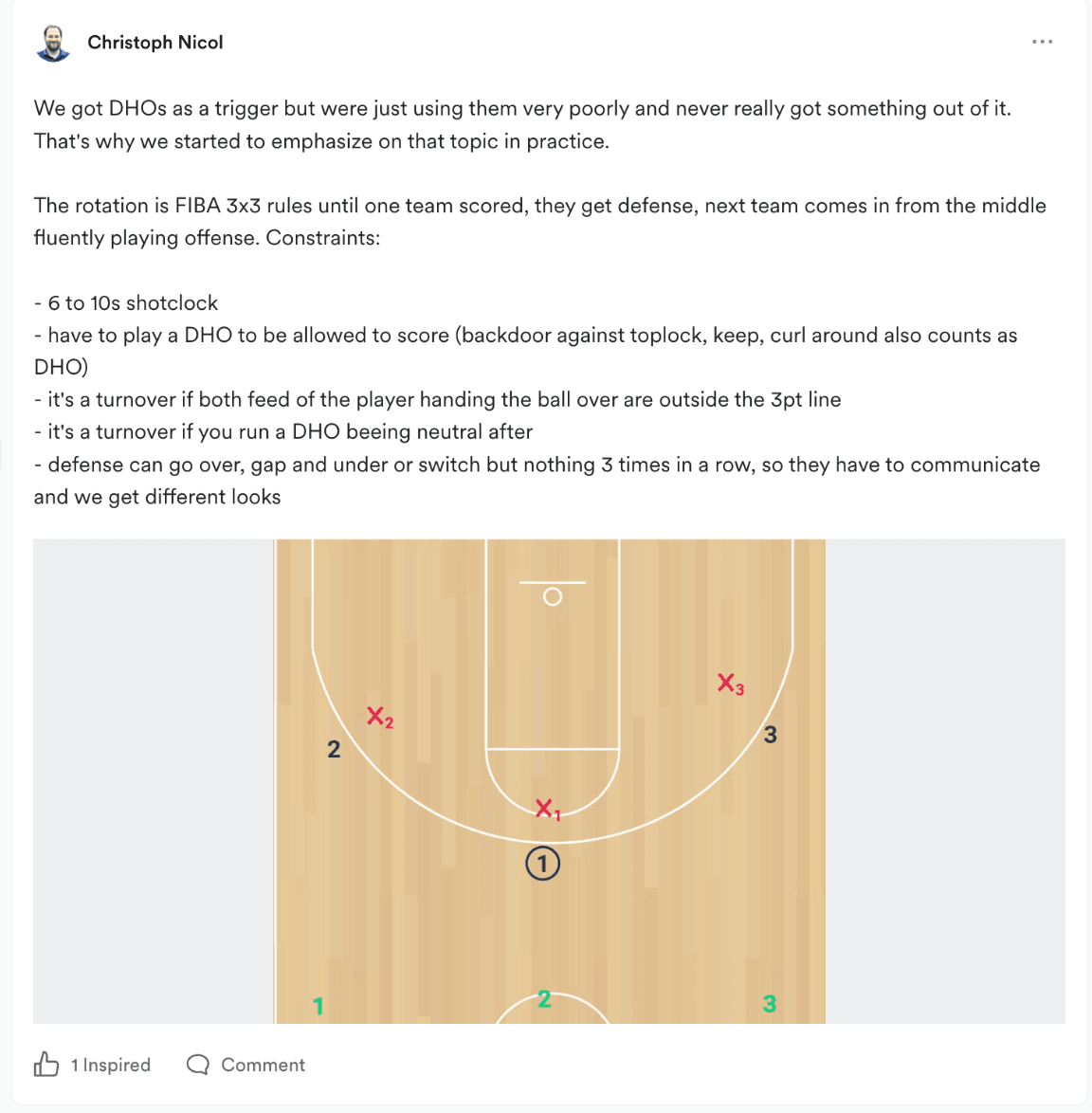
The "One Opportunity" Constraint
This rule directly addresses the problem of players running the DHO passively, which often leaves the offense in neutral, having gained no advantage.
- If they run the DHO but do not create an advantage and are back to being neutral, the coach may call a turnover or end the possession.
This forces players to use the DHO as a genuine scoring threat. The constraint compels the ball-receiver to be immediately aggressive, whether by driving toward the basket, looking for a quick shot, or making a decisive pass to an open teammate. It ensures both the ball-handler and the receiver prioritize decisive coverage solutions and run the DHO with an aggressive mentality. This focused pressure eliminates the habit of passively using the DHO.
This method successfully links the action (the DHO) directly to the intent (scoring), making the practice activity a more realistic preparation for game situations.
Leer la guía: U14 Basketball Practice Plan
Sigue desarrollándote como entrenador.
Conecta estas ideas con el Success Pathway, la videoteca de actividades, la comunidad de entrenadores y las sesiones mensuales en directo.
Descubre la membresíaCompártelo con otro entrenador
¿Conoces a alguien a quien le resultaría útil? Comparte este artículo.