
Coaching Takeaway
A well-organized practice still needs to represent the problems of the game. Pair an intention with live decisions and enough opportunities for players to explore them. Review both the time spent active and whether the activity is producing the learning problem you intended.
Read the guide: Basketball Practice DesignA practice can look organized while giving players little experience of the decisions they face in games. Start with a basketball problem, keep the relevant defenders and teammates involved, and organize enough opportunities for players to explore it.
The Secret Metric: Time on Task
Observe how much time each player spends in the intended interaction. Shorter explanations and clear rotations can create more opportunities, while feedback, rest and reflection remain purposeful parts of practice.
Use a small-sided game to revisit a decision that appears infrequently in competition. A short-roll game can provide several different opportunities to receive and act against help. Count those opportunities if useful, but do not treat practice repetitions as equivalent to a fixed number of games.
Try this SSG:
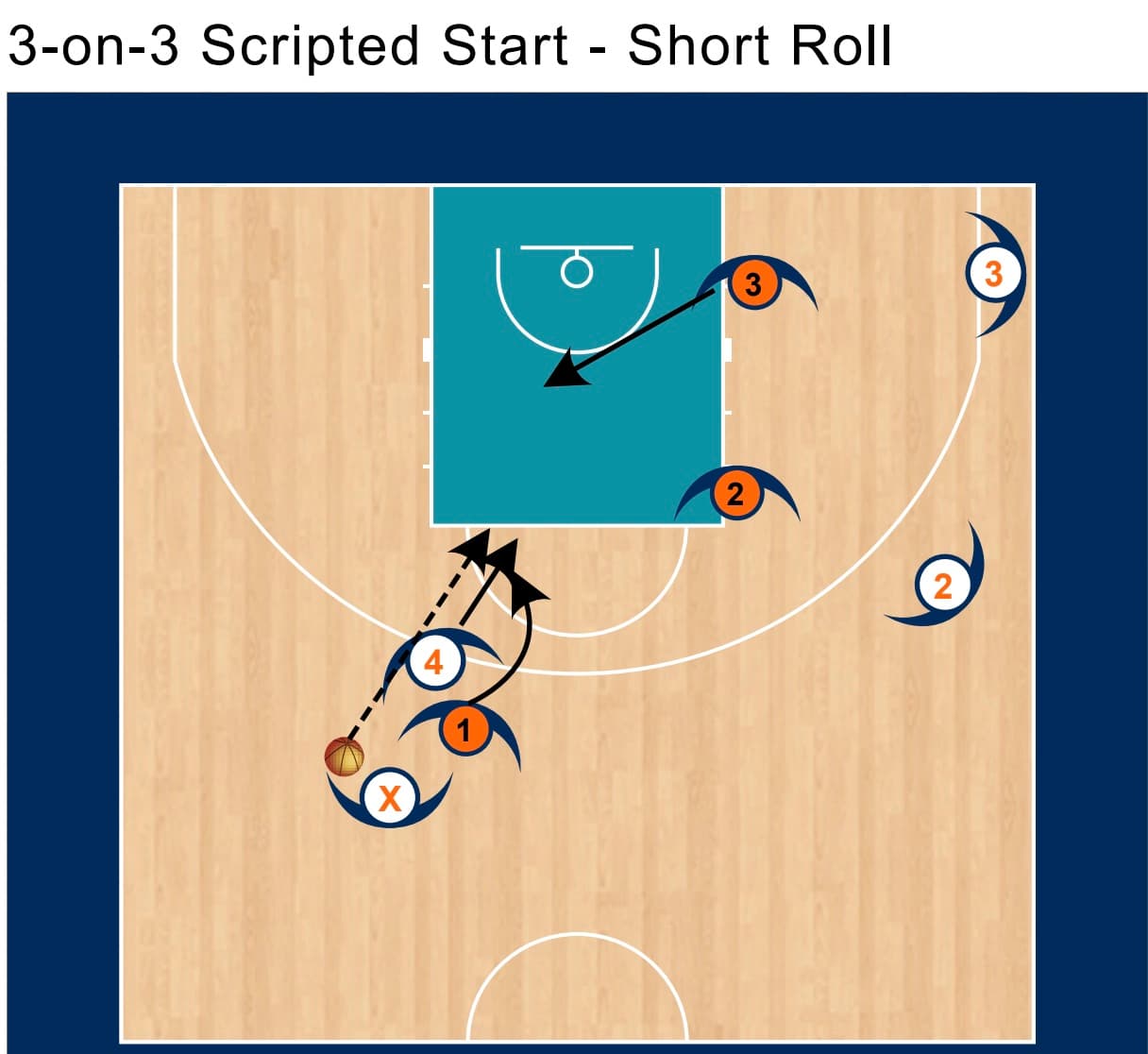
- Scripted start. So it is only live after the pass is made to the roller.
- From here the offense has 4 seconds to score.
How Basketball Practice Design Improves Time on Task
If you want to maximize your basketball practice design, you have to be intentional about the clock. Here are three ways to immediately increase your team's Time on Task:
- Limit explanation time: State the start, intention, scoring and rotation. Record an explanation and review what could be clearer or shorter; thirty seconds can be a useful coaching challenge, not a test that every worthwhile activity must pass.
- Sync Your Logistics: Take water breaks and timeouts together as a team. This prevents "dead time" where players wander off at different intervals, which kills the flow and decision-making density of the session.
- Smaller Games, More Decisions: Move away from 5-on-0 scripted reps. Use 2-on-2 or 3-on-3 Small-Sided Games. Smaller numbers mean more touches, more space, and significantly more decisions per minute for every player on the floor.
Embrace the Messy Learning
Allow players time to explore before intervening. Turnovers and missed shots can reveal a problem, but a messy practice is not automatically productive. Check whether the task offers a manageable challenge and useful information.
The Confidence Dial: Pre-Game Balance
Does this mean every session should be chaotic? Not quite. Effective basketball practice design uses a "sliding scale" of complexity:
- Discovery Phase (Early Week): High randomness, live defense, and maximum discovery.
- Confidence Phase (Pre-Game): Shift to "Guided Defense." Use coaches to give specific looks so players see the ball go through the net while still making the necessary reads. We want to ensure players are mentally ready for the game and feeling confident.
The Ultimate Ego Check
Give players room to act on the shared intention. Use feedback when it helps them notice an opportunity, then watch what they do without another prompt.
Review the activity in later sessions and wider play. Look for players recognizing the relevant opportunity and adapting when the defense changes.
Ready to transform your gym?
- Join the Community: Access hundreds of SSG diagrams and clinics at TransformingBball.com.
- The Deep Dive: Check out the Transforming Basketball book for the full evidence-based framework on player development.
- Download the FREE SSG Games Book to use in your next practice: https://transformingbball.com/21-ssgs-for-your-next-practice
Keep Developing Your Coaching.
Connect these ideas with the Success Pathway, activity video library, coaching community and monthly live sessions.
Explore the membership