
Small-sided games library
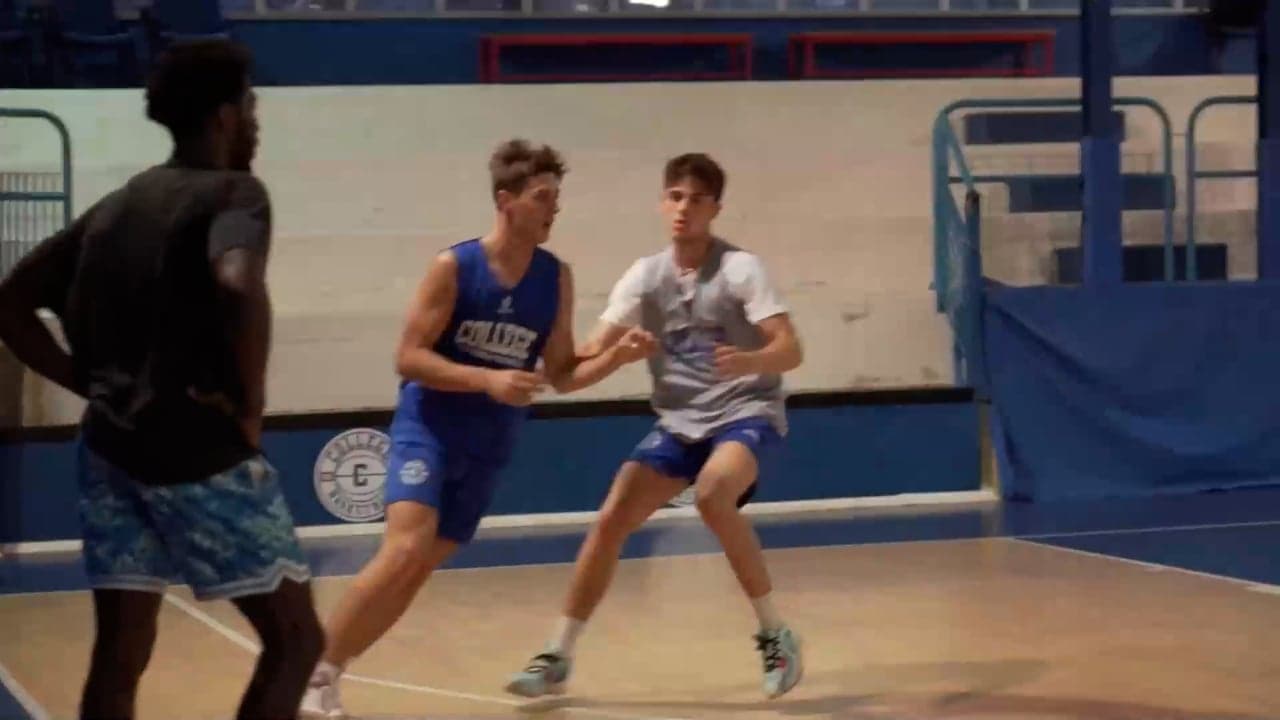
Chameleon 1-on-1
The defender recovers from three different disadvantages, or holds neutral (chest to chest), while the offense tries to keep or extend its advantage.
- 2 players
- 1 basket
- Defense
Quick rules
Run it in 30 seconds
- The offense gets three reps in a row, each from a new spot in the half court, with a three- to five-second clock.
- Blind start: the offense holds the ball on the defender's back, and the defender faces the rim and can't move until the ball is lifted.
- Hip start: the ball is on the defender's hip, side by side, a smaller advantage.
- Check-it start: the defender checks the ball to the offense from in front, a neutral start.
- After three reps, switch roles, then find a new partner.
- Scoring: the first player to five stops wins. A stop is a contested shot plus the defensive rebound, or a turnover. Three stops in a row wins instantly.
From our guide to Basketball Defense.
Setup, constraints and explanation
Setup
The aim of this activity is for the offense to keep, extend, or create their advantage, while the defense works on recovering or maintaining a neutral relationship (chest-to-chest) to the offense. The offense will get three reps in a row against the defender, with each rep being from a different location within the half-court. Like a chameleon, the defender changes their colors (the start positions) to create varied affordances across all three repetitions:
- Blind start: Offense has the ball on the defender’s back, who is blind to the offense facing the rim.
- Hip start: Offense has the ball on the defender’s hip, standing side-by-side with a smaller advantage.
- Check-it start: Defense starts chest-to-chest with the offense, playing the 1-on-1 from a neutral position.
The varied starts can be performed in any order.
Constraints
- Each rep features a shot clock of three to five seconds.
- Start positions can be manipulated and some players may only play against specific types of advantage if there is a defensive position they are struggling to score against, for example, hip start and being able to finish against a defender on their hip. This is all subject to the optimal challenge relative to each player.
- Change not just location, but the depth. For example, starting further back near or beyond the half-court line creates more affordances similar to those experienced in transition offense.
- Many other starts can be created to complement the base ideas provided here. The chameleon concept can still be applied by changing location and advantage type across three reps.
- Add an extra defender (e.g. 1-on-2) or use the same start for a 2-on-2, 3-on-3, 4-on-4, or 5-on-5. This creates affordances to keep dominoes and for the defense to rotate back to neutral.
Explanation
The offense starts with a ball on the back of the defensive player, who cannot move until the ball is lifted off their back. Play the 1-on-1 within the five-second clock. On the next rep, the offense stays as offense but picks a different half-court starting location, putting the ball on the defender’s hip and playing live once the ball is lifted. For the last rep, pick one new location and the defender will check the ball to the offense standing right in front of them. After these three reps are finished, change roles before finding a new teammate to play against.
Show the configuration of the offense and defense while providing the task design principles, before introducing the scoring system: The only way to win the game is on defense. The first player to force five stops wins, but these stops can only be contested shots followed by the defensive rebound or a turnover. The golden snitch can be caught and the game won immediately if a player gets three stops in a row!
From Transforming Basketball (2024) by Alex Sarama, chapter 8, pp. 261 to 263.
Make it easier or harder
Change one constraint at a time, watch what it does, then decide what comes next. The book's test is that the challenge point should be “just right” as opposed to being too easy or too hard. If players can't find a solution, take a constraint away rather than taking the defense away.
Adjustments from our guide
- Give a player more reps from the start they struggle with, such as defending from the hip.
- Start deeper, near half court, for transition-style recoveries.
- Add a second defender, or use the same starts for 2-on-2 up to 5-on-5 so the defense has to rotate back to neutral.
From our guide to Basketball Defense.
Guides that use this game
Related games
- HC Bursts 3-on-2The offense turns a numbers advantage into a good shot. The defense learns to stop it a player down.
- Close-Out Bursts 1-on-1+2Close out from the free-throw line to an offensive player who can shoot or drive, many times in one minute.
- Three Lives 5-on-5Make one or two defensive principles decide the scrimmage.
Playing With Advantage
$39 USD
An on-court clinic on creating, keeping and extending advantages — spacing, zero-second decisions and the Floor Is Lava.
Transforming Membership
More games, rules and video in the membership
378 games filmed on court. Browse by area of the game, or tell Transform AI what your team is struggling with.
378 activity videos
Games filmed on court across nine sections, from warm-ups to defensive principles of play.
The Success Pathway
Ten pathways from the foundations of the constraints-led approach to game coaching, with assignments, peer review, graded quizzes and a shareable certificate.
Live every month
A masterclass and a coaches’ roundtable on the calendar, with every recording in the archive.