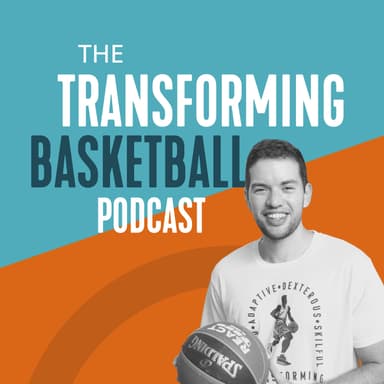
How Sweden are Revolutionizing Player Development with Andrew Pleick and Rikard Aspegren
Alex Sarama is joined by Andrew Pleick and Rikard Aspegren, basketball developers from the Swedish Basketball Federation.

Alex Sarama is joined by Andrew Pleick and Rikard Aspegren, basketball developers from the Swedish Basketball Federation.

Keep listening while you explore. Your episode keeps playing as you browse other pages on this site.
In this episode, Alex Sarama is joined by Andrew Pleick and Rikard Aspegren, basketball developers from the Swedish Basketball Federation. They discuss the player development framework introduced by the federation and how it has transformed the way basketball is taught and practiced in Sweden. The framework is based on contemporary skill acquisition ideas and emphasizes creating a more enjoyable and effective learning environment for players. They explain the challenges they have faced in implementing the framework and share their insights on how to introduce these ideas to coaches and overcome resistance to change.
Learn about player development with our FREE activities book. Inside, you'll find 50 activity diagrams for your workouts and team practices:https://transformingbball.com/small-sided-games-book
Questa trascrizione segue l’audio originale in inglese.
This is the Transforming Basketball Podcast, and I'm your host, Alex Sarama. This is the podcast where we help coaches and practitioners change the way we think about basketball performance. Our goal is to create the ultimate resource to help make sense of how contemporary skill acquisition ideas can be applied within the basketball world.
Throughout the podcast, we'll unpack how an ecological dynamics framework alters our perspective If you're ready to join us in our quest to transform the basketball world, then this is the podcast for you. Welcome back to the Transforming Basketball podcast. We've got a focus on Sweden today.
In the last episode, we spoke with Anton Callian, and, uh, now we've got Andrew Pleik and Rickard Aspegren Basketball developers from the Swedish Basketball Federation. So guys, thank you so much for joining me today. Really looking forward to this conversation.
Explore Transforming Basketball membership and continue your coach development.
Thanks for having us. Good to be here.
So guys, first question is, for the benefit of the listeners, could you just explain your role and what it actually means to be a basketball developer for the Swedish Basketball Federation?
Yeah, our role is really to— I will say it's 2 things mainly. We help clubs and coaches in Sweden in terms of how they should develop their basketball, how to be better in basketball, and how to do good practices. Just be there for the coaches.
So we do clinics, we do stuff in clubs, but we also do like, we have a newsletter, we have podcasts and so on. And the other part is we work within the federation that we like preach what we teach and that we do like— so we see that all the departments in the federation are in line what we want to do and our framework for player development.
So yeah, mainly is that.
I would also add a third part that we're also always looking ahead to, to the horizon, like what is the next step for us? So implementing the stuff that's in place today, but also discussing and viewing, okay, what, what does the future entail for us when it comes to basketball development, coach development, player development?
So, you know, where we're at today, helping the clubs, but also looking ahead.
Excellent. I think I'm always struck by just how incredibly active you guys are. And I don't believe that there's many federations who are doing as much from a coach development standpoint, just in terms of the podcast you guys have, the blogs, and then just the sheer number of clinics that you're organizing.
And obviously had the pleasure in the summer, I think, really, for me, I think it was probably the first basketball clinic, coaches clinic in the whole world where it was actually aligned with, you know, looking at contemporary skill acquisition ideas and, you know, not just having one speaker coming in sharing this, but many.
And it was just an amazing feeling to be part of that. So I think the biggest change— and I've been coming to Sweden for many years now, and you guys are a big reason why as well as, you know, other great people in Swedish basketball.
But you had a big change many— a few years ago, I don't know, I think maybe 4 or 5 years ago, where the player development framework you mentioned, Ricard, was introduced. It was a big change to, you know, what existed previously. So could you guys just speak a little bit about what that framework entails and why you— why this federation felt a need to move In this direction?
Yeah, I mean, that journey started before me and Erica got employed, and hats off to them. I mean, they were super brave to just take a step into not the unknown, but into, you know, an area that was uncharted for us. The Federation wanted to make a change.
They wanted to put more science behind how we do things. Before, it was a lot based on experience of just This is how basketball's always been played, always been run. But what's really the science behind it? So, so they really dug deep into, okay, what is player development and what does that entail?
And what, what steps does Swedish basketball want to take? How do we want to associate with our players, our clubs, our coaches? Are we only trying to, trying to win medals, or are we also trying to develop people? They really laid a foundation of how we interact with our players.
And our coaches and those around. And then, you know, obviously there's been some big influences along the way. Canada basketball has been huge in our journey. Took a few trips which I was able to take part in visiting Mike McKay and Canada basketball and seeing what they had done.
Then there were some other federations and other sports. We looked at Belgium soccer, football. And then, and also I think Swedish sports in general is also in this shift. So There was this shift happening. We just happened to maybe be one of the first ones in that, you know, as challenging as it is.
I don't know if you want to ask.
Yeah, I will say that we have like framework before or a player development like program, but that was like outdated. And I think in several years they haven't like do any update to it. So they could a little bit like the starting, like just Yeah, should we just like do some— can we just do small things?
And then like it started to like see on it and it's okay now. No, we have to do like a big shift maybe. So Anton, as you had like, you talked to in podcast before, they asked him like if it will this be like science-based, more than science, like direction, should we do it?
And, and I think in Swedish basketball in general, we have been pretty brave.
Yeah.
Like, it's something that we do. Like, even if, like, how we play with our younger kids, that was a shift in Sweden. Like, we was one of the first federations that changed our how should kids play. So we play 4 against 4 and so on.
And now all the sports in Sweden are like playing, uh, a difference with it, with the, with the younger. So I think it's a little bit that we, we used to To be brave also.
I also want to give you credit for this, Alex, too. I mean, you, you've been also huge in our journey and monumental in that, you know, when we started this, we, we obviously started looking around at people that could help us. And, and, you know, Mike McKay's name came up, uh, your name came up very early.
And, and obviously, you know, we've used— we've been able to use you a lot and a lot of stuff, and it's, and it's been huge for the strides that we've made. Because this is tough. It is challenging. Obviously, when you, when you're a country who maybe doesn't have the most success in its sport and you take these or you make these changes, there are going to be certain critics, certain people who question it.
So to bring in people like yourself to help sell the cause and are able to do that in such a way, it's, it's been huge for us. So we're super thankful.
I really appreciate that. I really admire the work you guys are doing. So it's always a pleasure to to help however I can. So I think this is why we're having the conversation, you know. I think more federations have maybe been interested or reluctant.
They, you know, they know that this approach can be so beneficial in so many ways, but maybe they're reluctant to go all in. And that's why I just think it's amazing that you guys have done that. So I just want to look at practically kind of what this looks like.
So the framework is basically a document which is given to every coach in Sweden for free at all levels. And then in addition to that, there's a bunch of video material, so like small-sided games, video libraries, constraint manipulation, so coaches can understand what it looks like.
And then of course there's an enormous amount of clinics. You guys are going around Sweden the whole time delivering clinics, bringing guest speakers in. So would you say that's kind of— I've done it justice, kind of just describing how you guys are bringing that framework to life?
Yeah, I think that's right. I think a little bit that's almost about like the biggest, like, because they launched the framework and they had some clinics in Sweden, but then like the next step, a little bit like, okay, this is— we're not reaching out to all the coaches in Sweden.
So I think like why they employed us, one part of it was that, okay, how can we implement this in Swedish basketball? So yeah, I think that's the correct describing it. But we also know that This is something we discussed a lot, like how much drills should we like show them?
Because we, we want them to, to be able to create out of their own context. And so should we like give them a lot of like drills and they just use drills and not know why they use the drills? But I think we have landed yet, like we need to show them how they can do it.
This was a great insight for us. I remember the first clinic that me and Rikard did together, you know, we We came to club and obviously we always introduced the theory behind it, theoretical, the research.
Yeah.
We tried to present the ideas and then we asked, we asked them then to go out and create some practice activities to show the theory to put into practice.
Fantastic.
And right away they fell into old habits of isolated block training, uh, you know, isolated technique training. And it—
And it, and, and even if they like tried, like They, okay, I take the 3-man weave and they are starting to like, like try to do it more representative, but it just became like, but why are you using this drill?
Yeah.
Like it's, yeah.
So, so, so then, you know, we were like, after a few clinics like that and after a few visits to clubs, we just went back to the drawing board and said, okay, what are we gonna do here? Like, this isn't working. It just seems they're frustrated.
They're not getting it. We're spending 2, 3 hours with a club and we're just not getting any progress. And then there was a great analogy that we saw that we got from Mike McKay, and he said, you know, sometimes we can look at coaches as cooks or chefs.
And when they're cooks, you might have to give them a recipe to follow. Then when they become chefs, you can just tell them the ingredients. And for this, you know, we had assumed that everybody was a chef. And not understanding that most likely the volunteer coaches who are parents who just come on a Tuesday right after work, haven't put much into their leadership development or coach development, they're most likely cooks.
They need some— they need a recipe book to help along the way. So we just changed the way we would visit clubs where we would introduce the theory, and then we would go out and show it over in practice. And we got a much better result off of it and feedback.
And then our second visit, We would ask them to practice activities, or we couldn't do that. We could even do that through you know Teams or Zoom meetings where they would do certain practice plannings. We would talk about it and discuss it, but then they they they had more meat on the bone to discuss.
We were almost jumping ahead of ourselves because we were so eager to just let them to self-explore and develop it. We had to give them something to. To understand.
So we also have a coach program. Do you want to touch upon that, Andrew?
Yeah, that was along with the other things that you mentioned with clinics and meeting with coaches or visiting clubs. We also started a specific coach program for selected coaches in certain age groups. It was under 13, under 14, and they were with us for, I believe, 6 weeks.
We would have weekly check-ins where they would send practice plannings, go through their practices, they would film, they would get individual feedback. You know, certain weeks we'd talk about offensive drills or defensive drills, and then we'd go into, okay, what do you say during a game?
What do you say before practice? What's instruct— you know, we would just go through all the aspects of it. And we saw tremendous development in those coaches where you really got the hands-on, where they got the support to understand, okay, what does this mean?
What is CLA? What is constraints-led approach like in theory, but also in practice? And how does that— how is it implemented into my context? What does that look like for my team? of my 25 players that come twice, 3 times a week, you know, what does that mean?
What they do on practice there, and we give them feedback. In the beginning, we give individual feedback, and in the end, we give so everyone can see, and everyone else could also give feedback. And I think that was a little bit to, like, to be a little bit deeper, uh, the deeper understanding.
Because when we are in a clinic, it's like, often it's a little bit like, okay, yeah, this is inspiration. This is a drill I can use, but maybe they don't like really do the shift. They understand maybe that they should maybe have more defense in drills or something like that, but to be able to like really get feedback to the coach in this way, I think it was real successful.
I love that, and it's, it's amazing how active you guys are. So this is a question I'm always interested in: how do you typically introduce these ideas and the complexity of things like ecological dynamics, the constraints-led approach, where would you guys typically start if you are, you know, working with a volunteer coach for the first time and they've never been exposed to these ideas?
Well, first it's understanding why, you know, why we want to do— why would we do it any different? Because the reality is it's easier for a coach to put 2 players in a corner and have them just pass the ball back and forth.
It's easier for me to ask 25 players Stand and dribble with your right hand for 10 minutes. That's, that's very easy for me as a coach. If we look at how much fun is that for the players and how effective is that in their player development.
So we try to understand, okay, you know, what's the reason for having our practices in general? One is we want to develop players. Another could be that we want the sport to grow. We want physical activity. We want the kids to be smiling and enjoying themselves.
We want connection among players. So if we understand these are the reasons why we actually have basketball—
And injury-free also.
Injury-free. If we understand those reasons why, then we can go about, okay, well, what is that? What does that look like in the most effective way? So first they have to, if they don't buy into that why, then we're never gonna sell them.
If, if they're not interested in making kids enjoy themselves and they wanna develop and they're having a very limited time to do so and to be more effective, If they're not interested in that, then it's hard for us to sell this idea. If they are interested, then we can go about showing, okay, these are ways we can go about it.
The science will show us the most effective way when it comes to skill acquisition is putting in environments that's representative where there's decision-making, you know, that the challenges are on level with their skill. And, and that's just how we go about, okay, that's, that's how we would go about it.
You know, that's what it looks like in practice. But the why is probably the most important if, if they don't buy into that, if they're not interested, then, you know, it doesn't really matter.
So— And I will say, like, in the start, we don't talk about the theory behind it really. We don't talk about CLA. We don't talk about nonlinear pedagogy. We, like, in the beginning, we do that also. Like, we give them the theory, but we shift that also because we see that they are concerned with the practice on Monday.
How, what should I do in practice on Monday? So the theory behind it, maybe we talk about that with our like educator or with our national team coaches, but with like a coach that just hears us for the first time, we often just introduce, this is, this is the way we, like the federation, think you should do it.
This is an effective way to do it and you can have a better practice on Monday. Just that it's more fun is very easy to sell when it's more fun for the kids.
Yeah.
They can enjoy themselves more and they can develop into better basketball players.
I love that. Great example of meeting coaches where they're at as well. So during this journey, what would you guys say are some of the biggest challenges you've had to coaches adopting more of a constraints-led approach within their practices? And have you guys got any good examples of maybe how some of those challenges have been overcome?
Yeah, I mean, everyone. I think most coaches that have been around longer are obviously— it's harder for them to adapt to new ideas because certain ideas and certain ways of practicing have been very successful. You know, I define successful in their terms of successful, and they've been doing, you know, they've been doing a certain way for so long a period of time.
So for them, it's been hard to make any change. Change is always hard. For the newer coaches coming in, it's been very easy to sell because this is just how we practice basketball. This is how we just teach it. This is how we learn basketball.
The older, more experienced group, those have been probably the most challenging to adapt to because they are so sold on this idea that everything has to be built like pieces of Lego, one piece at a time before you get the entire house.
Hey coach, I wanted to take a quick break from this episode to let you know that we just launched our new website at transformingbball.com. The goal of our site was to present basketball coaches and practitioners with the ultimate resource for applying evidence-based ideas.
It contains a number of free resources such as blogs, practice activity ideas, as well as some of our paid products including clinics, workshops, and courses. The website contains everything you need to take your coaching to the next level. Find the website in our show notes or head to transformingbball.com.
I think also that the problem is that they, they believe that the data you're doing is based on what's working, and the things we say, this, this is research. They don't know that this is 2 research theories, and they use like the old one.
So when we talk about our really deep with these guys, you can't really— it's hard to like discuss with them because they, they use like, like the other theory to play information processing. Yeah, yeah, exactly. And that's pretty hard. Sorry.
Or they'll refer to countries who still haven't adapted to this, you know, and they'll say, well, If we're so good, how come other countries who are better than us are doing that? You know, it's, it's almost—
Yeah, I see that one a lot.
Not, not understanding maybe how good those countries would be if they did adapt it. They're just looking—
Oh, absolutely.
Results orientated. So that's been the, without a doubt, the biggest challenge. The second one is, is like I mentioned before, since so many of our coaches have been our volunteers that do that as long as their kid is in the sport, that may be only there once or twice a week, for them to take in this, under this theory, to understand it and apply it is very demanding.
And this is where we come in and, you know, into our roles of helping them in that. But it is challenging. It is hard. I mean, I, I can only relate to myself, the teams that I've coached, and when I first started coaching, you have to be much more aware of, and, you know, that understanding, okay, what's What's the next step for this team?
What's the next step for this player? How do I, how do I alter the drill or the practice activity? How do I challenge them at their level? I have to be so attuned and locked in at all times.
And I think also the problem has been that like before the framework, we, we did some shift in our educations before that. And we, we like, it's the same at like the FIBA like coaching education, or we call it, on their website, they describe 2 perspectives, like more technical-oriented or more game-based.
Okay.
So in the beginning, we talk a lot about game-based before the framework was there. So the coaches also believe that this is just game-based. And then, like, we often have to say, no, no, no, no. So some of them just believe that, yeah, we want to play a lot of games.
But that's like, this is bigger than that.
It is. It's the classic games approach versus CLA. And I, I get that one a lot too, where people point to successes of countries like Serbia, Lithuania, you know, which are obviously very much based on traditional coaching. And I can say this, I've got a lot of Lithuanian friends and a lot of Serbian friends, and it's, you know, it's not because of that, it's in spite of that.
And I think actually within the CLA, it's accounted for when we look at forms of life. And, you know, these are type of— these are, you know, societal kind of sociocultural historical constraints in particular communities or countries as a whole, which lead to players expressing themselves in a particular way.
And another good example is Brazilian football, you know.
Yeah.
So it's not because of the coaching, but it's because of how powerful society is. For instance, the popularity of basketball, the number of players, the number of practice opportunities. And what this does is all these things combine to create a landscape where it's incredibly conducive for developing effective basketball players.
So obviously, if, if the coaching was contemporary, like you said, Andrew, imagine what the results could be. It could be even more.
Can you imagine USA basketball if they had applied this?
Like, how scary. No one would catch the US.
And that's, I think, probably— I think, you know, you mentioned Lithuania, Serbia. I would say the US, due to the social media you know, NBA, all the individual coaches that are on social media, their influence of looking, well, look, they have 30 people standing by themselves dribbling in a row.
Yeah.
If they do that and they're the top country in the world, then how, who are we to criticize that? And I would say USA Basketball has probably been the hardest one for us to overcome for others because they look to the obviously to the states for influence.
Yeah, of course. And, and the individual coaches of all the one-on-one moves against chairs or cones and, and, and think, well, that's, that's what you need to do to get better and, and not that decision-making versus an opponent. And if we were to simplify for us, you know, for the coaches, I think that was the one thing is just like, just throw on a defender or an offense, just throw on an opponent, just put in decision-making And try to adapt to their level of play, you know, and it doesn't have to be games per se,
but just create a decision-making environment for our players.
Because in the beginning we said like the people that have been for a long time coaching, okay, we don't have to focus on them. But the problem with that is that there are like really basketball ambassadors in their like community. So a lot of people like watching them and do what they say and so on.
So they are important. Like, they are important for us also. And maybe if they say, yeah, okay, I hear what you say, I understand the theory behind it, I understand why, uh, but I choose to do this. But often they are not like willing to like take in what we say.
And I think it's also that you are open-minded to change the way you coach. I think some of them aren't like Open for that. So the coaches that have been been coached for a long time, but are open and used to develop themselves, they are more easy to connect with.
Yeah, 100%. And like just going back to we mentioned the USA framework. I mean, the moment the U.S. if they ever adopt evidence-informed ideas, it would be over. But you still see in like USA basketball within their actual curriculum talks about. Technique mastery and not graduating from a skill.
And, and, you know, whole parts of the curriculum focused on teaching techniques. And it's, you know, I'm not calling anyone out, but I'm just saying it's— we've got research available, so let's use it. And I think it's especially as federations, I think we have a duty to make sure we're trying to give our coaches, you know, the material which is most recent and most evidence-informed as we can.
And that's why I just think it makes sense to go down, you know, this road. I want to look a little bit at the framework, guys, because what I've seen in, you know, I've reviewed a few kind of, I'd say, curriculums. I don't like the word curriculum, and that's why I like the fact that you guys call it framework.
But a lot of federations call them curriculums. And, you know, what, what these do is they're typically incredibly linear, and it's based on player— typically based on age groups and players having to do certain things at particular ages. perform particular techniques. So, you know, how is your framework different to what we traditionally see with federations all over the world?
The word curriculum is interesting to look at, and we think about the linear aspect of it. You know, if I look at the way we used to consider player development is that at a certain age, like you said, you would graduate from a skill.
If you could perform this technique, we would give you a little award or, you know, a medal or something. And, and you had to graduate that before you could, you know, try the next technique or the next skill, similar to USA Basketball. And it became very much like a school environment.
Like you had to do the, you had to do A before you could do B before you could do C. And we just realized that that's not what it looks like. You know, that's not how skill acquisition works, how development works. So we went away from this of looking at ages and just looking at that everything's nonlinear when it comes to development.
When it comes to physical, social, mental basketball skill acquisition or development, these are always flowing and developing, but not at the same pace. You could have kids at the same age, but just socially, mentally, physically, they could look completely different, interact differently. So therefore, we had to understand that, you know, that development in that team is going to look different, and we have to understand that, and we have to understand the person behind it, understand where they're at in their development.
And try to help them and not assume that every 14-year-old should be able to do this, or every 17-year-old should have to do this, that it's okay. This is what we see at the end of the road, and your pathway, it might look a little different.
We're gonna help you along that way.
And also, I think that like, even if you start at the same time, because they don't, like in a, in a regular club, like you have some people that have played for a long time, some play 2 years. But even if this started in like different age, it's easy just to see like, like this is a nonlinear development.
And also that a lot of people, like the players, just come to us and they can nothing. It's like they have never like do anything before they come to the basketball. That's not true. Like if you have played soccer, yeah, maybe you can perform some tasks.
better than. So I think to like to see the player where they are. And I think in general, like with the old, maybe traditional approach, you're always starting like 1 against 0 because you like underestimate the players instead of seeing where is the player.
That's so true. That's a great point, Ricard.
And I think that's the biggest shift with this new framework is that we don't talk about— we have some Like guidelines for different age groups, because I think that can be good. And they also have some, yeah, like the physical parts where they are there.
That's important to know. But in general, we'll talk a little bit about like the age of the players.
Right. And I think like it's just guidelines and it's just, you said it's helping coaches get an idea as, you know, maybe they're a volunteer under-14 coach. Here are some ideas for principles of play at the under-14s age group. Boom, there you go.
It's not saying these are the techniques we got to be teaching on the 14s, and that's a huge difference to me.
I think the biggest sell, or the biggest thing that we really push, is understanding your context. What, what does your context look like, you know? So, and that's why we use the word framework. Like, this is the framework we want, but understand you're applying this to your context.
So is it 20 17-year-old girls that want to play in the WNBA, or is it 15, 12-year-old boys that are just there for social reasons? Understand your context. And I think a lot of these curriculums assume that everyone has the same reason for being there, the same goal for being there.
That's what everybody wants to make a national team, or everybody wants to stand on the podium, or everyone is there for this reason or that reason. And this is where we want the coaches to really identify the reasons behind their players of being there and the reasons behind them being coaches and then being able to apply our framework to their specific context.
That is by far the biggest reason why we want to help them. It's not— of course, we're interested in Swedish basketball growing talent-wise, but we're more interested in that we create a positive social impact in these kids' lives. So it's really important that the coaches understand their context.
I love that, Andrew. And I think coaches may be skeptical of the research from a skill acquisition standpoint, but we certainly cannot argue with the fact that the CLA is more fun.
Yeah.
And just from a transformational side and from a perspective of developing the person and the children in this instance, we can't dispute that. So in many of these environments where we're seeing these traditional drills, drills, drills, and these environments which are not fun and not enjoyable, Like you said, context.
And I think if coaches maybe thought about that a bit more deeply, I think they'd be more inclined to consider everything we're talking about here and through Transforming Basketball. So my last question to you guys is, what's next for Swedish basketball? And in terms of federations who are maybe listening to this and they're a bit intrigued, why should they consider going down not the same path as you guys?
Because there's no copy paste, but exploring, you know, a constraints-led approach within their, you know, frameworks and their own respective countries?
Oh, that's a big question. It is. I think the first thing for us, like, the next thing is also that, like, every part of the federation is working in the same direction on this. For example, our youth national teams, we have, like, have lectures with them, but we haven't, like, really said, okay, if you don't do this, you're not welcome.
And I think we have to like get them deeper to understand this, what this means. And so every part of our federation, like in our own, that they do the same thing or in line with other things that we want to do. I think that's one thing.
Later, I think like, I think you, you will see, and we see really a growth of basketball players in Sweden. I think this will affect the amount of players we will have. in a positive way. And I think that will be really important for us.
I think we'll see some shift, as you said before, even if, of course, we think this will also become better basketball players. But I think also we will have a lot more basketball players and they will enjoy their time playing basketball.
Fantastic.
Yeah, I would say if there are federations listening to this and they're going to implement a framework, it's monumental and imperative that every aspect of your federation is in line with that framework. And we're not there yet. This is something that we discuss and we're working on all the time.
It takes time. There is a shift. And what I mean is, if you look at all the departments we have, if it's competition, if it's education, if it's national team, the way we compete, the way we educate, the way we participate in national teams, all those have to be in line with our framework.
The way we, you know, if it's our— the rules and competition, the way we use social media, the way we select national teams, those we have to all at all times be understanding that our framework is the foundation that it's based on. Yes, CLA, when it comes to how we develop players, there's also other aspects in your framework as to how to engage into personal relationships with players or people and so forth.
So For those federations listening, it's monumental that everything lives and breathes according in the same direction, because otherwise it's hard to do one thing and then the next day in other aspects are, are taking a different route, you know.
Can I say one thing?
Please do, Ricardo.
That is evidence-based is so much more easier to work with. Like when we have been on other conference with skill acquisition, we bought, yeah, this is this is aligned with the framework. You don't have to like change word or something like that. You know that this is— so when we are out, we can always just talk about the science behind it because we know that the framework is based on it.
And a tip will be like, in, in our framework, some words a little bit different. So I would recommend to use, use the same words used by, by like in science because then it's more easier Some words in our framework, like, like, okay, because we use, for example, we use loads instead of constraints.
Yeah.
And I think so that can also be like, like a tip rather, that like use the real words.
Great advice, guys. That was a fantastic podcast. I really enjoyed our discussion. Uh, I'm huge fans of everything you're doing and just Swedish basketball in general. So really rooting for everything you guys are doing. And so thanks so much for coming on.
Thanks so much and best of luck to you in your new endeavor here. So we're going to be following with interest and we're rooting for you. So super excited for you, Alex.
Thank you, guys. Thanks for tuning into this episode of the Transforming Basketball Podcast. If you would like to learn more about the work we do, head to www.transformingbasketball.com. b-ball.com to access our free resources and help spread these ideas throughout the basketball world. If you enjoyed this episode, then please subscribe and leave a rating or review on your favorite podcast platform.
We will gladly answer any questions from today's episode via our social media platforms. See you next time on the Transforming Basketball Podcast.