Podcast introduction0:06
This is the Transforming Basketball Podcast. This is the podcast helping coaches and practitioners change the way we think about basketball performance. Our goal is to provide the ultimate resource for making sense of applying contemporary skill acquisition ideas within basketball. Within this podcast, we unpack how an ecological dynamics framework Impacts our perspective of the game.
Podcast introduction0:28
If you're ready to join us in our quest to transform the basketball world, this is the podcast for you.
Podcast announcement0:41
Hey coach, before we get to today's episode, are you tired of running the same old small-sided games and wondering why your team isn't reaching their full potential? Imagine having access to over 750 coaching videos right in your pocket through our dedicated mobile app.
Speaker B0:57
This isn't just another collection of small-sided games. It's a complete strategy. Our community of like-minded coaches are dedicated to Transforming Basketball principles. Within our membership, you'll be able to get all of your coaching-related questions answered 24/7 with our community forums and chat features, access the Transforming Small-Sided Games library with a new video each week, participate in monthly masterclasses with the leading evidence-based coaches, as well as a monthly Q&A with Alex Sarama.
Speaker B1:27
Gain access to 20% off all Transforming PDFs, clinics, workshops, and courses. Join hundreds of coaches who are already part of the Transforming movement. Whether you're dealing with zone offense, tryouts, or managing parents, we've got you covered. Access our game-changing community via transformingbball.com. Join us in transforming how the game is coached.
Adam Omiecinski1:58
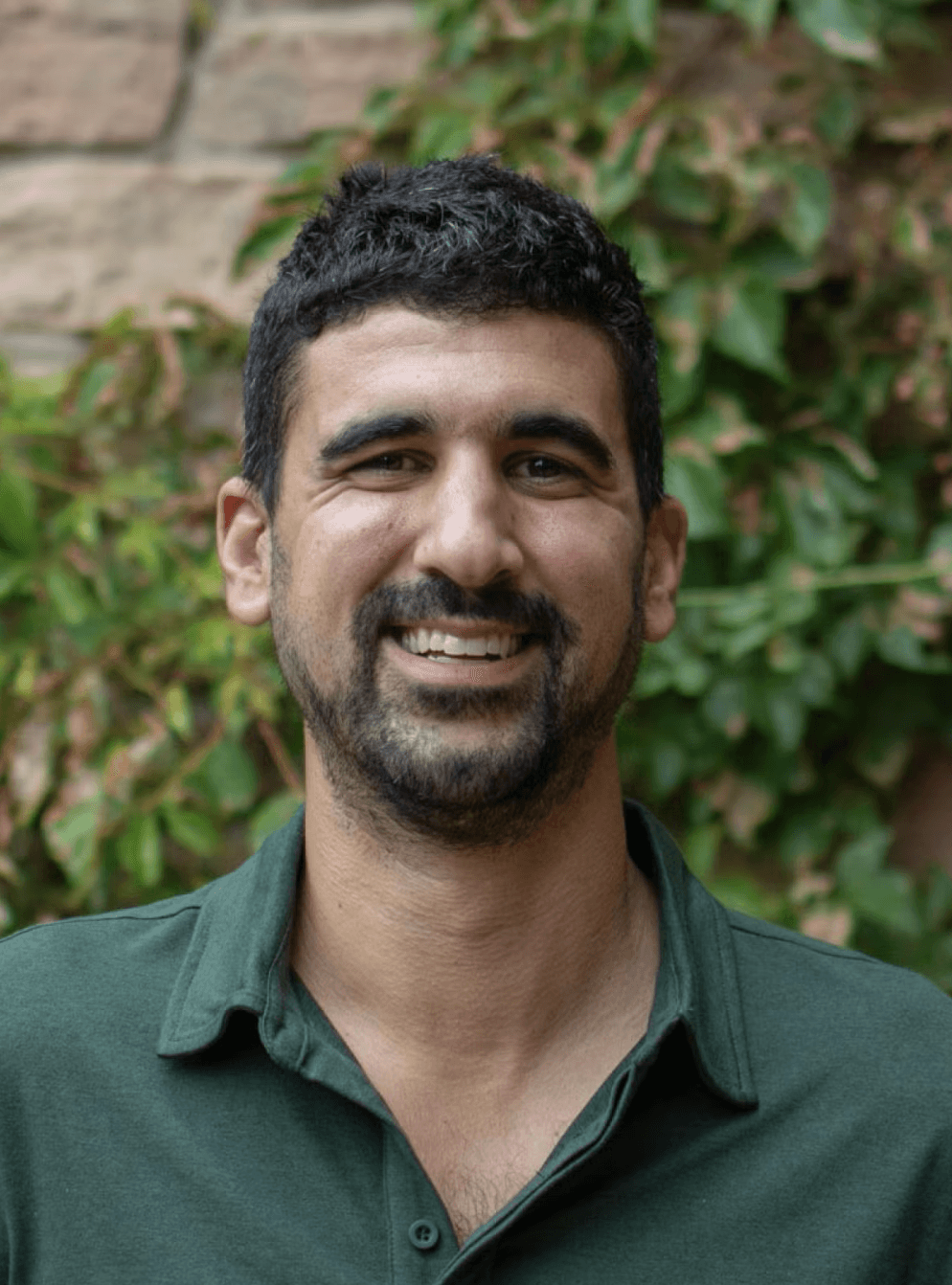
Hi and hello. Welcome to the Transforming Basketball Podcast. I'm Adam Omiecinski, and I'm here with Jamie Monroe of JM3 Sports. Jamie, if you could give a brief background of who you are and what you do, that'd be sweet. All right, Adam.
Jamie Munro2:10
I'm a career lacrosse coach. I coached lacrosse for around 20 years. I was an assistant at Yale for 8 years and the head coach at Denver for 11 years. Kicked off my very first coaching experience at Colorado College. back in 1990. But then I started— I got out of it.
Jamie Munro2:25
I coached high school lacrosse at Mountain Vista High School for 5 years. Then I coached girls lacrosse. And then I founded 3D Lacrosse, sold it, and now I'm working with Jam3 Sports, which has been a really great opportunity to work with athletes. And I do a lot of work on Zoom, and it's allowed me to really dive into the CLA.
Jamie Munro2:48
It's been very exciting.
Adam Omiecinski2:50
Speaking of, I might as well just, you know, obviously I'm talking to a lacrosse guy here on the Transforming Basketball podcast. I may as well ask, like, how did you connect with Transforming Basketball and Alex and this entire world?
Jamie Munro3:02
Well, I've always been very interested in basketball. I play a ton of hoops. I studied it. I actually, like, wrote Bobby Knight a letter in 1994 and went to Bloomington and spent 3 days there watching practices. Coach Knight actually responded to the letter, said, I don't meet with people during the season, but you're welcome to come.
Jamie Munro3:21
I'll connect you with my head manager. And I spent 3 days there. So I've been studying hoops and really always looking at it and played so much. I saw this amazing crossover in my playing days and my coaching days. But it was the blog that Alex wrote on, Does an Athlete Really Need Fundamentals?
Jamie Munro3:39
That made me say, wow, that is an incredible articulation of the things that I've been sort of thinking about. And so I reached out to Alex on Twitter and we connected and did a Zoom. And then I was like, hey man, would you like to do a podcast?
Jamie Munro3:52
Because I have a lacrosse podcast. And he came on my podcast a couple times. He came to Denver to visit Kareem. We met a couple years ago and then I invited him to Rhode Island to come hang out and we've become friends and worked together on a couple different projects.
Adam Omiecinski4:08
That's great, man. I guess I'm curious, like you said, you were thinking, like the Fundamentals article really hit you. What type of things was going off in your mind to even search out that information? What were you questioning about, whether it was what you were doing or whether it was lacrosse as a whole was doing?
Jamie Munro4:24
Yeah. Well, in 2017, I had a really great opportunity in my life to step back and really assess what I was doing. I had sold my business, 3D Lacrosse, and I was stepping down at that time as the head boys lacrosse coach at the high school where my son had just graduated from.
Jamie Munro4:41
And it gave me an opportunity to really think about what I was happy with, what I wasn't happy with, and really step back in life. What I was happy with was we did a lot of good work on both fronts. I really tried to create this club program and this training program into being what I care most about, which is training athletes.
Jamie Munro4:58
And I've always been an avid learner and student of the game and sort of an outside-of-the-box thinker. And I tried to do the same thing with my high school. I just loved it. But what I wasn't satisfied with was the transfer of what I knew kids could do and what they actually did in games.
Jamie Munro5:13
So, I started looking for another way and I came across Raymond Verheyen. I mentioned him when we had dinner the other night. He's a soccer guy and he made this statement that was like, it's not the execution of the skill that's the hard part, it's the decision coupled with the execution of the skill that is incredibly important.
Jamie Munro5:30
So, I kind of was going down this path of rethinking fundamentals myself. I had already done a podcast by the time I read Alex's article. I had done a podcast that said fundamentals are really the principles of the game, not techniques. And any technique that you call fundamental is a fake fundamental.
Jamie Munro5:45
I stole Brian McCormick's usage of the word fake fundamental for that. And then what that article did for me was it put it into the terms of ecological dynamics, and it actually began this journey of learning the theory behind all of it. And so I was really heavily into a free play mode when I stepped back from, as I said, from 3D lacrosse and from coaching.
Jamie Munro6:13
I was like, I want to figure out a different way. I was kind of a list guy of like, I wanted lists of all the things that I wanted people to know how to do, and I would figure out ways to teach them.
Jamie Munro6:22
And I always understood constraints, just like all great coaches. Everybody understands how constraints work. What I didn't really totally understand was that if you don't leave it up to the athlete to figure out how to do it themselves, it doesn't really count. So just because they can do a skill on command or in a very specific way, It doesn't add up.
Jamie Munro6:44
So, my idea was, hmm, I wonder if I can get these kids playing in these small net games, AKA 3x in lacrosse, these 3x3 nets or 3.5x3.5 nets, which resemble box lacrosse, which is kind of like the futsal comparison to soccer. It's a small-sided game with smaller goals and smaller equipment and stuff like this.
Jamie Munro7:07
And it just, it creates a higher level of skill because of confined spaces. And I was like, if they can figure out how to do the skills I want them to learn in these games, I bet it will work better than me teaching it to them and trying to get them to do it.
Jamie Munro7:21
Again, I might have done it on air and then done it live and then done it in a 2-on-1 or a 3-on-2 and then a 3-on-3 and build it up. But in the end, I started to try to figure out how to do it in free play.
Jamie Munro7:33
So I did an experiment. I started filming everything I did. I started having them play, and then I naturally was changing constraints because I would be like, all right, I want to pick action here, or you have to score in this and such way.
Jamie Munro7:44
And again, that's stuff that I already knew, and any good coach understands that. So, that was kind of how I went down this path. And so now, I'm just continuing to dig in, learn more, read more, listen more, watch more, observe more, experiment more, try to find the solutions on my end as a coach to try to create The behaviors that I'm hoping for on the field out of my athletes.
Jamie Munro8:09
And frankly, they're very, very similar to basketball. The game of lacrosse is a lot like basketball. It's a— it's got a full— it's 10 on 10 and 12 on 12 in women's lacrosse, but it goes down to a half-court level of 6 on 6.
Jamie Munro8:20
There's picking, there's screening, there's man-to-man, there's coverages, there's zone, there's man, there's pressure. You know, you still have to create advantages and capitalize on advantages and read coverages. So there's a lot of stuff that's very, very similar. So. That's kind of where I'm at.
Adam Omiecinski8:34
Speaking of that similarity, obviously you've been a big hoops guy your whole life. Well, how has hoops influenced like the way you've coached, whether it be tactically or technically in the sport of lacrosse?
Jamie Munro8:44
Well, as a player, I was really more of a pickup hoop player. I played a little bit of high school basketball, but it wasn't really till I went to college and we would just play hoops every single day when we weren't in season.
Jamie Munro8:53
And then when I was a college coach for 20 years, I played lunchtime hoops, which is kind of like in most athletic departments across the country, there's a lunchtime hoops thing where coaches and faculty come and play hoops at lunchtime. And I just started playing so much and I just loved it.
Jamie Munro9:07
And I started to really learn how to apply my lacrosse skills to basketball and then vice versa. The elements of deception and hesitations are probably some of the things that I learned the most that in lacrosse work just as well. But because there's so much more space, kids tend to just use all of their speed.
Jamie Munro9:24
And in basketball with a reduced amount of space, you'll never get to the basket with one move. You're going to have to create your advantage on it, get a step on a guy, and then you might have to look it off and hesitate a little bit and sell jumper and then go and make all those big men— they're going to try to block your shot— make them a little bit late or make them early so you can dish it.
Jamie Munro9:42
And there's so many elements to basketball. And like I said, the whole Bobby Knight thing, I mean, I watched all of his videos that he had back in the '90s that were incredibly impactful for me for learning coverage solutions and really understanding how defenses play stuff.
Jamie Munro9:58
And I read all the books. Like I said, I went to practice. I watched the way he had a part-whole Methodology that was really the same thing as slicing down the game into smaller parts so that you could work on specific things. And the organization in which he would do that, I mean, he had 15 managers because he had stuff going on at tons of different hoops.
Jamie Munro10:18
And he had the big men working on stuff over here and the guards working on stuff. And while there was some stuff that Bobby Knight would have done that was non-contextual, it was mostly contextual. And it was very specific with the reads of the things that were going on.
Jamie Munro10:30
And it was in-game preparation for their Michigan State game back then. I forget who the 2-guard was that was on that team, but he played in the NBA for a long time, and they were talking about him the whole time. And it was, it was incredibly— basketball organization influenced the way I coached offense and began going down this principles-based offense model.
Jamie Munro10:48
Bobby Knight had his motion offense, and he had like maybe, I think he had like 7 different sort of sets that he used, but it was all— everything was involved with screening and passing and picking and reading. And, you know, some of the specific ones were like, I loved his high offense that he did versus pressure.
Jamie Munro11:03
I think we might have talked about this at dinner, where, where back before in the pre-shot era, if he was getting a lot of pressure, he would pull— he would get 5 guys above the free throw line extended, and it created unbelievable opportunities for backdoor cuts and things like that.
Jamie Munro11:16
And these are things that I was able to apply to lacrosse along with all of the various— really, it opened my eyes to coverage solutions quite a bit and just the natural deception that you have to have, which has always been a huge topic of mine and thought as a player.
Jamie Munro11:31
I was always that way, but also as a coach trying to get players to think this way. And it's been an awesome journey and it continues on. I love watching the Nuggets play. I'm a Celtics fan because I'm from Boston, but I don't get to watch them as much because they're not on when I can watch.
Jamie Munro11:45
And watching Jokic has been incredible to sort of see the things he does and the way he uses deception. Unbelievable.
Adam Omiecinski11:52
That's a treat, man. It sounds like the box lacrosse version really brings that— like, it constrains the possibilities and Kind of forces that deceptiveness to start to emerge. I think we talked about how, like, in certain— I think it was, what was it, Canada, that box across is that much more popular.
Adam Omiecinski12:07
And there's these small sects where, you know, like, based off how a player plays, oh, that, that person's a box across player.
Speaker B12:20
Hi, Coach. A brief interruption from the podcast to remind you of the Transforming Basketball Summer Camp. Taking place by the beachside in Roseto, Italy, this is a once-in-a-lifetime experience for players and coaches alike. The boys' week will run from the 27th of July to the 2nd of August, with the girls' week from the 3rd to the 10th of August.
Speaker B12:42
As a coach, you'll be able to spend a week with Alex Sarama and other Transforming clinicians, observing up to 6 hours of camp practices each day. Each evening, coach development workshops will take place to consolidate what you learnt in the day. For just €850, your participation in the camp, as well as 6 nights accommodation and 3 meals per day at a 4-star hotel, will be covered.
Speaker B13:05
The hotel is right on the beach, allowing you to combine an incredible basketball experience along with your summer holiday. Head to our website and click the events tab to learn more. Coaches go completely free if they send 4 players or more to the camp.
Speaker B13:20
Now back to the rest of the podcast.
Jamie Munro13:24
What is box lacrosse? Yeah, box lacrosse is the Canadian version of the game, and it's played at a hockey rink when the rinks don't have ice on them in the summer. And all the hockey players play box in the summer, and they all play hockey, you know, the other 9 months a year.
Jamie Munro13:40
And it's a 5-on-5 game with a shot clock that takes the game out of the hands of the coach in many ways because there's just not as much time for them to slow it down and do what they want. And the smaller nets You know, a field lacrosse net is 6 by 6, so you can shoot a lot of shots at different angles and distances that you cannot shoot in box.
Jamie Munro14:00
And with a 4 by 4 net or 4 by 4.6 net in box lacrosse, you literally have to get to the middle to score. You'll never score if you don't get to the middle. So that becomes one of the main principles of play, and it's the same principle of play in field lacrosse as well.
Jamie Munro14:14
And it's easier to get to the middle without the ball than with the ball. And so therefore it becomes more of a passing and cutting game, and you can't just create space to attack one-on-one by just clearing space because there's not enough space to do that.
Jamie Munro14:26
Whereas in field, you can kind of just throw everybody on the other side and attack, particularly at younger levels. You can't do that in box lacrosse because they don't have to move. And so the way you create space is by bringing people together.
Jamie Munro14:37
So if you have 2 people on a side and you bring them together, it creates more space, you know, above or below the pick action. So that's what 2-man game's all about. And so then you're dodging and going one-on-one in the context of a pick-a-lot, in the context of that coverage solution.
Jamie Munro14:51
So it makes for a smarter player because of that. And then off-ball, you've got all of these actions going on too. And so you start realizing that it's a picking and passing and cutting game, and all the dodging is occurring during the course of these 2-man situations.
Jamie Munro15:06
And the defense obviously can pack it in a lot more. So you start really learning how to use the deception of shooting around screens and really hitching a lot and using much more deception. A really interesting analogy between lacrosse and basketball is That in basketball, there's a double dribble rule.
Jamie Munro15:21
And if you can imagine in basketball, if one person was allowed to not follow that rule, they could just fake their way to set their feet and fake a shot or whatever, and they'd be unguardable. In lacrosse, basically, you can play like there's no double dribble rule and there's no offensive foul rule.
Jamie Munro15:37
So you can kind of slam into people and you can set your feet and start faking and hitching and looking and create a very, very difficult situation for the defense to guard. Yet in field lacrosse, due to the constraints of all that space and all that speed, people don't do that very much.
Jamie Munro15:51
They don't use those hesitations and those hitches and those fake shots to the degree that they could, nor are they concentrated on just getting to the middle because at younger ages, they're rewarded by taking lower angle shots, going down the side and shooting the ball at less angle as opposed to coming to the middle and shooting with angle.
Adam Omiecinski16:12
What rules or constraints would you— I guess they have rules— would you like to see field hockey take from box lacrosse? Do you think it would— what rules would you like to see in field lacrosse that potentially could enhance that deceptiveness? It seems like you would like to see more of it.
Jamie Munro16:28
Constraints?
Adam Omiecinski16:29
Yeah.
Jamie Munro16:30
I mean, honestly, field lacrosse is a great game. Box lacrosse is a great game. I love them both. I think that There are a lot of coaches out there that are using the constraints of box lacrosse to develop their players. One of the simplest ones is just using a smaller net.
Jamie Munro16:48
I mean, that literally is one of the most powerful constraints you can use, and it's an environmental constraint that forces you to get to the middle in it. But at the same time, it also— like in Canada, the players are much more one-handed because you can only score by getting to the middle, and you're going to score by getting to the middle with your strong hand.
Jamie Munro17:08
So if you're a lefty looking at the net, you're going to play on the right. And if you're a righty looking at the net, you'd be playing on the left because you're trying to get to the middle. You can go left and right.
Jamie Munro17:17
You can go underneath and get to your right. You can go topside and get to your right. You can step back and get to your right. You've got all the options of left, right, back, but you're not scoring with your left hand on these smaller nets.
Jamie Munro17:28
So a huge constraint is learning how to be intentional about what side You're playing on. Now, in basketball, you can go wherever you want, but there are certain reasons why if you learn how to, in basketball, inside-out dribble from the left— if you're a right-handed player and you learn how to inside-out dribble and crossover with your right hand to get topside or get underneath and still be able to score it with your right hand, it happens a lot in basketball too.
Jamie Munro17:54
And it doesn't mean that there's one way of doing anything, but in the sense of Always wanted to do that, but that's sort of an example in basketball where you'd be sort of using a lacrosse type of a move. Like Michael Jordan would come down the left side and he'd like sell like he's going underneath and he'd inside-out dribble and get right to the basket right-handed.
Jamie Munro18:10
Or he could use that same inside-out to set up a crossover and get underneath and he might come right in and still score it, protecting the basketball, laying it in with his inside hand, or reversing it on the other side of the basket with his right hand.
Jamie Munro18:24
And that's sort of a box lacrosse or a lacrosse example of how you would attack in basketball.
Adam Omiecinski18:29
Yeah, it seems like you— again, there's only so many ways you can actually shoot in lacrosse as opposed to basketball, which opens up a little bit more possibilities close to the net and stuff like that. So I could see it. And obviously, like, time being a huge constraint, especially in that box lacrosse, would kind of force you to go pretty much like strong hand, and you have to be accurate and powerful.
Adam Omiecinski18:46
So yeah, I could see how it definitely constrains you to one side. Shifting gears a little bit, since discovering the CLA, in like a general sense, like, how has your coaching evolved? Like, From day one discovering the CLA to now, what has kind of changed of importance to you in your coaching?
Jamie Munro19:03
Yeah. Well, like I said, the concept of manipulating constraints is something that I've understood for a long time. I would say that the main thing that I've learned that has been the biggest difference for me is creating a lot more variability. So, what I would basically do is I would have all kinds of— I use the word drills.
Jamie Munro19:22
I know Alex doesn't love the word drills, but for me, a drill can be something that's very contextual and competitive or whatever. But I would put them in environments where I would be having an action and a coverage and a space constraint or a way to score.
Jamie Munro19:35
I mean, there was all kinds of amazing constraints, but I didn't really understand how important it was to change constraints a lot more often. And so, I'd say it's figuring out new and different ways to try to get these behaviors that we're looking for and just trying to find new and creative ways to get the players to do the things within the scope of principles of play.
Jamie Munro19:59
That's another thing I've always kind of understood. I think that principles of play, and I think that's a really important part for all coaches, you know, the principles of play don't change regardless of your approach to how you're going to teach them. What I'm learning is how can I find a constraint that's going to get some— a player to do something that I want them to learn how to do, and how can I use lots of different constraints to kind of figure that out.
Jamie Munro20:22
And I think what it's done for me is it's allowed me mostly to be a better coach to figure that out because I'm putting them in a situation where they're figuring it out. And also where if they don't figure it out, I don't have to be frustrated.
Jamie Munro20:36
I have to figure out a different constraint or because they're not figuring it out, it's good because they're on the verge of figuring it out. And I think that the frustration that you have as a coach is when you've said something 1,000 times and they're not doing it.
Jamie Munro20:48
You know, that's on you as the coach, not on the player, because all you have to do is figure out constraints that will get them to do what you want them to do. And getting— the better you get at that, the better of a coach I think you are.
Adam Omiecinski20:59
Now, you said like variability is a big change for you. Like, how did things look like to you before you started with the CLA as far as variability?
Jamie Munro21:08
Well, I might now, if I have a certain environment that I really like, I'll still use it. I will just use it in so many different ways. You know, the way that we'll start, you know, we'll start in so many different ways just to create something different within that environment and just try to figure out, you know, for example, I've always understood that you want to try to do one-on-ones in different ways, but I've just scaled that to the nth degree and figured out all kinds of ways of trying to do things.
Jamie Munro21:39
Deception, Adam, is like one of the most common topics that I think about, talk about, you know, when I'm doing Zooms with athletes, when I'm coaching. And it's something that you can emphasize all day long, but you can't teach it. It has to be learned.
Jamie Munro21:55
And so trying to figure out all kinds of different ways to be deceptive, and which is so hard because whenever you do something that is specific, the deception goes out the window. Something as simple as just looking one way and going the other.
Jamie Munro22:10
And so, I think that with that in mind, I'm just trying to figure out different ways to scale the ideas of deception, try to reward deception, try to create situations where they can use more deception. And that has been where the variability for me has coming up with different ways of doing that, whether it's we're doing some kind of a 2-man on-ball picking situation and a constraint of point for the pick, point where you want the pick to come be set for you.
Jamie Munro22:39
Well, because if I point for the pick, I want it here, I can then— it's setting me up to reject. But then if the defense kind of knows that's what I'm trying to do, then I fake the reject and use the pick. And now we're— we've got a pick setup going that I really, really like.
Jamie Munro22:53
And so there's just endless things like that. Calling out the coverages has been a huge one. I did that to create variability in our small-sided games because it was hard to get— it's easy for me to dictate a coverage or change coverages if I'm coaching a group, but when we're playing a small-sided game and I want to get a mix of switching, staying, going over a pick, staying, getting under a pick, hedging a pick, whatever it is, it was hard for me to get that kind of flow.
Jamie Munro23:17
So I started having the offense call out the coverage that they wanted the defense to do. And then all of a sudden I started to realize that so many things came from that. Whether it be the communication of what you wanted the picker to be able to do based on what your call was, or whether it was just being attuned to the coverage itself.
Jamie Munro23:36
So you're actually attuned to like, it's an over and now you're going to have to bring them over the pick, invite them over the pick, or reject because they're overplaying you towards the pick, or using hesis to slow down and bring them with you and not run straight into a switch or a hedge.
Jamie Munro23:50
And so there's just been sort of endless ways for us to figure out how to create more variability with the looks that we're seeing, with the looks that our defense is giving, or that our offense is giving the defense, and then how to accomplish these things and trying to be creative with the way we're doing it.
Adam Omiecinski24:09
I think some basketball coaches will steal the calling out the coverage constraint. I think they'll like some of that, man.
Jamie Munro24:14
Yeah, it's pretty cool.
Adam Omiecinski24:15
On the flip side of the coin, what has kind of stayed constant as like a high priority in your coaching regardless of Before you discovered the CLA and up till today?
Jamie Munro24:25
Yeah, it was pretty funny. I was mentioning to you that one of the reasons why I was really into basketball and learning so much back in the mid-'90s was because I was creating a video series called— at the time, it was a first-of-its-kind video of everything I could possibly think of about the entire game.
Jamie Munro24:43
And it was just an insane endeavor. It took like 3 years to put it together. And every time I learned more, it opened up a new can of worms of learning of more stuff. A lot of the things from that USA Lacrosse Progression is what it was called.
Jamie Munro24:56
A lot of the things that I learned back then and from also, I had a really big soccer background. I was actually more of a soccer player growing up than even a lacrosse player. It's where I kind of learned free play. So a lot of the things that I've learned, these principles of deception and scanning and different environments to teach them, whether it be different keep away environments.
Jamie Munro25:13
You know, a lot of the things, a lot of the environments are not different. The principles of play continue to evolve because I learn new things about coverages, but for the most part, they've kind of remained constant too. There's almost nothing that's really new.
Jamie Munro25:27
Almost everything that you could possibly think is new has probably already been done, but it's the way you put it together that's really, really different. So, I think that, you know, most coaches know this. So much of what I'm doing isn't Different, but I would say that because of this ecological thought process, it's just changed my approach in a way that has both made me a better coach, like I said, from a pure patience perspective where I don't need something to be accomplished and look good.
Jamie Munro26:00
I just need the situation to occur. And, if they're not good at it, that's probably a good thing and we'll figure out a way to help them get better at that situation. But so much of it is, you know, a lot of the drills and environments that I've created for years, I still do.
Jamie Munro26:14
I just do them with this approach. And so, I think that's what's so exciting about it. You know, I think people that kind of know the game have an advantage probably over people that don't. But the real advantage is if you know the game and you really figure out how to leverage the concepts of ecological dynamics to get your players to learn the game because that's the biggest key.
Adam Omiecinski26:32
Well, I don't think I could pick a better place to end the podcast than that, Jamie. That was a tremendous close right there. Go ahead and plug your socials, let people know how they can learn more about what you're doing with JM3 Sports and maybe connect with you.
Jamie Munro26:45
Yeah, JM3 Sports on Instagram. I put a ton of content out there that would be relevant to basketball in some ways, maybe not in others, but there's always relevancy from other sports. I think we all know that. And it's the constraints of another sport are what makes multi-sport athletes so good, right?
Jamie Munro27:01
Because they're learning how to do something in a way that's a little bit different. But it applies from a principles of play perspective. And then my email, jmonroe@jm3sports.com, if you ever want to reach out. All right.
Adam Omiecinski27:12
Thanks, Jamie. Appreciate it, man.
Jamie Munro27:14
Thanks, Adam. Really appreciate you having me on the show.
Podcast outro27:21
Thanks for tuning in to this episode of the Transforming Basketball Podcast. If you'd like to learn more about the work that we do, head to transformingbball.com to access our free resources and spread these ideas throughout the basketball world. If you enjoyed today's episode, be sure to subscribe and leave a review on your favorite podcast platform.
Podcast outro27:41
You can also connect with us on Instagram, X, or YouTube with any questions that you have from the episode. See you next time on the Transforming Basketball Podcast.