EP 17Player development
What Is the London Lions' Approach to Youth Development?
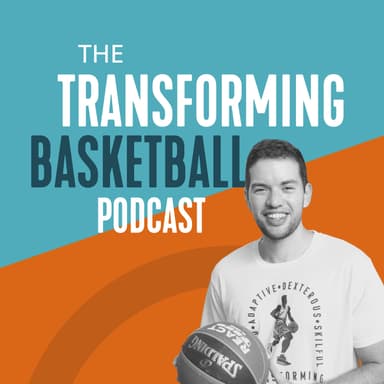
Alex Sarama discusses the ecological approach that he and his colleagues at the London Lions are applying in their basketball academy.
26 min
0:0026:13
Alex Sarama discusses the ecological approach that he and his colleagues at the London Lions are applying in their basketball academy.
Keep listening while you explore. Your episode keeps playing as you browse other pages on this site.
In this episode, Alex Sarama discusses the ecological approach that he and his colleagues at the London Lions are applying in their basketball academy. He explains how they have adopted a completely ecologically driven approach based on contemporary skill acquisition research. Alex highlights the importance of embedding these ideas in every team and age group within the academy. He also introduces the concept of a Director of Methodology position, which can help unite different departments within a basketball organization.
This transcript follows the original English audio.
This is the Transforming Basketball Podcast, and I'm your host, Alex Sarama. This is the podcast where we help coaches and practitioners change the way we think about basketball performance. Our goal is to create the ultimate resource to help make sense of how contemporary skill acquisition ideas can be applied within the basketball world.
Throughout the podcast, we'll unpack how an ecological dynamics framework alters our perspective If you're ready to join us in our quest to transform the basketball world, then this is the podcast for you. Welcome back to the podcast. Got an interesting episode in store for you today because I'm going to be talking about some of the ideas that myself and my colleagues at the London Lions are applying based on an ecological approach.
So I had the chance to move back to the UK after almost 8 years working abroad through different kind of coaching roles. And this is a really exciting chance to come home. And the London Lions are an awesome organization doing big things for the UK basketball scene.
So there's a men's team participating in the Eurocup and a women's team with a chance to be playing in the EuroLeague this season. And in addition to that, we have a brand new academy, and that's primarily why I've come on board to basically help adopt a completely ecologically driven approach based on contemporary skill acquisition to what we are doing there.
And I think this is really exciting because I think this will probably be one of the first basketball academies in the world which is completely focused to contemporary skill acquisition research. So in other words, you know, all the processes that we are embedding, it's not just based on our opinions, but it's based on empirical evidence from what has emerged in the research world.
And This to me was a really unique opportunity because after working in college prep, you know, I kept thinking when I was there, this is great, but imagine the difference if if I could do this with players before they came to me, and imagine if we could do this across a whole kind of academy environment.
So this is basically what we have now: got an amazing team of four professional coaches and supported by the academy general manager Vanya Cernivets, who was a. Big reason why I came back to London, had the chance to work with Vanya NBA Europe before.
And we're assisted by Jacob Lloyd, who is the assistant general manager. So it's kind of like a team of 7 people, including myself. And we're really just trying to develop kind of the next generation of basketball players from the UK who can hopefully become senior team players.
And the reason why we've kind of gone about the academy from a very different perspective is, you know, there's such a kind of gap between where players typically are when they graduate from youth programs in the UK right now to where they would need to be to, you know, have a chance of actually contributing to a team that's at the EuroCup/EuroLeague level.
So really good challenge. I just, I feel like it's going to be really interesting to kind of show what could be done using, you know, these ideas at this level. So I'm sure people will be following some of the things I've shared already on social media from the things we're doing there.
But in this episode, I'm going to take you into a very detailed perspective. Firstly, within the academy, what teams do we have? So in the first year, we have under-12s, under-14s, under-16s, boys and girls. So 6 teams. And we're actually not competing in the English youth leagues.
So we really wanted to do something unique and try and create opportunities with very meaningful competition outlets. So We're basically playing entirely in Europe with competitions there, as well as playing exhibition games against good UK teams and even older teams, teams who are a few years older than some of our age group teams.
I think one of the biggest differences traditionally in the UK, a lot of constraints. So things such as costs of hiring facilities, equipment time. So that naturally leads to a lack of practice time. So despite the UK having so many players with enormous potential until they kind of get to the age of 16 when they're in their clubs, they maybe practice twice a week.
So, you know, our teams will have 4 or 5 practices a week, which is obviously a big change, and it provides us with a great opportunity to embed a CLA into, you know, every single team, every age group. My role, I have a bit of a fancy title, it's called Director of Methodology, and I believe it's the first one in the basketball world, but this position has existed in football for years, and I'll come on to that.
But essentially my goal is to design the methods and the methodologies that we are using and embedding these in skill acquisition research. So that's the first one, ensuring that everything we're doing is grounded in that. Now, when it comes to the academy specifically, we have— one of my biggest kind of roles was designing shared principles of play.
So this means looking at every age group and having a conceptual framework for how we want to play. Something I see in many programs, many clubs, is every single age group team you go in and you wouldn't tell that it's the same club.
The under-14s, some of the under-16s, some of the under-12s, whatever. Very different approaches, very different drills, and very different offenses and defenses. So, and very different offenses and defenses. So we want to have complete alignment and also ensure that these principles of play are actually conducive for what the senior coaches want.
If players progress to the EuroCups, that's EuroLeague level. So that's something really important. And I spent a lot of time designing these and thinking about what made sense for the context we were in. So it wasn't just a case of me copy and pasting everything I did in Italy.
I was thinking about the players, the context, and where we're at right now. Third part of this role and what I do is leading regular coach education workshops and programs. So When I am in London, and even in the instances where maybe I'm delivering a coaching clinic away from London this year, we're trying to have a very regular kind of coach development program.
This means I might even in a normal week in London, I might lead 3 workshops in the week. And we do this in the mornings with the coaches, and they're incredibly reflective. And I basically take different parts of the principles of play and the academy framework that I've designed for player development.
Obviously all based on a CLA and some differential learning. And we basically, I design interactive tasks for the coaches to think about it. We present to each other and we're really just trying to make sure that learning is something that doesn't kind of only occur in the offseason and that learning isn't something that's left to us independently to kind of navigate.
But we're basically trying to make the learning process as useful and helpful for all the coaches as possible. And, you know, this has been something really fun. And I think in most programs, whether it's professional teams or even youth programs, you know, we don't have time to learn on the job.
So for me, a big part of my role is basically finding creative ways to help make it easy for coaches to learn on the job during the season. Because if we want to be better and we want to deliver, you know, programs which are underpinned by the latest research and really offering the players a chance to fulfill their potential, Well, we need to be fulfilling our potential as coaches.
And I think that's very important. And the last thing is creating a one-club philosophy. So together with Vanya and Jacob, we spoke about how we don't want this to be an academy which has silos and is fragmented within each age group. So one of the biggest things we kind of did was create this shared coaching pool, where instead of having coaches only work with one age group, every Lions Academy coach is an academy coach, not just a U16 or U14 coach.
So what that means in practice is, Our coaches are cycling through all the different age groups. And what that does is it removes these siloed kind of operational procedures, which traditionally impact clubs. And we're thinking in a far more unified manner. And also, I think the biggest reason why I wanted to go down this route is it develops more adaptive coaches.
Because if coaches can become well-versed using the CLA with under-12s, under-14s, under-16s, all these different needs, well, even if they want to become maybe an assistant coach on one of our senior teams in a couple of seasons, they're going to be far more prepared and they're going to be more skillful as a coach because they've been exposed to that and they've, you know, found ways to use the CLA in a number of different settings.
So I want to get to— I focused kind of on Lions, and, and now I want to focus on the potential of where I see the director of methodology position existing in the basketball world, because I believe this is the future of the game, not just in academies But in professional teams at the highest level and college teams where they have the resources to hire someone for this role.
So firstly, this kind of idea, how I first learned about the director of methodology position was some research papers, which we're going to get to, as well as a really good article by James Vaughan for the Player Development Project. I want to get James on a podcast.
I'm a big fan of his work. I've learned a lot from some of his papers over the years. So this is a really good blog, and I'll include it in the show notes. So Essentially from this blog, I'm just gonna read a short segment, and this is related to FC Barcelona.
Quote starts, Joan Vilabosch is one of the heads of Barcelona's Department of Methodology, a department created 5 years ago at the request of Pep Guardiola, who was obviously, he was the manager of the team at the time. And the new Department of Methodology has 4 main objectives.
Number 1, maintain and develop the club's philosophy and style of play. Number 2, plan training programs for junior and youth teams. Number 3, provide continuous coach education within the club. 4, share and promote FCB internationally. So for instance, attending coaching clinics, workshops, et cetera.
However, Jones says that the ultimate goal is to unite science and football through this position. To do this, the department is using ecological psychology, dynamical systems, and complexity theories to understand and optimize player and coach development. So, you know, this for me is how organizations can practically implement the ideas that I speak about within the podcast.
Obviously, if individual coaches and practitioners can kind of share these ideas, then great. But I think if we really want to go all in on this, this director of methodology position is key because then they can create this actual department, which we're going to look at, and really create the processes for ecological dynamics to be brought to life in organizations around the world.
Especially, you know, there's so much money being invested in basketball, especially at the higher levels. So for a fraction of that, I think we can get what has been missing for decades and really benefit from contemporary ideas. So I want to look at 2 papers which come from researchers in the ecological space looking at how a department of methodology could be integrated and applied in different sporting organizations.
So firstly, I just want to kind of clarify how I see it. So a director of methodology is hired, and obviously I think that has to be someone who has a background in contemporary skill acquisition ideas. And their job is, you know, very much it's to create a department of different people within the organization where we can get together, understand the theory, and start to apply it.
You know, maybe one staff member from each field forms this greater department. And then, you know, the essence is how can we adopt ideas from the research in the practical approaches of what we are doing at this organization? So just a short excerpt from the paper.
A challenge in sports organizations is to understand how evidence-based methodologies can support practitioners in developing innovative models for athlete learning, development, and performance preparation. Current models of athlete development and support tend to be dominated by isolated specialists working in silos. So this is that whole essence of silo thinking, which I've spoken about already on the podcast and how I believe that this arises where we have so much, you know, specialism within the basketball world now, but every field is so kind of fragmented.
They're not getting around the table. We're not creating this unified organizational approach. So This is where evidence-based frameworks offer the potential to eclipse from, you know, this traditional kind of paradigm we're faced by. And instead of working in isolation, we can work in a unified manner.
Because when we view basketball through an ecological lens, and maybe every practitioner understands the CLA and is using the CLA, naturally that is going to lead to these silos being broken down. And people are going to start having conversations within the organization about how to work together and how to link their approach with other kind of organizational approaches versus just kind of working in a very independent manner.
Now, how has this problem emerged? Well, this kind of comes from the paper done by— it was titled A Department of Methodology Can Coordinate Transdisciplinary Sports Science Support by Rothwell et al. So they wrote, it has been suggested that the problem of integration is embedded in the traditional reductionist method of applied sports science.
Leading to the eagerness of individual specialists to quantify progress in isolated components. This is what leads to siloed working and decontextualized learning environments that hinder athlete preparation. Now, this to me is a really interesting one because especially over the last decade in the NBA, I'd say to a lesser extent the EuroLeague, but now maybe it's becoming more common to invest in sports science, right?
We've seen it a lot and A lot of money is going into it, but in my opinion, and this might be a little bit controversial, yes, sports science is key, but without a theoretical framework underpinned by skill acquisition, I don't feel like the sports science is being applied as effectively as it could be.
So what this leads to is hundreds of millions, maybe even billions of dollars being spent at all levels of basketball every year on approaches that kind of are not optimal with what they could be if they're aligned to a shared framework. So, you know, the more that sports science has become popular, especially in the NBA, I think the more isolated things have become, and ideas such as reductionism have become more widespread, where, you know, scientists really kind of work in isolation.
So instead, this is one way we can get past that and understand how I think the basketball is the area which should influence every other field. For me, that means it starts with the head coach and the principles of play, and then every other department should work around that in a kind of satellite orbiting manner.
So that means in the department of methodology, any director of methodology needs to find a way to unite all these departments as opposed to them just existing as these kind of isolated components, and that is where obviously ecological dynamics enters the equation as a way for everything to be coordinated through the same approach.
Another paper, which I'll include in the notes, was— it's titled Specialist Coaching Integrated into a Department of Methodology in Team Sports Organizations. This is done by Otter et al. They wrote that a key kind of role of director of methodology, the power of methodology, is to improve practice design.
You know, this is what the coaches are doing on the court. Now, I am not suggesting for one moment that the role of the coach is devalued or that coaches don't know what they're talking about. Quite the contrary. Instead, a director methodology supports the coaches to become more effective by empowering them.
And how that's done is maybe coaches have their vision for how the team wants to play, which every head coach will have. It's not a case of conflicting with these. It's a case of how the coach's knowledge can be better applied. So, you know, how I would frame this is the coach has the knowledge for what they want their team to play like.
In other words, the principles of play. A director of methodology, their job is to help the coaches bring their ideas to life through effective practice design. We're not working in a conflicting manner. It's in a supporting manner to ensure that whatever the head coach's vision for the team is, well, the team can actually transfer that to the game environment.
That's why I think this approach is so important. So, That is where director of methodology can have an impact on practice design. They could provide ideas for small-sided games to bring the activities to life, for constraint manipulations, for player development in order for, you know, players to be used maybe in different ways within principles of play.
This is where kind of the director of methodology sits in between every different kind of organizational department. There's a great diagram in this paper where they had the researchers listed the 3 categories of staff we typically see, where we have the coaching staff, for instance, head coaches, assistants, performance analysts.
We have the support staff, sports scientists, athletic trainers, psychologists, physios, nutritionists, et cetera. And then we have specialist coaches. So these could be things like maybe there's a skill acquisition specialist who would obviously work very closely with a director of methodology. You could have a shooting coach.
You could have, some organizations have coaches just for developing big men, you know, whatever it is. The whole essence behind this is that we are integrating all 3 departments through the same shared theoretical lens. And one staff member from each department will kind of meet regularly through this department of methodology and discuss best practice ideas throughout the entire organization.
And these should be informed by, you know, many of the skill acquisition ideas I have shared already through Transforming Basketball. So this is a great diagram. Obviously, you can find this diagram within the paper that will be referenced. So practically, how do we go about doing this?
Well, number one, form a department of methodology. Even if you're a high school team, just regularly sit down with your strength coach, your physio, and talk about an ecological approach and what these ideas are. Now, if you're a collegiate or professional team, obviously, I think the biggest takeaway is trying to hire a skill acquisition specialist and actually someone who can act as a director of methodology.
I actually believe that it's better to have a director of methodology in the first instance that maybe does another role. For instance, maybe they're the assistant GM, the assistant coach, maybe they're the athletic performance director, but it's got to be someone who has some influence within the organization.
And then, you know, they will obviously work with a skill acquisition specialist to embed these ideas across the whole program. So the first kind of step is obviously educating and kind of sharing these ideas with the staff and doing that in a way that resonates.
So this can't be in a top-down approach. This has to be very much meeting people where they're at, having conversations on the ground, and really trying to make headway through this way. And critically, it can't just be giving research papers. It's gotta be practical.
Looking at videos and actually looking at how this manifests in a practical setting. So we have to have a shared theory. So the kind of the key goal is to try and unite everyone within an organization by getting them understanding what the CLA is and how it can be applied.
The third thing is regular discussion. Now, obviously, time is a huge constraint, but even if it's 15 minutes a week where this department can meet, this is gonna be better than nothing. It could be something like having a Slack channel or a group messaging thread where best practice ideas can be shared.
So we gotta find a way to promote discussion where all these different specialists and experts are frequently sharing ideas, getting around the table and understanding this versus kind of working in a very individualized manner. Number 4, having generalists and promoting generalists versus solely relying on specialists.
So what I mean by that is something I've done a lot over the last 2 years is I've been learning about athletic performance. I've been learning about performance analysis through an ecological lens. I've even been trying to learn through some of my friends in this field a little bit about physio and rehab.
So the idea is we want to kind of blur the lines. So that means, say I'm working in a player development setting, and maybe I'm a coach on the team, and I'm working with a player. Instead of me just solely being on the court, I might involve the athletic performance coach.
So we might do different segments on court together. And work together in unison, as opposed to him or her just working in the weight room and then me solely working on court. Then we might involve an analytics person to actually look at, you know, can we actually track things through the representative activities we're doing in this player development setting?
For instance, a small group workout. Then maybe find a way we can look for these things in games. So we want to bring everyone around the same table so that we have this unified approach. versus solely working on our job and just focusing on that.
Going back to the first paper, A Department of Methodology Can Coordinate Transdisciplinary Sports Science, they actually shared how this has been successful in a rugby team in Australia. The authors wrote, this type of collaborative working was demonstrated by McKay and O'Connor in 2018 to illustrate how a team of coaches and sports scientists integrated knowledge, experience, and ideas to identify possession sources for the Queensland Reds rugby union team.
This collaborative effort revealed that traditional practice designs did not account for the most common sources of turnover possession, where unstructured possessions, i.e., transitions from kick receipt, unexpected turnovers from errors, and quickly taken tap penalties, were the most common form of possession sources. Informed by dynamical systems theory and constraints-led pedagogy, the team of defense and attack coaches, physical performance staff, and performance analysts collaborated to identify principles of unstructured practice to support the redesign of practice tasks that better stimulated Rugby Union match play conditions.
So, you know, obviously that example is in rugby, but you can easily apply that to basketball, even in the same context of turnovers. And this is where the department methodology could help. So the head coach, the assistant coaches, they might identify a problem, something within the principles of play that the team needs to develop.
They might pose this problem to the department of methodology. This is the problem, we've identified it. Can you give us some ideas as to how we could work on this? And obviously, this requires a very open-minded staff, and we've gotta be vulnerable and open to the fact that It's not the coaching staff's job to know everything.
We've surpassed those days. If we can involve everyone and get more people involved in the thought-making process and then just involve different perspectives, we're probably gonna reach a better solution. You know, the department of methodology may then come up with an approach that could target this, and now we start creating processes to implement this.
So it's a highly systematic approach as opposed to, you know, the general kind of reductionist approaches which we see at every level of basketball right now. So conclusions. I started kind of introducing the Director of Methodology position within the youth space with what I'm currently doing with the London Lions.
And, you know, obviously keep following the work we're doing there. I'm really excited to be pioneering, you know, all these ideas in that space. Where I see this role being of most value is obviously for professional and college teams who have the resources to hire someone like this.
But even if you don't have the resources, Start doing it straight away. Think about what you can do at your level with the resources you have. And I think ultimately, this is the way we can benefit from evidence-based ideas in the basketball world.
It's that bridge between science and experiential knowledge, which is, you know, the main kind of factor which influences current procedures. And we want to bridge that knowledge with the science. If you have any takeaways from today's episode, I'd love to hear them. Any practical kind of challenges maybe to implementing a department of methodology would also be really interesting to discuss.
So I believe, you know, if football has had this position for many years, even then, I don't— I would say many organizations, maybe they don't do it in a way that's ecologically orientated, but still the position's there. The potential we have for this in the basketball world is staggering.
It's just a matter of time. And I think the first organizations who kind of go down this approach, well, they're going to be able to access an unparalleled competitive advantage. So thanks for listening, and see you on another episode of the Transforming Basketball Podcast.
Thanks for tuning into this episode of the Transforming Basketball Podcast. If you would like to learn more about the work we do, head to www.transformingbball.com to access our free resources and help spread these ideas throughout the basketball world. If you enjoyed this episode, then please subscribe and leave a rating or review on your favorite podcast platform.
We will gladly answer any questions from today's episode via our social media platforms. See you next time on Transforming Basketball. Thank you. On the Transforming Basketball podcast.
Explore Transforming Basketball membership and continue your coach development.