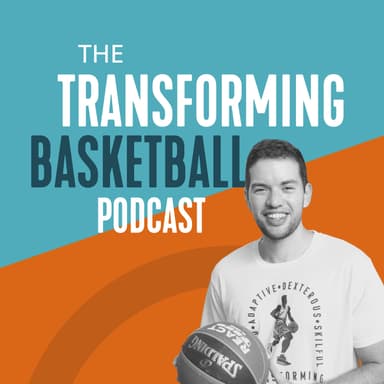
Nathanial Mitchell: Transforming Players Through Sweat Equity
George sits down with Nathanial Mitchell, head coach for Canada Basketball's Senior Men's National Team and former NBA assistant with the Toronto Raptors and Charlotte…

George sits down with Nathanial Mitchell, head coach for Canada Basketball's Senior Men's National Team and former NBA assistant with the Toronto Raptors and Charlotte…

Keep listening while you explore. Your episode keeps playing as you browse other pages on this site.
In this episode, George sits down with Nathanial Mitchell, head coach for Canada Basketball's Senior Men's National Team and former NBA assistant with the Toronto Raptors and Charlotte Hornets. Nathanial shares lessons from coaching across the NBA, G League, international basketball, and now the Chinese Basketball Association, emphasizing how connection, accountability, and continuous learning shape his coaching philosophy. Bio:
Toronto's Nathanial Mitchell has coached at every level — from the NBA with the Raptors and Hornets to leading and assisting Canada's Senior Men's National Team across the FIBA AmeriCup, World Cup, and Olympic stages. Nate is currently the head coach of the Guangzhou Loong Lions in China's CBA. In this episode, he shares how he builds transformational environments through sweat equity, trust, and a constraints-led approach that develops both the player and the person.
Select a chapter to start listening from that moment.
Useful for your staff or players? Share this episode—or a specific moment—with them.
This transcript follows the original English audio.
This is the Transforming Basketball Podcast. This is the podcast helping coaches and practitioners change the way we think about basketball performance. Our goal is to provide the ultimate resource for making sense of applying contemporary skill acquisition ideas within basketball. Within this podcast, we unpack how an ecological dynamics framework Impacts our perspective of the game.
If you're ready to join us in our quest to transform the basketball world, this is the podcast for you.
Welcome to the Transforming Basketball Podcast. Today's guest is Nathaniel Mitchell, a Toronto native who left his imprint on Canada basketball in various ways. He's coached in the NBA with the Charlotte Hornets and Toronto Raptors, as well as the Raptors 905, where he won a G League— well, D League at the time— championship and played a key role in developing stars like Pascal Siakam and Fred VanVleet.
Explore Transforming Basketball membership and continue your coach development.
Since 2016, he's been a part of Canada basketball, including being the head coach for the senior men's national team at the 2022 and 2025 FIBA AmeriCup. Currently, he's bringing his transformational coaching style to the professional game in China with the Guangzhou Long Lions.
Welcome to the show, Nate.
Thanks, George. Appreciate it. I'm really excited to be here and dive into all the things we need to talk about basketball.
Yeah, man. First thing I want to start with, the AmeriCup experience. Obviously, just about a month ago, you guys finished 4th. You know, were super close to finishing, getting the bronze or even being in the gold medal game. How was that experience for you?
How was the whole thing?
Yeah, I mean, every, every, every experience that you bring into national team play, That you get a chance to compete, like for the players to wear Canada across their chest, you know, us coaches have a flag on our polo. Representing the country will always be first and foremost, like the biggest blessing that you can do.
And I get another chance to do it and competing in a high-level tournament like that. I can't say enough, like for the gratitude and thanks that I have for that, for the people that put me in this position. So it was a great experience.
Unfortunate ending, clearly, a little bit disappointing, but that has come with the traction of where we are as a country, continuing to build and try to put ourselves in a situation where anything under a gold is pretty much, you know, not our goal.
So I love where we are as a country. And I want to continue kind of to build that with our players and with our staff.
Man, I always find it interesting that you have like, you don't have much time because you're coaching in windows. How did you adjust on the fly? Like, obviously you did it before in 2022 as well. So this time around, you knew a little bit more what to expect, but how did you adjust on the fly to, you know, coaching?
Yeah. I mean, you know what, like it goes back to like the experience I've had as an assistant. I've been a part of many windows in the past. Since being here with Canada Basketball, I've coached under, I think it's 6 different head coaches.
A lot of times that coaches have gone and gotten You know, head coaching jobs elsewhere, like they had to move on and we had to hire somebody new into that situation. So I was able to adapt plenty styles, you know, Nate Bjorken, Nick Nurse, Roy Rana at a time, you know, Gordie Herbert, and now back for the second time, Gordie Herbert, Jordi Fernandez.
We've really put ourselves in a situation to make sure like our assistants have been able to learn from some greats. Including Jay Triano, who was the original. So I'm just grateful for the opportunities to learn from so many people, to be able to adapt and see how we can apply things in a short amount of time.
Yeah. And the players did a great job picking that all that up. You know, it was one thing for the coaches, but then the players got to put it in games. So I want to talk about, pivot a little bit, talk about sweat equity, something you talk about.
Can you talk a little bit about what that is, what that means to you? Like, what's been your guiding principle with working with so many elite-level athletes through the years?
Yeah, I just think it's important to, like, as much as your ability allows you to as a person, I take great pride in trying to stay in somewhat shape to be able to keep up with my athletes somewhat. Obviously, these guys are at the highest level possible, but I think putting yourself in a situation where you have some physical ability to get out there with your players, If you have a chance to defend with them, pass to them, contest with them, compete with them every now and again in a shooting drill, you know, little things
like that. And there's like individually, I have guys that I'm really close with that go to the weight room and sometimes I'll show up for my training session before their weight room session. And I'll do that weight room session with them just to let them know like, hey, like I'm here with you.
I'm supporting you. I'm not doing a person like, hey, Do what I say and I do it. Don't do any of that. Kind of living by it sometimes helps you get the extra mile that they know you care. And for a guy like me, I didn't play in the NBA.
I didn't play in the EuroLeague. I didn't play high-level professional basketball. And so sometimes when you're able to like show that you're willing to grind just the way they grind, that respect factor is there. And sometimes when you're young, you can do it.
I'm pretty sure. I'm not sure if I'll be doing that 10 years from now, but. That would be a goal to be able to do something physical. And I think that goes a long way when it comes to holding your athletes accountable, certain things on the court.
I think it was Jeff Teague in his podcast. He mentioned the year that he was an All-Star, Kenny Atkinson, who's now the head coach of the Cleveland Cavaliers, would work with him on the court every day. And then as soon as he left, you know, he didn't have that same coach coming in and being active like that.
And You know, he made a joke like, you know, wasn't an All-Star since then. But I think to your point, just the difference it also makes in players' development and the respect that they have for you as a coach as well.
I think they have to know that you're dedicated to them. Anytime a player knows you're dedicated to their craft, you want to increase their value as a player, they're more willing to incline to listen to what you have to say in its totality when you're dealing in a team situation at times.
It's kind of like reverse engineering. We're always talking about team. What causes the team to win are individual performances. Individual performances are breaking down to making sure each person is aligned in their role, what they have to do, and excelling at that. And they have to see value in that, accepting that role.
So the individuals accepting the role allow your team to bond, which allows you to connect and fight through scenarios where you need to win. So I do think the individual piece is just as important as the team piece is, because why else would you need, you know, debriefs for individual exit meetings and things of this nature and discussing what the expectations of each player is coming in?
I want to, I want to expand on that a little bit because now you're in a situation in China with the Lions where you're obviously, I think maybe you've worked with, you know, in Canada basketball, you've worked in the US. So now you have a certain way you interact with guys.
You know, what are some of the challenges that you're going to be looking at, that you're facing, that you faced last season and now heading into the second season of how to get players to buy into their roles?
Well, I think within professional sports, there's certain things that happen all the time that are always tough. It could be people retiring. There could be trades. There can be injuries, roster construction changes, your imports change. So how do those personalities intertwine with the ones that are already there?
Do you have some carryover for, of leadership of youth? I just talked about our, you know, our average age being 22. I had a captain last year that was 24 years old. Right. And so, but he was mature and him being able to retain on our roster the following year allows us to have some continuity of the guys and any of the rookies or any of the people that have been traded to our team coming in to kind of build that.
And then when you're recruiting imports per se, Like you go into that as well. Like, what are their personalities? Are they going to be able to fit with the people that you have? And so those things always bring challenges. Within a national team, like the best thing is that the people of your country are the people of your country.
It's not like you're going to go recruit, man, I need a 7-foot-4 center. If your country doesn't have it, you can't get it. You know what I mean? And I think that building those relationships Before they get into this and going to the U16, U19 events to get a feel for them, how they are within a team.
And when they get to the senior level, it's a smoother transition. All those things happen. So just meeting new players, understanding their personality and how they fit with the other personalities will also be a challenge. I mean, the easy one is probably going to be the language barrier.
I'm a big analogy coach. And so to use those analogies. That may be relevant within our environment here in North America may not be the same in Asia. And I think you have to be very clever in how you do that. I've been blessed to have an amazing translator who always is able to translate my stories to when I know it's time for them to laugh, they laugh.
When I know it's time for them to like really dig in and be serious about a game, it is. So like that to me has been a blessing and just trying to find simple ways to do that. It's been great for me.
And how did you create these environments? So how do you co-create these environments with the players? So it's not just, all right guys, you're doing what, you know, what I'm saying, but instead it's like, you know, like if you're working on the skill development session, for example, how do you collaborate with the players to work on something that they feel they need to work on and you feel that they need to work on as a coach?
Yeah.
I mean, there's like 2 different instances for me. As the coach, I always want to hear from them what they feel they need to do to get better as a basketball player. They're going to give you a list of what they feel they need to get better at and what they want to do and what they see themselves as.
And I think it's very important to take that information and say, hey, these 2 to 3 things I think we can affect in the near future. And they're able to be implemented right away. With the team. And here are the scenarios that are going to happen within a game, especially within our sets and concepts where you can implement that.
But if you're not capable of the skills or the decision-making in these situations to make that efficient, then here's where our individual time needs to be, you know, where we need to put our attention to and improve those things. And then it's up to me to create the constraints to allow this player to get better, whether it's in a team setting, whether it's an individual coaching setting, whether it's through film individually, or what other players, other examples of it there might be.
And I think just building that bond to know, hey, these are immediate things that we can improve at. And these are things down the road that we need to improve at. And we're not forgetting about them, but let's get this part first. Because I think that will, you know, it could hinder or it can help how our season goes, or especially get off to a better start.
It's like, what are the most important, we call it like rate limiters within Transforming Basketball. And it's like, what are the most, what is the thing that if we were to tackle this right now would yield the biggest dividends? So, you know, let's say the player handles a lot in the pick and roll, but they can't necessarily make The best passes that, you know, they can't see maybe the skip pass or the pocket pass and make that over taller defenders.
So then it's like, maybe that specific thing is what they need to get our offense better. And that's going to yield the biggest thing. And that's where we work on with the skill development as well. I want to ask you, you spoke about adjusting constraints to shape, you know, how players can improve on this.
Can you maybe give us an example of how you've done this? How you've put players in competitive environments and used constraints in practice to shape what you wanted them to work on?
I think the biggest thing is like, you got to identify what is missing. Is it the decision, which is the part of player development, or is it the skill, which is a part of skill development, which I think there's 2 different aspects to, you know, developing a player.
And the player development to me, a lot of times comes from the decision-making. And so you have to be able to identify, is this player or multiple players struggling with the read, or can they actually see it, but they can't get the ball to where it needs to go?
And that's either in the net or to their teammate. And a lot of those things is what you could be working on. And so sometimes you're watching the game as a head coach film-wise and seeing there are multiple guards having problems with making this read to the corner when the low man is pulled in on the roll and the ball's not getting there.
Sure.
And there's some, right? So here's 4 guards and all of a sudden 2 of them never pass it to the corner. One of them passes it decently, but it's off target and maybe it's sailing. Right. And another one just like pivots and passes it too late.
So to me, I have 2 people that can actually see it. But can't deliver it. And I have 2 people that don't see it at all. So now I have to, you know, figure out a drill. Okay, I'm going to start with the skill piece.
We're going to work on our ball handling and it's going to be going left, left-handed passes like that are direct, left-handed passes that have a little lift underneath it. That's where we're simulating the ball going over the top of high hands. Right. And then, so as I'm building the skill, they have confidence to ever make this play.
Now, when you come off, I'm going to have a coach here. He's going to come in or go out, and you need to be able to throw the lob with the left or the skip pass direct to the corner. Right. And now the big that is guarding you coming off this pick and roll is going to stay with the roller.
The ball's in one hand and you got to finish a left-handed layup high off the glass without your right hand touching it. Right. But if he comes, throw the lob. But if the other coach comes, Throw it direct. And if the coach that's in the corner has to move his hands, it's a minus 1, right?
And so now all of a sudden, like, if you throw a lob and it doesn't hit the corner of the backboard, like, it's a minus 1. Like, they have a direct target to what they need to do. And they're now like, yes, the coach didn't move his hands.
So when they make a pass in a game and a guy is reaching way above his head or outside of his frame, To make that pass and make an assist. Like, they have pride in how the ball is being delivered. And so now, because they've worked on the ball handling drill that was warming up their skill and they've started to read it, now it goes back to the film.
Like, hey, we just worked on this yesterday. Press pause. What pass is supposed to make right here to the corner? Okay, press play. The ball gets to the corner. That was the right one. So now I'm congratulating them. I'm showing them that Hey, here was an opportunity for you to make the read and you actually made it.
Right. And the ball was delivered on time, on target in their shooting pocket. So like—
Sorry, I was going to ask, it's important to show both the good and bad clips as well? Like to your—
100%. I think I always use like before the action, I know what happens is I press pause. They say, tell me what's supposed to happen right here. They'll let you know this or this. And you press play and see if it happened or not.
And sometimes they know exactly what should have happened because they remember the play in the game. So one way to learn from that is showing them other people and saying, you press pause, what should this player do here? Oh, he should throw the lob easy.
Then all of a sudden the player shoots a floater and he's like, ah, that's not the right shot. You know, so all of a sudden they're starting to Put themselves in situations that okay, what is the right play? Because now when it does happen in the game and they make the wrong decision, they already man, I saw that on film.
I should have made this play, and that's cool. That means if they make the next the right play the next three times, that means three out of four. That that has increased our offensive efficiency, our assist to field goal percentage. All those things have increased because they are becoming better as decision makers.
And the players are getting better. If the ball is not being delivered or they're scared to make the pass going left, that's a skill issue. And that's where you actually need to sit down and work on the skill.
No, I love that. And I love the fact that you, you know, make it a game and there's, there's different points if it's in the target zone or if it's not. And like there's different decisions. So you're adding complexity to the game. So once they know how to do the skill, you know, you can change up and add complexity to it.
It's great. I know you worked with a lot of Canadian hoopers growing up. I know like you worked with RJ Barrett when he was, I think, 11 years old. You worked with obviously Shai at the national team, Pascal Siakam, Fred VanVleet, Pascal with the 905.
So you worked with a lot of them and a lot of them when they were young as well. Are these the same kind of games, drills that you were doing with them as they were growing up? What are some of the— What did you do with them as they were growing up to help them, you know, develop not only as basketball players, skill, player development, but also like in life as well?
Like, what are some of the things you did with all these?
Yeah, I mean, some of those things, like some of those scenarios with those players are definitely different. Where it pertains to guys that I met while I was in my professional coaching realm, like Pascal and Fred, they were rookies with the Raptors that happened to come down and play games.
And I was one, a part of the staff that was able to help Guys like that out. At those times, you're trying to teach them through, like, I worked more with Fred, you know, like with the film. Hey, this is, these are the reads that you're not making.
These are the reads that you are making. These are going to be transferable to the NBA games to be happening like right away so that when you get into the game, like you have no issues with this. And these are your defensive decisions that you need to improve on and where you need to be on the floor.
I think those are the things that really help. In the professional setting, when you're talking about players like Andrew Nembhard, RJ Barrett, Nakil Alexander-Walker, Shai Gilgeous-Alexander, even like an AJ Lawson, these are guys that I had from a young age that grew up.
And I could keep going on with like young players in Canada. To be honest, I've dealt with a lot. But the biggest thing that I felt is the consistency of work that needs to be had in In order to get better. What are the skills and drills that are transferable to your game?
When you're younger, you're trying to improve all these skills. You're trying to decrease weaknesses and deficiencies in your game. As you get to the professional realm, after 2, 3 years of building a base within this player, you're starting to understand their offenses that their teams run and how you can implement those skills faster.
And I think that, that is always the case in what you're trying to do, because a lot of guys work on stuff during the summer and have no clue how to apply it within a game and sometimes make it a situation where it's the team, the coach, and the system don't allow me to do the things that I really got better at.
And I think it's important for coaches who are working with individuals offseason to have a great understanding of that. Team's concept and offensive sets and things of that nature. So you can help them. Hey, when they run thumb down twist and you're in this corner, the ball comes to you here.
It's an opportunity for attack and play off the catch so you can make plays for your teammates. But if there is good defense, here's a time for you to turn that into a post-up. And now when you turn it into a post-up and there's 6 seconds left on the clock, the type of shot is not going to be scrutinized by your staff.
But you have to create a shot that you are capable of making and being efficient at. And here are some of the things that you can do. You know, you like to shoot over your left shoulder, so you can do this. You like to shoot over your right shoulder, so you can do this.
And then you start to show them the comfortability in the certain spots that they can be an individual good player while staying within the team constraints of what are the reads to make the best play for your teammates to be catch and shoot 3s and dunks.
That's going to allow your offensive efficiency as a team, especially while you're on the floor to grow.
And I just want to build on that because what you said, I think is super important. Like there's so many skills trainers nowadays. And I think if they were just to, instead of working isolated from the players' teams, have a conversation with the coach and the program and see what, you know, what plays are you running?
Like, how do you plan to, you know, play in transition? What are some of your principles? And then work with that player based on that, to your point. Because if you do that, you know, it's great that you're working on a lot of getting into your bag and all that.
But is that going to be your role? And then if not, maybe as a skills trainer, you might be doing this player a disservice because they're going to have a completely different role on that team.
Yeah, I think the biggest thing about that is, and it's a little tricky because most players now have a skills trainer. Because they feel like they're not getting that from their team at times. All right. And I think that's the biggest, if you start to do what the team does all the time, then there's no need for you.
Right. And so there's a thin line here that you're trying to walk. But I think the big thing about this whole thing is you need to understand what the player wants as a skills trainer. And in doing so, because he's going to come to me, I want to be a better post-up player.
Okay. Because he thinks, or she thinks, being a post-up player is going to put them at, increase their value, or, you know, they can be an all-star or whatever it might be. Now they're playing within a system that doesn't create post-ups for them as a wing player.
Right. And so you have to try and look through these things like, okay, they run some UCLA cuts sometimes. Here's an opportunity for you to break it off and get an advantage. Right? They run certain things where you have to go set a cross screen and all of a sudden they switch on the cross screen and now you have a mismatch.
Well, instead of popping out and just spacing, here's an advantage for you down low. And if you don't have the direct relationship with the coaches to speak with them on actions and concepts, then you as a person, you need to actually dive into the offense of what they're actually running to see what they can and cannot do.
And players, a lot of time, their complaint is they only want me to shoot the shots that they want me to shoot. And this is the reason why my usage is low and my production is very limited. Because they only want me to stand here and shoot.
They only want me to take layups. They never want me to take these type of shots. And I want to work on those things so I can get better. Instead of making $5 million, I want to make $20 million. Right? And it's okay to push that envelope as a trainer.
As a skills coach, right? But as some of these coaches, like, how do we implement that? How do we marry the two? And I think more coaches at higher levels can become better at improving individual skill through instruction. And I think more skills trainers can improve by understanding tactical offensive and defensive concepts to help the player know even how to apply these things within a game and within a system.
I think the faster you can marry the both, the better for the player.
And that's what I was going to ask you, actually. What would you do if you were in that situation, whether it's high school, college, whatever, but you're in that situation where maybe a player feels like they want to be working and doing more for the offense.
But now, you know, you don't want to push him away. So it's like, how, as a coach, how do you manage, you know, the fact that he, you know, he wants to get better and improve and be a better player to get better opportunities.
But then also fitting into the team, like we talked about earlier, you know, you have, this is your role. This is what's best for the team. How would you go about that? Yeah.
I mean, I've been in that plenty of times. I've been the guy, I've been the coach that's on a team knowing that the guy wants to get somewhere. And I've been the coach or, you know, skill development guy on the outside looking in to say, hey, this is your role for the team.
This is what you need to do just to get on the floor. We need to extend your minutes on the floor. Because this is what your team wants from you. That is the biggest thing. 'Cause you can't do an in and out crossover, step back, shot fake, fade away without being on the floor.
So let's focus there. Okay, boom, we got it. Now we're on the floor. You went from 5 minutes a game to 20 minutes a game because you're just playing defense and making 3s. Okay, cool. Now you want to work on your bag a little bit and you want, 'cause you want pick and roll scenarios.
Man, when they run this action and you're coming off a pick and roll, every 1 out of 4 times, look to turn that corner. And if the big does this, here's a time where you can use this move to implement that and put it in the game.
If you happen to have success in this scenario, the next time you do it, your coach is not going to look, have a, like, turn a blind eye. They'll turn a blind eye to it. They're like, no, he's capable of doing that. Right?
Working on that scenario, being good at it. So when the situation presents itself, the opportunity presents itself, you're able to effectively do this move or this finish or take this type of shot, knowing the time constraint of the clock. Time and score will determine what you do, if it's okay.
And then understanding your ability will also Help with that decision-making process on the coach to know if, man, I agree with that or not. And so working a certain skill or a certain situation over and over and over again that you want to implement within a game, finding out within the offense, the areas that it's like, it might be okay to try and do these things, right?
While trying to win the game. And I think that's important. Like you coming in in the second quarter and trying to do something. And apply something that you've worked at tirelessly, right? And that goes back to the summer. Like, how are you training?
Are you just training by yourself? Are you training with 3 to 4 other people? Have you developed a situation where you're playing 5 on 5 during the summer to where you're doing it within runs, to where now you're doing it within team practices, to where now you're doing it in the preseason, to where you're doing it in a game, to the playoffs, to the finals?
Like, that is—
Yeah.
kind of like the steps that most players need to take in order to actually apply and do a skill, like taking an under 3. You can't just work on it for a summer and say, I'm just going to do it the first time in the NBA game.
It requires you to do it in a preseason game, in a practice and training camp, in 5-on-5 pickup down the street at the YMCA. So there's an order of process and usually your skills coaches If they're able to sit you down and show you where you can do that, then you'll be better off.
No, building blocks. Agreed 100%. And I was laughing while you were saying that because the situation reminded me of last season. There was 2 players and it was the same conversation I was having with them. I was like, listen, I like, cause they were like, oh, we, you know, we deserve more minutes.
And I said, no, absolutely. I agree with you. Like I want you on the floor. I think you could be a huge benefit to the team, but You're turning the ball over, right? And here's how you're turning the ball over. One was in transition.
The other one was trying to, you know, go 1 versus 3 in the half court kind of thing. So it's like, if you stay away from this, because I could really use you on defense, like you're up, like you're a tremendous rebounder, et cetera.
But if we stay away from these, because we need these possessions on offense, right? Our whole intention for the season was like winning the possession battle every game as much as we could. And like, so if you stop doing that, then, you know, we can So I, you know, I talked to them, showed them the video and it's a long process, but like towards the end of the season, they started to get it and they started to get more minutes on the floor.
And then, you know, one would be handling in the pick and roll to your point and make a mistake. And I'm like, that's all right. Cause that, cause he's not doing that every time now. He's learned, like now he's like being more calculated when he's taking his risk, time and score to your point.
So, you know, I was laughing as you said that, cause it was the same situation that happened with me last season. Having the conversations with the guys. Nate, I want to thank you for your time. You've been very gracious with your time. I have one more question before I let you go.
And that's our transformative tip question. So if you could leave coaches with one piece of advice that would instantly improve their practice environments, what would that be?
I would say to invest in yourself, go watch practices at a higher level than where you think you are at. And I always encourage coaches to do that no matter where it is in the world. Like after the CBA season this year in China, instead of coming home, I went to Europe and I made 2 stops with 2 EuroLeague teams that allowed me to be with them for a week and watch multiple practices, games, their games, the practices in the morning, their shootarounds, how they prepared for teams, then being able to watch them play.
After preparing for a team and then the film session the day after of the accountabilities from what they were planning on doing. I think, man, you can learn so much from that. And like having those conversations, if you have relationships, use them to just be able to find your way and how you can do 2 to 3 days of learning.
So professional development, which is very important. And I think sometimes coaches don't do that. I'll probably give you one more on that.
Yeah.
You know, answer is just like, be okay with it not going particularly how you want it to go from a time constraint, or you wanted the drill to go a certain way, but because you added some variability to it and it's reading, it's not going great and the guys are struggling.
That means you're, you've found an uncomfortable ground where guys can actually like get better at it. And Sometimes I think we go into practice and we say, hey, this is going to be a 55-minute practice. It's going to be on the dot, on the time.
We've got the same amount of reps. At that point, you're just, you know, painting lines. At that point, you're not really making the whole picture and where shades need to be a little bit darker, a little bit lighter, becoming a real artist of what you're doing is important.
So those are things I would say to really implement as a coach.
Nah, that's great. Thank you so much for sharing. And once again, thank you for your time, Nate.
No problem, man. Thank you for having me. This was great and it was fun.
Thanks for tuning in to this episode of the Transforming Basketball Podcast. If you'd like to learn more about the work that we do, head to transformingbball.com to access our free resources and spread these ideas throughout the basketball world. If you enjoyed today's episode, Be sure to subscribe and leave a review on your favorite podcast platform.
You can also connect with us on Instagram, X, or YouTube with any questions that you have from the episode. See you next time on the Transforming Basketball Podcast.