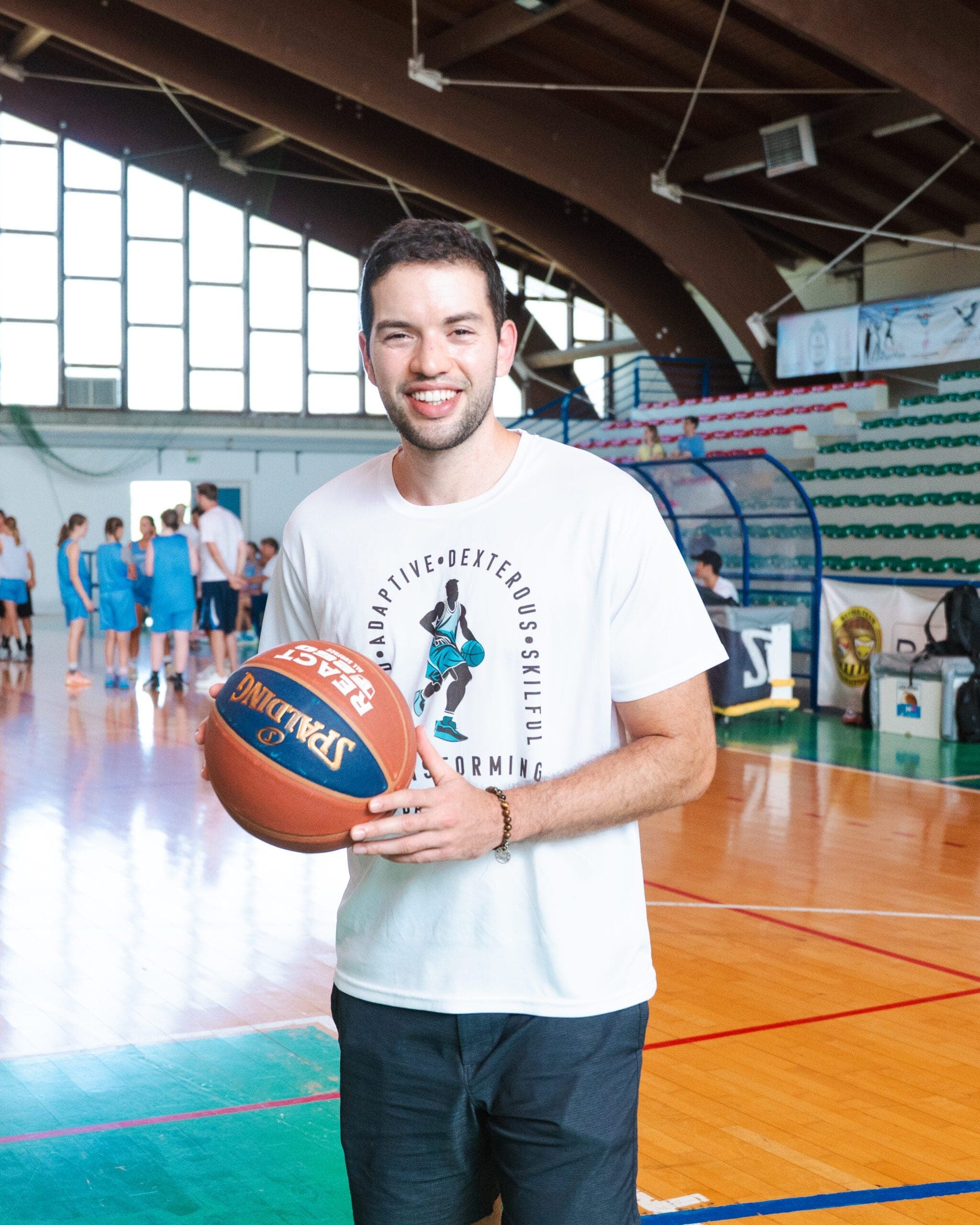

Coaching takeaway
Ref practice the way games are called. Design games that take away information so players focus on what you're teaching. Ask your players what they think they need to work on.
Read the guide: Basketball Practice DesignCoaching is more than calling plays. Like players, coaches have roles in practice. The traditional picture is the coach in the middle with a loud whistle, but watch a EuroLeague timeout and you will see coaches and players working out what to run together.
Take, for instance, Olympiakos' Georgios Bartzokas, who, in the heat of a close game, actively involves his players in decisions, asking them what play they prefer to run. This shift towards player involvement doesn’t just happen in games; it should be ingrained in practice as well.
Most practices never ask players that kind of question. Below are the roles I think a coach plays during practice, and how to give players more of a voice.
What is the role of the coach during practice?
Just as players have specific roles for a team, so too does the coach. Both the head coach and the assistants.
In a traditional environment, the coach with the loudest voice or the whistle will control the group. Players will stop and go when the coach says so. However, in a more modern approach that you see with many coaches both in games and in practice, players are having more autonomy and a clearer voice. You can observe this in timeouts during EuroLeague and EuroCup games, which give excellent coverage of the timeouts. I particularly enjoy listening in to Georgios Bartzokas’ timeouts with Olympiakos. I observed him asking the players what play they wanted to run in the last two minutes of a close game! (Although he gave the illusion of choice by giving them an option of play A or play B, but still, you get the point.)
While it is true that coaching interventions are important, having players give their feedback when appropriate is just as important. After all, the players are out there on the court and can see and feel the game in real time more than the quickest eyes on the sidelines can. The same is true in a practice environment.
Coaching Implications:
Coaches should design practice tasks that present athletes with dynamic, unscripted problems, encouraging exploration and adaptation rather than rote repetition.
With this in mind, I want to create a list of what I believe are a coach’s key roles during a practice:
- Reffing: Coaches should make sure the same calls players will see in games are officiated in practice.
- Games Designer: Think Squid Game without the gruesome fate of the contestants. Coaches should design games/drills that replicate the game environment as much as possible. This will involve being creative, so take away information to focus players’ affordances on the intention you are teaching. i.e., if you want to work on the MIG/last, you might create a 1-on-1 game that simulates an offensive player attacking the basket, as the help defender must come over to protect the basket.
- Collaborator: A coach should work with their players and ask what the players think they need to work on. This creates rapport with the group and, like the example above, gives the illusion of choice.
Free resource
21 SSGs for your next practice.
A free PDF of small-sided games you can run right away. A practical first taste of the approach.
Other Coaching Practices
1. Giorgos Bartzokas Collaborates with Players During Timeout
In this EuroLeague timeout, Bartzokas talks the decision through with his players and lets them shape what Olympiacos runs.
2. Sarunas Jasikevicius Executes a Game-Winning Play
Sarunas Jasikevicius draws up a play in a timeout that ends in a game-winning basket.
You can find this YouTube Shorts about his coaching tactic.
3. Timeout Strategies in High-Stakes Situations
A look at how coaches use timeouts in high-pressure moments, and how much the players are involved.
Recommendation
If you want to go further with game coaching, check out Transforming Basketball’s Game Coaching Resources. They cover how we coach games, from game flow to decision-making. You can find them here: Game Coaching Resources PDF.
The Game Coaching Workshop goes from live coaching to post-game analysis. Learn more and sign up here: Game Coaching Workshop.
Keep developing your coaching.
Connect these ideas with the Success Pathway, activity video library, coaching community and monthly live sessions.
Explore the membership